Advice
Can You Wash Floor Mats in the Washer?
Some floor mats can go in the washing machine, but only if the mat is designed for laundering and the care instructions say so. The safe choice depends less on the word "mat" and more on the actual build: surface fabric, backing, size, weight when wet, and whether it has glued or foam layers. This guide helps you sort the mat you have, avoid the common ones that should stay out of the washer, and choose a cleaning method that will not damage the mat, the machine, or the floor when the mat goes back down.

A floor mat that is stained, smells damp, or is tracking grit indoors is the kind of thing you want to clean quickly without making a bigger mess. Some floor mats can go in the washer, but only when the product is designed for laundering and the care instructions say so. Others need a different cleaning method because the backing, size, or construction will not cope with a wash cycle. Get this wrong and you can crack the backing, distort the mat, overload the machine, or end up with a slipping hazard when you put it back down. This guide shows you how to tell what you can wash, what should stay out of the machine, and what to do instead.
Start with the care label and the backing
If the mat still has a care label, use that first. That is the safest answer. If there is no label, look underneath before you do anything else. A washable fabric top does not automatically mean the whole mat is washer-safe.
The main things to check are:
- whether the backing is fabric, rubber, foam, PVC or vinyl
- whether the mat feels flexible or stiff
- whether it has glued layers or a bonded edge
- whether it will become very heavy when soaked
- whether it is small enough for the machine drum to move it properly
Manufacturer guidance is fairly consistent on the point that backing matters. Some mats are made for laundering, while many rubber-backed, rubber and PVC mats are better cleaned by brushing, mopping, hosing or pressure washing unless the maker says otherwise.
Mats that are usually machine washable
The mats most likely to be washer-safe are lighter textile mats that are clearly sold as washable. That often includes small indoor doormats, bath-style mats, microfibre mats and some low-pile fabric mats, but only where the care instructions allow it.
Good signs
- The label says machine washable or washable
- The mat is small enough to fit the drum comfortably
- The mat stays flexible when lifted
- The backing is designed for laundering, not just general indoor use

Washable mats often have size limits too. First Mats' washable mat guidance notes that smaller washable sizes may suit a domestic machine, while larger washable mats may need commercial laundering. That is a useful reminder that even a washable mat can still be too large for the washer you have.
If you are comparing washable styles, it helps to look for mats that say clearly that laundering is part of the design rather than assuming any soft mat will cope.
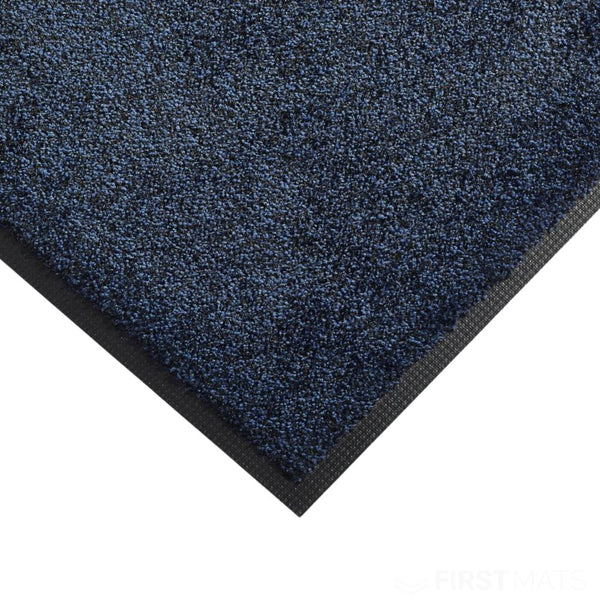
Renown 9mm Machine Washable Entrance Mat
The Renown 9mm Machine Washable Entrance Mat is designed for busy entrances where durability and easy maintenance are essential. With its premium plush pile and reinforced rubber backing, it traps…
- Machine Washable: Clean easily at 40°C for a fresh appearance.
- Dirt and Moisture Absorption: Protects floors and reduces slip hazards.
- Gripper Rubber Backing: Reduces movement on carpeted floors.
- Flammability Tested: Meets Cfl-s1 (EN ISO 13501) standards for safety.
From £36.59 + VAT
That matters most with entrance mats, where two products can look similar from above but behave very differently once soaked and spun.
Mats that should not usually go in the washer
Many mats are better kept out of the washing machine unless the manufacturer says otherwise. This is where people most often damage the mat because the top surface looks soft enough to wash, but the base or internal structure is the problem.
Rubber-backed mats
Most rubber-backed mats are made to cope with laundering, but many are not. Hot washes, strong detergent and repeated spinning can shorten the life of the backing or affect how well it grips the floor.
Rubber, PVC and vinyl mats
These are usually cleaned another way. Manufacturer guidance commonly points to brushing, mopping, hosing or pressure washing rather than machine washing. That applies especially to workshop matting, anti-fatigue mats and utility mats that are heavier and stiffer by design.

Coir mats
If you have a coir mat, stick to the care label. Without one, dry cleaning methods such as shaking out, vacuuming and light spot cleaning are the safer route.
Memory foam or layered mats
If a mat has a squishy foam core, glued backing, thick bonded layers or a structured edge, the washer is a risk. The cycle can distort the shape, split layers apart or leave the mat uneven underneath.
Heavy entrance mats
Even when an entrance mat looks like carpet, it may still be too heavy for a domestic washer once wet. Commercial entrance mats are often maintained with vacuuming, spot cleaning and extraction instead of being put through a household machine. If you are comparing types, our indoor door mats range shows how varied this category is, which is why washability cannot be assumed.
What can go wrong in the washer
The biggest risk is not always the wash itself. It is the combination of water, weight, spinning and heat.
Manufacturer laundering guidance warns that very hot washes, harsh detergents and too much dryer heat can lead to colour loss, shrinkage, distorted edging and delamination. In plain terms, the mat can come out misshapen, with the layers starting to separate, or with a backing that no longer sits flat.
A mat that is too heavy or too stiff can also be hard on the washer. It may thump badly in the drum, fail to rinse properly, or stay so waterlogged that it is awkward and unsafe to handle. Even if it survives the wash, a damaged backing can make it creep on the floor afterwards.
If your mat is washable, use the gentlest settings
If the label confirms machine washing, keep the settings mild. The aim is to clean the mat, not force dirt out of it at any cost.
- Use cold or warm water rather than a very hot wash, unless the label says otherwise
- Choose a gentle cycle
- Use a mild detergent
- Do not overdo the detergent, because residue can stay in the pile or backing
- Wash the mat on its own or only with items that will not snag or overload the drum
For drying, air drying is the safer default unless the care label clearly allows tumble drying. Heat is where a lot of backing and edge damage starts. If tumble drying is allowed, keep it low. If the mat has any doubt around rubber, foam or bonded layers, let it dry flat or hung securely with plenty of airflow.
Best ways to clean a mat that cannot be machine washed
If the washer is not suitable, you still have good options. The right method depends on what the mat is made to deal with.
For textile entrance mats
Vacuum first to lift dry dirt. Spot clean marks. For deeper cleaning, use extraction or professional laundering where appropriate. This is often a better fit for larger entrance mats than trying to force them into a domestic washer.
For rubber, PVC and utility mats
Take them outside if you can. Brush off loose dirt, wash with water and mild detergent, then rinse and dry fully before putting them back down. Pressure washing may be suitable for some matting, but check the product guidance first.
For coir mats
Shake out debris, vacuum gently and spot clean lightly. Avoid soaking unless the care instructions specifically allow it.
For smelly mats
Do not put a damp-backed mat straight back on the floor. Whatever cleaning method you use, make sure it is fully dry before it goes back into service. That matters just as much as the washing method because trapped moisture can lead to odour, floor marking and poor grip.
How to make the call in a minute
If the mat is light, flexible and clearly labelled as machine washable, a gentle wash is often fine. If it is rubber-backed, foam-filled, PVC, coir, layered, stiff, oversized or very heavy when wet, keep it out of the washer unless the manufacturer says it can go in.
When you are unsure, the safer choice is to vacuum, hose, spot clean or send it for proper laundering rather than risk damaging both the mat and the machine. If easy cleaning matters when you replace it, choose a mat that states washability clearly.