


Buying Guides
What are Swarf Mats?

Trying to stop metal chips or shavings being carried out of a machine area? A swarf mat can help, but the term often describes a use rather than a single specialist product.
In plain terms, swarf is the waste material left behind by machining, cutting, drilling, turning, routing, or similar workshop work. That can mean fine metal swarf near lathes or CNC machines, wood shavings near cutting benches, or a more mixed spread of workshop debris in fabrication and maintenance areas. The right mat needs to suit that debris, the floor conditions, and how people move through the area.
What swarf means in a workshop
Swarf is the loose waste created when material is removed during a process. In industrial settings, that often means small metal chips, curls, filings, or fragments. In other environments it may include wood shavings, dustier offcuts, or mixed debris from trimming and assembly work.
This matters because not all swarf behaves in the same way. Fine metal particles can sit differently underfoot from larger chips. Wood waste can be lighter and more easily spread. Damp debris can cling to soles or gather in low points. So when buyers ask for a swarf mat, they are usually looking for a mat construction that helps dislodge and hold debris until it can be cleaned away.

How swarf mats work
A mat used for swarf control usually works in two steps. First, its surface helps scrape debris from footwear. Next, the mat gives that debris somewhere to go so it is less likely to sit on the walking surface.
Textured or scraping surfaces
A flat, smooth mat may not do much to remove chips or shavings from the sole pattern of a work boot. Mats with raised texture, patterned rubber, or a more pronounced top surface can be more useful because they create contact points that help shift debris as someone steps across them.
Open holes or recessed areas
Many workshop-style rubber mats have holes, gaps, or lower recesses. These spaces can help larger particles fall below the main foot contact area instead of staying on top of the mat. That is often more practical for swarf control than a fully closed textile or smooth vinyl surface, especially where debris is coarse or continuous.

Easy cleaning
A swarf mat is only practical if your team can clean it without too much disruption. Rubber formats are often considered for this application because they can be lifted, shaken out, swept around, or washed depending on the environment. The right choice depends on whether your debris is dry, damp, oily, fine, or bulky.
Why ordinary mats may be less suitable
Standard entrance mats are often designed for dirt and moisture from general foot traffic. That does not automatically make them a good fit for machining debris. If the pile is too closed, the surface too smooth, or the mat too awkward to clear out, swarf may sit on top, get pressed in, or simply move back onto surrounding floors.

This is why workshop buyers often end up looking at rubber anti-fatigue mats, drainage mats, or modular industrial mats instead of traditional entrance matting. The question is not whether a mat is labelled as a swarf mat. The better question is whether its construction matches the kind of debris your area produces.
If you want to compare the broader range of formats used for this job, it can help to look at the industrial swarf mat range and then narrow down by application.
Where swarf mats are usually placed
Placement has a big effect on whether a mat is likely to help. In most workshops, mats used for swarf control are placed where debris is picked up on footwear or where it starts to spread into cleaner zones.
- Around lathes, CNC machines, and fabrication equipment
- In front of workbenches where cutting or trimming happens
- At the exit from a machine cell or workshop bay
- At transition points into walkways, stores, or adjoining work areas
If staff stand in one spot for long periods, comfort may also matter alongside debris control. In that case, a rubber anti-fatigue format may be worth considering rather than choosing on debris capture alone.
The Non-Slip Rubber Anti-Fatigue Mat is worth shortlisting where operators work in one standing position and you want an open rubber mat that can also cope with debris dropping through the surface rather than staying underfoot.
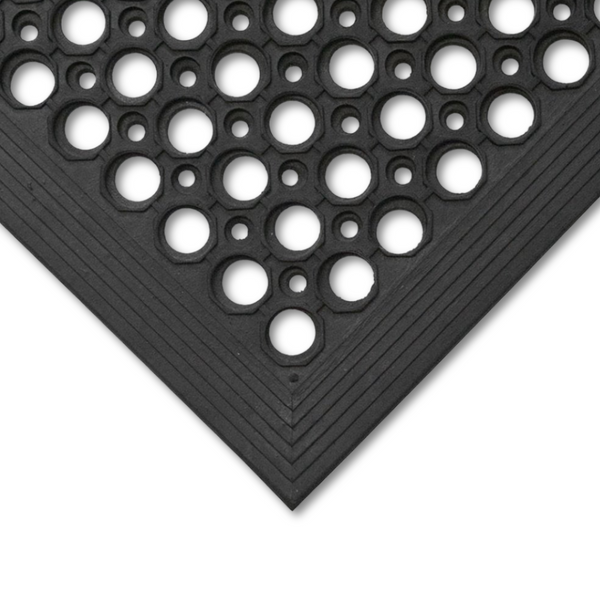
Non-Slip Rubber Anti-Fatigue Mat
The Non-Slip Rubber Anti-Fatigue Mat is a practical choice for busy workshops, factories, and wet work areas. Designed to provide reliable comfort and grip, it supports staff through daily standing…
- Swarf Management: Holes trap swarf and isolate debris for easy cleaning.
- Slip Resistant: Rated 4/5 for secure footing in wet and dry conditions.
- Anti-Fatigue Comfort: Reduces discomfort with a 4/5 fatigue rating.
- Durable Construction: Made from natural rubber for long-term reliability.
From £24.90 + VAT
For larger defined zones, such as around benches or machine groups, modular layouts can be easier to plan than placing several loose mats side by side. That can be useful when you need to cover a broader work area rather than just one stepping point.
The Heavy Duty Interlocking Workshop Mats are one to compare if you need to build a swarf-control area around fixed equipment or along a longer operator route.
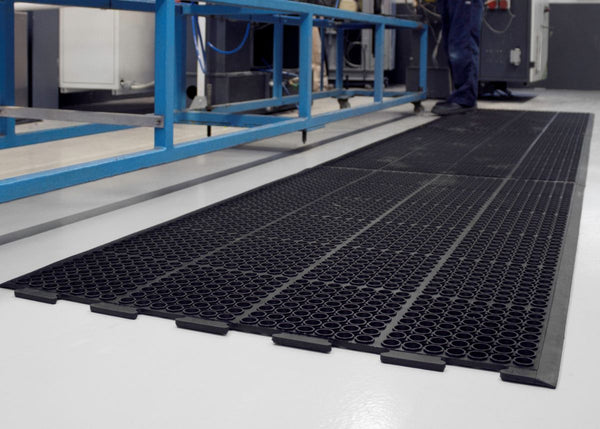
Heavy Duty Interlocking Workshop Mats
Heavy Duty Mats: Unmatched Durability & Safety Heavy-Duty Durability: Crafted from a robust mix of SBR and Nitrile rubber, these workshop mats withstand the rigours of industrial use while offering…
- Robust Material: Made from SBR and Nitrile rubber for heavy-duty use.
- Oil and Grease Resistant: Ideal for industrial and food production environments.
- Interlocking System: Flexible layout options for any workspace size.
- Anti-Fatigue Comfort: Provides excellent support, rated 4/5.
From £82.96 + VAT
How to choose the right type for your debris
Start with the debris, not the product name. A mat that works reasonably well for chunky metal chips may be less suitable for lighter shavings or wetter waste.
Fine metal swarf
Look for a mat with enough surface texture to disturb debris from soles, but also think about cleaning. Very fine material can collect in openings and recesses, so the best option is often one your team can clear quickly as part of the normal end-of-shift routine.
Larger chips or offcuts
An open structure or larger recessed spaces can make more sense where the issue is chunkier debris. If there is nowhere for larger particles to settle, they are more likely to remain on the top surface.
Wood shavings and mixed dry debris
Light debris can move around easily, so placement becomes important. Put the mat where people naturally pivot, step away from the bench, or pass into cleaner areas. A useful mat in this case is often one that combines scraping action with a format that does not make sweeping awkward.
Damp or oily areas
If swarf mixes with liquid, coolant-like residue, or oily contamination, material choice becomes more important. You need to think about drainage and cleanability as well as debris retention.
The Oil-Resistant Non-Slip Drainage Mat may be relevant where the area is not just dry and dusty, but also sees oily or wet contamination and needs a drainage-style rubber format.
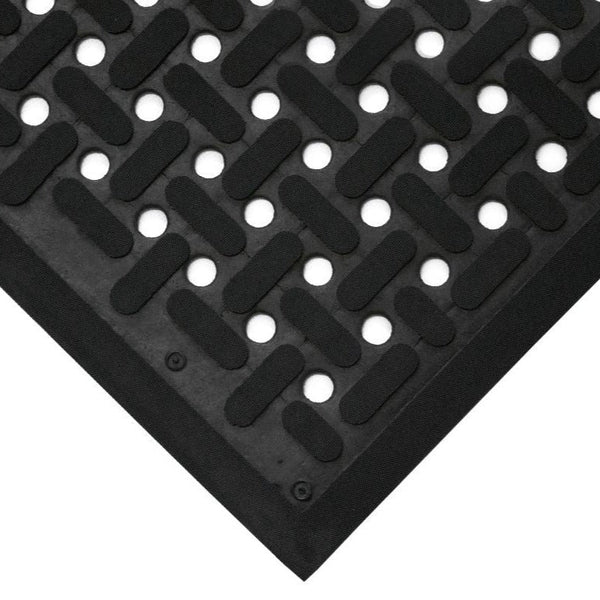
Oil-Resistant Non-Slip Drainage Mat
The Oil-Resistant Non-Slip Drainage Mat is designed for the busiest, most spill-prone areas in commercial kitchens. Made from high-quality nitrile rubber, it's fully resistant to cooking oils, grease, and kitchen…
- Oil Resistant: Nitrile rubber construction withstands grease and cooking oils.
- Enhanced Safety: Raised 'Kross' pattern for superior slip resistance.
- Efficient Drainage: 12.5mm holes channel away liquids, keeping surfaces dry.
- Trolley Friendly: Robust enough to accommodate wheels without damage.
From £58.40 + VAT
No single mat suits every workshop. The better shortlist comes from matching the mat to debris size, traffic frequency, whether people stand in place for long periods, and how often the area is actually cleaned.
Cleaning and maintenance considerations
Buyers often focus on the mat surface and forget the cleaning routine. A mat that looks right on paper can become a poor choice if clearing it takes too long or interrupts the area too much.
Before choosing, ask a few practical questions:
- Will the mat be swept around in place, lifted out, or washed down?
- Does the debris tend to be dry, damp, or sticky?
- How often is the area cleaned during the day or at shift end?
- Will the mat stay accessible, or will machines and trolleys make removal awkward?
If the answer points to quick daily clearance, simpler rubber constructions often make more sense than mat types that trap debris in a way that is harder to empty. If the area changes often, modular sections may be easier to adapt than one fixed mat size.
What to decide before you buy
A good swarf mat choice usually comes down to four points: what debris you are dealing with, where the mat will sit, how people use that space, and how the mat will be cleaned. That is more useful than treating swarf mats as a one-size-fits-all category.
If you are comparing options now, start by identifying your debris type and placement point, then shortlist mats by surface texture, debris-retention design, and cleaning practicality.