


Advice
What Does Bunding Mean? And What's its Purpose?
Bunding means secondary containment. In practice, it is the tray, sump or enclosed area that sits under or around stored liquid containers so leaks, drips or spills are caught before they spread. This guide explains what bunding looks like on site, why it is used, and how to choose between a simple containment tray, a bunded spill pallet and an IBC bund for workplace storage.

A row of drums in a workshop, an IBC in a warehouse corner, or a small container that always seems to leave drips behind are the kinds of situations that make bunding matter. In workplace liquid storage, bunding usually means secondary containment: a tray, bund or enclosed area designed to catch leaks, drips or spills from the main container. It is used to stop escaped liquid spreading across the floor or yard and becoming a bigger clean-up and storage problem. This guide explains what bunding looks like in day-to-day use, where bunded spill pallets and IBC bunds fit, and what to check before you buy.
Why bunding matters on site
You will usually meet bunding when the container itself is not the whole answer. A drum, can or IBC holds the liquid you want to store, but it does not deal with the leak from a tap, a split seam, a damaged valve or the drips left after transfer. Bunding is the back-up layer underneath or around that storage point.
A simple way to picture it is the tray you might put under something messy to catch what escapes. On site, the same idea scales up. Instead of catching a few drops, you are trying to keep oils, chemicals, fuels or other stored liquids in one controlled place so they do not run under racking, across walkways or out into a yard.
The HSE describes secondary containment as a second line of defence around liquid storage. For oil storage, government guidance also refers to drip trays, bunded areas and other systems that stop escaped oil leaving the storage area. So when someone says a storage point needs bunding, they usually mean it needs that second containment layer, not just the container itself.
What bunding looks like in practice
Bunding is not one single product. It can be as simple as a containment tray under a smaller container or as substantial as a bunded unit built for drums or IBCs. What matters is the job it does and whether it suits the way you store and handle that liquid.
Small trays and drip trays
These are often used where the main issue is minor drips, small containers or routine dispensing. Think of a container with a tap, a transfer point, or a drum that is not expected to leak but needs something underneath in case it does. For some smaller drum storage arrangements, a drip tray may be a suitable form of secondary containment, but the correct choice depends on the liquid, the quantity and your site rules.

Bunded spill pallets
A bunded spill pallet gives you a raised storage platform with a sump underneath. They are commonly considered for drums and similar containers when you need a more organised storage point and more capture space than a basic tray offers. They also make sense where you want containers kept together in one obvious location rather than sitting loose on the floor.
IBC bunds
IBC bunds are built around the footprint and weight of IBC storage. That matters because an IBC is not just a bigger drum. It changes the space you need, the access you need for handling, and the amount of escaped liquid you may need to contain if something goes wrong.

When a tray is enough and when you need more
A small containment tray may be enough where you are dealing with minor drips from smaller containers or a controlled dispensing point. It is often the practical choice when the container is small, the risk of a larger release is limited, and the area is easy to inspect and clean.
You would usually start looking at a bunded spill pallet when the storage point becomes more permanent or the containers become larger and heavier. Drums stored together, drums in regular use, or drums handled by pallet truck or forklift are all examples where a pallet-style bund is often easier to live with than several separate trays.

An IBC bund comes into the picture when the container itself is an IBC. At that point, the footprint, load and access needs are different enough that trying to make a smaller containment option do the job usually creates problems later. You can end up with awkward access, difficult cleaning, or a storage point that no longer fits how the area actually works.
If you want a deeper look at pallet-style containment, this guide on bunded pallets is a useful next read.
How to choose the right type of bunding
The quickest way to choose well is to look at the real storage setup rather than starting with the product name. These are the checks that usually matter most.
What liquid are you storing?
Do not assume one bund suits every liquid. Oils, fuels, chemicals and mixed site liquids may need different containment approaches. Check the requirements for the substance you store and the product information for the unit you are considering.
What container are you storing it in?
A tray for a small container, a pallet for drums and a bund for an IBC are not just different sizes of the same thing. They are built around different loads, footprints and handling patterns. Start with the container first, then narrow the containment options from there.
How much does the bund need to hold?
Capacity matters just as much as footprint. A commonly used requirement for secondary containment is that a bund should be able to hold at least 110% of the capacity of the largest container it protects. For multiple tanks or IBCs, the required capacity may be the greater of 110% of the largest container or 25% of their combined capacity. Different rules can apply to drums and particular substances, so always check the regulations and guidance relevant to your storage setup before choosing a bund.
The 110% rule for spill containment requires that a secondary containment system (like a bund or sump) must be able to hold at least 110% of the volume of the largest single container stored inside it.
Where will it sit?
Indoor and outdoor use can change the practical choice. In a yard or loading area, you may need to think about exposure, housekeeping and whether rainwater could collect in the containment area. In a warehouse, the bigger issue may be aisle width, nearby traffic and how easy the unit is to inspect.
How will you move containers on and off?
This is where good choices often go wrong. If drums arrive by pallet truck, forklift or both, the unit has to work with that handling method. If your team needs regular access to valves or taps, the platform height and layout matter too. A containment product that fits the liquid but slows down day-to-day handling can become a nuisance very quickly.
How will you clean it?
Leaks rarely arrive on a convenient day. Look at how the sump or tray will actually be inspected, emptied and cleaned. Features such as removable decks or grated tops can make routine housekeeping easier, but only if they suit the way your team works.
If your site already uses fixed bunded areas, it is also worth reading about bund integrity testing so you can separate portable containment products from larger permanent bund structures.
Common product routes for drums and IBCs
For a single drum storage point, a one-drum bunded pallet can be the neatest fit when you want dedicated containment under one container rather than a larger shared unit.
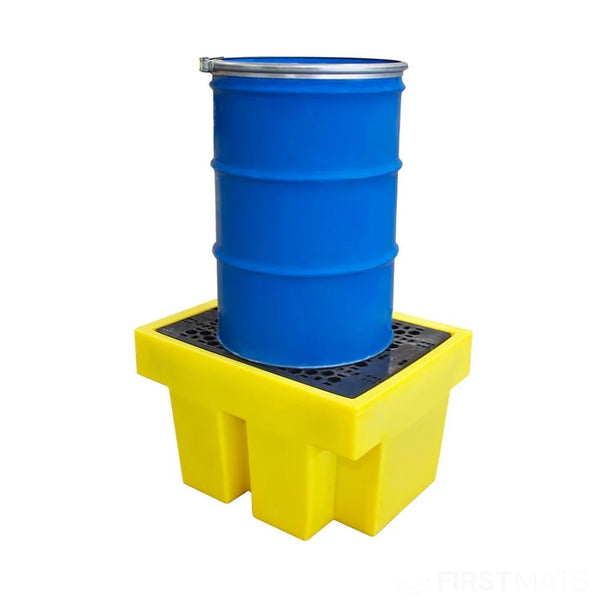
Bunded Spill Pallet for 1 x 205Ltr Drum
Secure 205Ltr Drum Storage with Bunded Spill Pallet Bunded Spill Pallet for 1 x 205Ltr Drum: A robust and reliable solution for storing hazardous liquids such as oil, petrol, and…
- Reliable Spill Containment: Holds up to 225 litres of liquid, ensuring compliance with pollution control regulations.
- Durable Polyethylene Construction: Corrosion-resistant material makes it suitable for a wide range of chemicals.
- Removable Plastic Mesh Deck: Easy to clean and maintain, keeping your workspace safe and compliant.
From £210.13 + VAT
Where several drums are stored together, a larger pallet-style unit may suit the area better because it keeps the storage point in one place and reduces the clutter of multiple smaller trays or pallets.
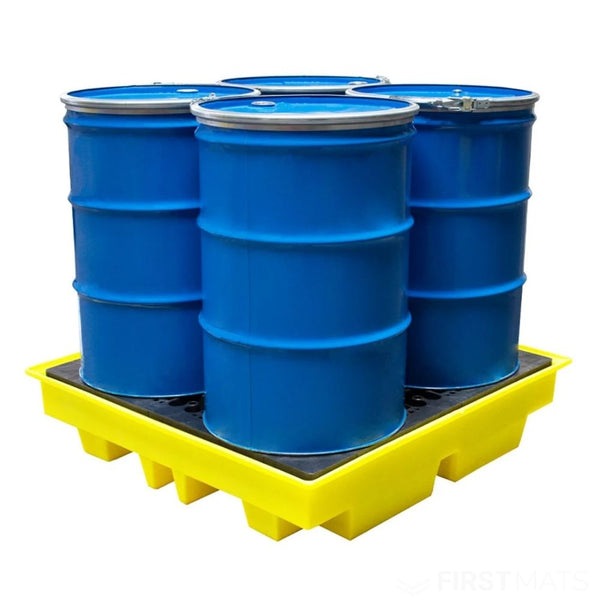
4-Drum Low-Profile Bunded Spill Pallet
4-Drum Spill Pallet: Robust, Low-Profile & High Capacity 4-Drum Low-Profile Bunded Spill Pallet: This robust spill pallet is designed for safe and reliable oil and chemical storage for up to…
- Secure Storage: Holds up to four 205L drums for safe spill containment.
- Low-Profile Design: Makes loading and unloading easier.
- Forklift Friendly: Two-way forklift pockets for easy transport.
- Easy Maintenance: Removable grid simplifies cleaning.
From £231.33 + VAT
If you are storing one IBC in a fixed position, an IBC bund built around a single container footprint is usually the more sensible starting point than trying to adapt a drum setup to do the same job. The Single IBC Bund Pallet with Removable Deck is the kind of unit to consider when you want containment that matches one IBC storage position.
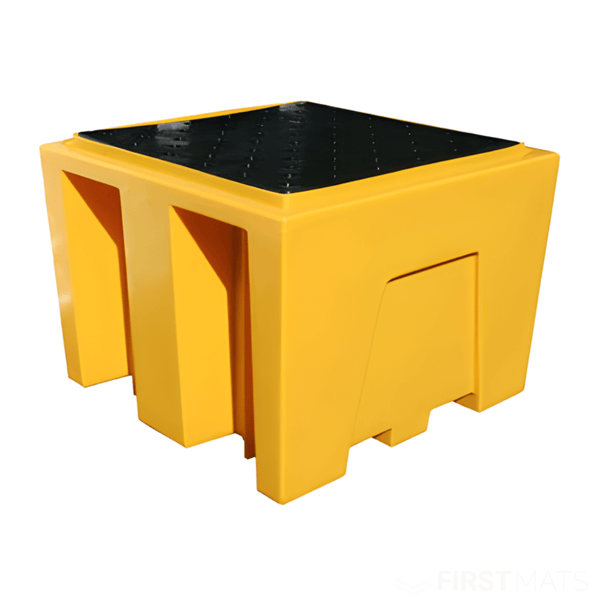
Single IBC Bund Pallet with Removable Deck
The Single IBC Bund Pallet with Removable Deck is designed for the safe and compliant storage of intermediate bulk containers holding oils, chemicals, and other hazardous liquids. Built to meet…
- 1350-litre sump to contain leaks and stay compliant.
- 100% polyethylene construction for long-term indoor or outdoor use.
- Removable deck for fast cleaning and maintenance.
- Two-way forklift access for easy positioning when unloaded.
From £734.90 + VAT
Some sites need a more temporary or movable containment area for larger containers. A portable unit such as the PCB4 Portable Bund for 2 x IBC can be relevant where the storage arrangement changes, though you still need to check that the layout, access and liquid type suit the job.
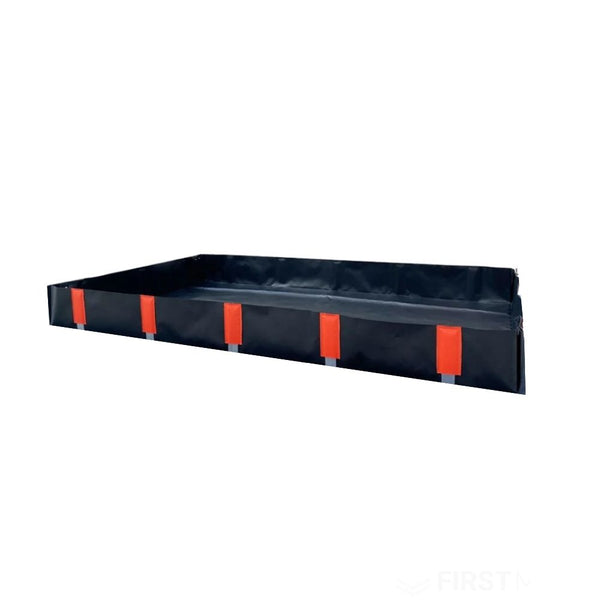
PCB4 Portable Bund for 2 x IBC (2500x1500x250mm)
The PCB4 Portable Bund is designed to provide safe and effective spill containment for up to two IBCs. With a footprint of 2500 x 1500mm, it offers ample space for…
- Designed for Two IBCs: Provides a robust and efficient spill containment solution for up to two IBC containers.
- Quick and Tool-Free Assembly: Easy to set up and collapse without tools, saving time and effort.
- Generous Sump Capacity: Holds up to 937 litres, ensuring reliable containment for spills and leaks.
From £538.69 + VAT
Check the rules before you buy
Bunding is one of those topics where the basic idea is simple but the detail can change with the liquid, the quantity, the container type and where the site is. Oil storage rules are clearly set out in UK guidance, but that does not mean you should carry those figures across to every chemical or every workplace setup.
Customers should always check the applicable site rules and substance-specific requirements before choosing a drip tray, bunded spill pallet or IBC bund. That is especially important if you are storing oil, larger containers, or packaged dangerous substances. Start with your own risk controls and storage arrangements, then match the containment to the actual job. If you are about to buy, walk the storage area first and choose the bunding that your team can use, inspect and clean properly.