


Advice
What Is a Duck Board? Uses, Materials and Where Duckboard Matting Works Best
A duck board is a raised slatted panel or mat that keeps your feet above water, mud or spills. You usually see it in wet areas where drainage matters more than a sealed floor surface, such as poolside walkways, changing rooms, washdown spaces, garden paths and some workshop zones. The key question is not just what a duck board is, but whether its open slatted design suits your space. This guide explains how duckboard matting works, where it helps, where it falls short, and when another type of anti-slip or drainage mat is the better fit.

A duck board is a raised slatted panel or mat that gives you a more stable surface to walk on in wet, muddy or slippery areas. The gaps between the slats let water and debris pass through, while the raised top surface keeps foot traffic above the mess.
That basic idea shows up in both domestic and commercial settings. You might use a duck board by a garden tap, a shed door or a poolside path. You might also find duckboard matting in changing rooms, washdown areas, plant rooms or back-of-house spaces where water on the floor is a regular problem.
What duckboard matting is used for
Duckboard matting is used where the floor does not stay dry for long. Its job is simple: create separation between people and the surface below.
That makes it useful in places where water needs somewhere to go instead of sitting underfoot. In a changing area or pool surround, it helps by letting splashed water drop through the gaps. On a muddy outdoor route, it lifts walking traffic above the dirt rather than asking people to step straight into it.
It works best where people are mainly walking across the area, standing briefly, or moving between wetter and drier zones. If the main issue is drainage and safer footing, duckboards are often a sensible starting point.

How a duck board helps on slippery floors
The raised slatted design does three useful things at once. It breaks contact with standing water. It gives the foot a defined surface instead of a film of moisture. And it lets the floor below keep draining instead of trapping water on top.
That does not make the whole area automatically safe. Slip risk still depends on what is on the floor, how steep the surface is, whether the mat stays in place, and how well the area is cleaned. A duck board reduces the problem. It does not remove the need for sensible housekeeping.
Where duck boards work well
Duck boards are most useful in areas that are regularly wet rather than occasionally damp. Good examples include poolside routes, shower and changing spaces, utility areas, some leisure settings, outdoor paths that stay muddy, and sheltered entrances where rainwater tends to sit.
In commercial settings, they can also suit washdown zones, some food-adjacent back-of-house spaces, and service corridors where drainage matters and foot traffic is the main load. In domestic settings, they are often chosen where you want a simple raised walking surface without committing to fixed flooring.
If you are dealing with a long poolside route or a changing-room run rather than one small standing point, a roll-format duckboard can make more sense than separate panels. Plastic Duckboard Standard Pool Matting Rolls are aimed at continuous wet-foot traffic in leisure-style spaces where water is expected on the floor.
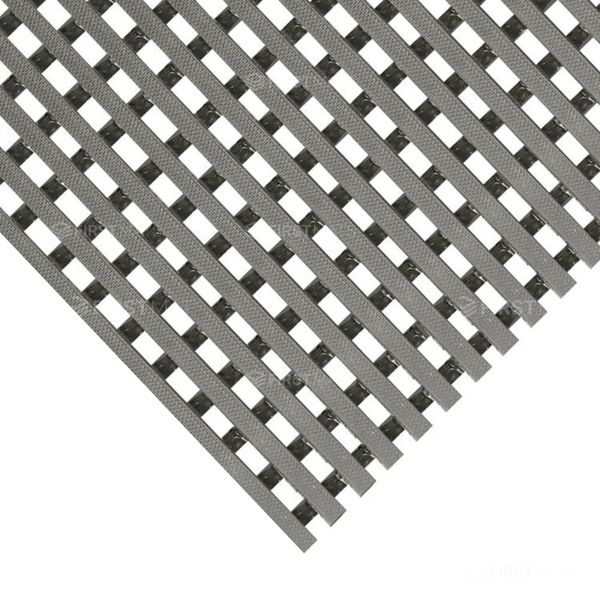
Plastic Duckboard Standard Pool Matting Rolls
The Plastic Duckboard Standard Pool Matting Rolls are a long-lasting and practical choice for wet floor areas such as swimming pools, changing rooms, and leisure centres. Constructed from robust, non-porous…
- Custom Lengths: Choose a size up to 10 metres for a perfect fit.
- Slip-Resistant Surface: Etched texture ensures stability in wet areas.
- Hygienic & Durable: Resists bacterial and fungal growth for cleanliness.
- Oil & Chemical Resistant: Ideal for industrial and wet environments.
From £406.95 + VAT
That said, duckboards are not the best answer everywhere. If the area takes wheeled traffic, heavy point loading, or fine debris that packs into the gaps, the slatted design can become awkward to keep clear in day-to-day use.
Common materials and what they mean in practice
The two materials most people mean when they say duck board are wood and plastic or PVC. They do the same basic job, but they suit different environments.
Wood duck boards
Wood has a familiar slatted look and can work well in outdoor domestic spaces or lower-demand areas where appearance matters as much as drainage. It can be a practical choice for a garden route, a shed threshold or a spot that gets wet but is not subject to strict cleaning routines.
The trade-off is upkeep. In wet conditions, wood needs more attention over time, and it is usually less suitable where hygiene, frequent washdown or constant soaking are part of normal use.
Plastic and PVC duck boards
Plastic and PVC options are common in commercial wet areas because they are built around water exposure. They are often lighter to handle than fixed platforms and usually easier to wash down than timber slats.

For a buyer looking at workshop or service-area use rather than leisure wet rooms, Industrial PVC Duckboard Matting is the more relevant type of duckboard. It is a duckboard-style option for workplaces where you still want raised drainage underfoot but need a more industrial format.
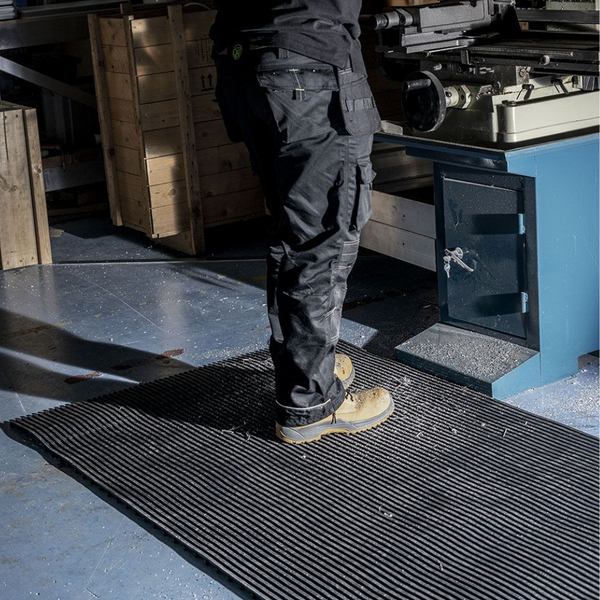
Industrial PVC Duckboard Matting
The Industrial PVC Duckboard Matting is a heavy-duty flooring solution designed for demanding workplaces. It provides a safe, slip-resistant surface in wet and oily environments. Constructed from durable PVC, it…
- Durable Material: PVC construction resists oils, grease, and chemicals.
- Efficient Drainage: Multi-directional design reduces slip hazards in wet environments.
- Customisable Sizes: Available in lengths up to 10m and widths of 60cm, 80cm, or 100cm.
- Colour Options: Choose from Black, Blue, or Red to mark walkways or safe zones.
From £406.95 + VAT
Your real choice comes down to environment. A barefoot pool surround, a plant room walkway and a muddy garden path may all need drainage, but they do not place the same demands on cleaning, grip and day-to-day wear.
The benefits of duckboard matting
-
It lifts foot traffic above surface water, mud or spill residue.
-
It lets water drain through instead of pooling on the walking surface.
-
It can be easier to place than installing fixed flooring.
-
It suits long wet routes as well as smaller standing areas, depending on the format.
-
It is easy to recognise and simple to explain to users: walk on the raised slats, not in the water below.
Those strengths make duckboards a good fit where drainage is the main problem to solve. They are often chosen because they deal with persistent wetness in a straightforward way.
The limitations to know before you buy
Duck boards are not a universal anti-slip answer. The open design that helps water escape can also let dirt, debris and contamination collect below or between sections. That can be fine on a garden path or a poolside run that gets washed through. It is more of a nuisance where hair, grit, leaves or workshop swarf build up and need clearing out regularly.
They are also not ideal for every kind of contamination. If the floor is exposed to oils or greasy residue, you may need a mat designed for that specific environment rather than a standard duckboard. In that case, a dedicated industrial drainage mat is often the better match than a slatted wet-area product.
If your problem is oily workshop flooring rather than plain water, the Oil Resistant Drainage Mat is the more suitable type to review. It helps you compare duckboards with a mat built for greasy industrial floors, where contamination is part of the job rather than an occasional splash.
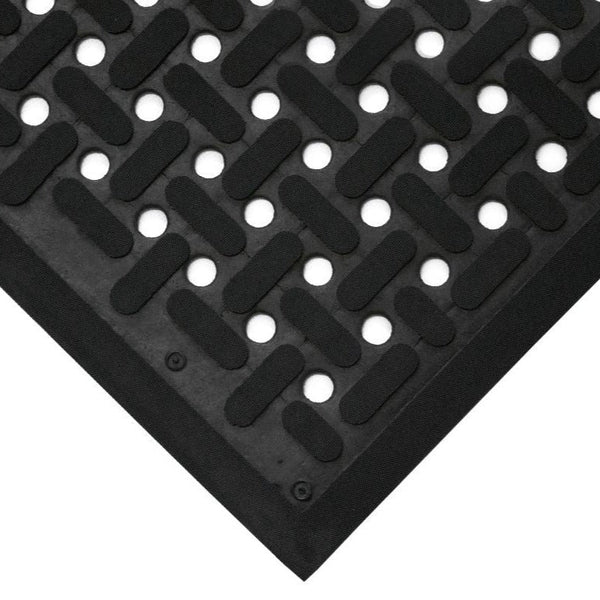
Oil Resistant Drainage Mat
The Non-Slip Oil Resistant Drainage Mat is purpose-built for industrial workshops and factory environments, delivering outstanding slip resistance and durability under demanding conditions. Constructed from nitrile rubber, it withstands exposure…
- Oil-Resistant Rubber: Nitrile material resists grease and oil damage.
- Slip-Resistant Surface: Certified R11 with raised 'Kross' texture.
- Superior Drainage: 12.5mm holes channel away fluids instantly.
- Temperature-Resilient: Performs from -30°C to +90°C.
From £58.40 + VAT
Duckboards can also be the wrong fit where you need scraper performance at an entrance, easy containment of fine dirt, or support for wheeled equipment. For those situations, it is worth looking at other industrial non-slip mats, which help when you need a flatter enclosed surface for demanding work areas, or broader walkway matting if you are comparing safer walking routes across longer slippery stretches.
What to look for when choosing a duck board
Look first at the contamination. Is it mainly clean water, muddy runoff, regular washdown, or something more demanding? That tells you whether a duckboard is suitable at all.
Next, look at traffic. Bare feet, shoes and occasional pedestrian use are one thing. Trolleys, carts and heavy industrial movement are another. Duckboards are usually strongest where people are walking, not rolling loads over the top.
Then check cleaning. Open slats help drainage, but they also create places where dirt can gather. If the area needs frequent deep cleaning or has strict hygiene expectations, make sure the format fits the routine you can actually maintain.
Also look at whether you need a temporary laid-in product or a longer continuous run. In wet leisure spaces, roll-based duckboard is often the practical option because it covers a route neatly and keeps the walking surface consistent.
If your space is wet enough that people keep stepping into standing water, duckboard matting is worth shortlisting. If the floor problem is oil, heavy traffic or dirt control, skip straight to a mat built for that job.