


Buying Guides
How to Choose Safety Floor Matting for Wet Industrial Areas
HSE says slip and trip accidents cost UK employers over £500 million per year, and wet or dirty floors are a common cause. In wet industrial areas, that makes matting a practical buying decision, not just a housekeeping extra. The key is to match the mat to the actual contamination and working conditions. A mat that works in a wash bay may be a poor fit for a CNC area with coolant and swarf, while a comfortable standing mat may be awkward where cleaning is frequent or wheeled traffic crosses the area.

HSE says slip and trip accidents cost UK employers over £500 million per year. In wet industrial areas, the right floor matting choice starts with a simple question: what is actually ending up on the floor, and how often?
That matters because wet-area safety matting is not one category with one answer. Water-only splash zones, frequent washdown areas, oily workshop floors and machining stations with coolant or swarf all place different demands on the mat. So the best approach is to classify the area first, then assess drainage, surface texture, material, cleaning demands and traffic.
Why wet-area matting is used
Wet and dirty floors are a common workplace slip risk, so matting should be chosen with contamination control in mind. HSE guidance on flooring suitability and cleaning makes the same point in practical terms: the floor surface has to suit the activity, and areas that become contaminated need sensible precautions.
In industrial settings, wet area safety matting is often used to help lift foot traffic above surface liquid, encourage drainage away from the walking surface, add underfoot texture, and make wet work points more manageable day to day. It can also help define where people should stand or walk in areas near wet processes.
That does not mean any wet-area mat will suit any wet area. A mat that handles splashy water near a wash station may not be suitable where oils, coolants, sludge or metal swarf are part of the problem. This is why buyers should start with the contamination, not the catalogue.
Match the mat to the contamination
Water-only or mostly water areas
For factory walkways near wet processes, wash bays, test areas or general splash zones, look first at whether the mat has an open structure or drainage holes that help move water away from the walking surface. A raised design can be useful where the main aim is to avoid people standing directly in shallow pooled water.
In these areas, surface texture still matters, but so does how easily the mat can be lifted, rinsed or cleaned around. If the area is cleaned frequently, a mat that is awkward to move can create more disruption than it saves.
Frequent washdown zones
Washdown areas need a more cautious assessment. Repeated cleaning means the mat has to work with the cleaning routine, not fight against it. HSE notes that cleaning itself can create wet-floor hazards, so choose matting that staff can remove, reposition or clean without turning a routine washdown into a longer unsafe period.
Check whether debris, residue or process waste is likely to clog openings. In some washdown environments, an open-drainage design is useful. In others, blocked holes can make the mat harder to keep clean and less practical over time.
Oils, coolants and mixed contamination
CNC, lathe and machining areas often need a different conversation. If water is mixed with coolant, oil or fine swarf, do not assume a general wet-area safety mat is suitable. The mat needs to be assessed for the actual contamination present, how that contamination behaves underfoot, and whether debris will sit on top, fall through, or become trapped.

Mixed contamination zones often need more product-specific checks than water-only areas. If the floor sees oil residues, cutting fluids, metal fines or regular trolley crossings, specialist advice is sensible before ordering.
Features to assess before you buy
Drainage and open structure
For wet floors, drainage is usually the first feature to assess. Open-hole or raised structures can help move water away from the top surface, but they are not automatically the right answer in every setting. Fine swarf, sludge or heavy residue can block openings, so buyers should weigh drainage benefits against cleaning reality.
Surface texture and grip underfoot
Look for a walking surface that gives stable footing for the footwear used on site. Keep the wording cautious here: grip depends on the mat surface, the contamination, footwear and maintenance. If you need formal slip-resistance data, ask for the relevant test information rather than assuming a wet-area product is suitable by default. If testing is discussed, BS EN 16165 is a test-method reference, not a blanket approval for any mat.
Material suitability
Material choice should follow the environment. Rubber, PVC and other constructions can behave differently in wet, oily or frequently cleaned areas. Avoid broad assumptions about resistance or durability unless the manufacturer has confirmed them for the exact product. This is especially important in washdown zones and machining areas where chemicals, oils or coolants may be involved.

Cleaning and maintenance
A safety mat that performs well on day one but traps residue, takes too long to lift, or cannot be cleaned without downtime is usually a poor buying choice. Ask practical questions: Will the mat need daily cleaning? Can one person move it safely? Will openings clog? Does the area need fast turnaround between cleaning and use?
Edges, profile and traffic
Edge detail matters in busy industrial spaces. A wet-area mat should sit in a way that supports safe stepping on and off, especially at entries, exits and crossing points. Also check how people and equipment move through the area. Pedestrian-only standing points, turning traffic, sack trucks and trolleys can all affect whether a softer or more open design is practical.
When anti-fatigue matters
If people stand in one position for long periods, anti-fatigue matting may help reduce standing discomfort, but performance varies by product and setting. The key is not to treat comfort as the only buying factor. In wet industrial areas, comfort has to be balanced with drainage, stable footing and ease of cleaning.
The Non-Slip Rubber Anti-Fatigue Mat is one example to assess where operators stand at wet workstations for extended periods and you need a drainage-style format rather than a sealed cushioned mat.
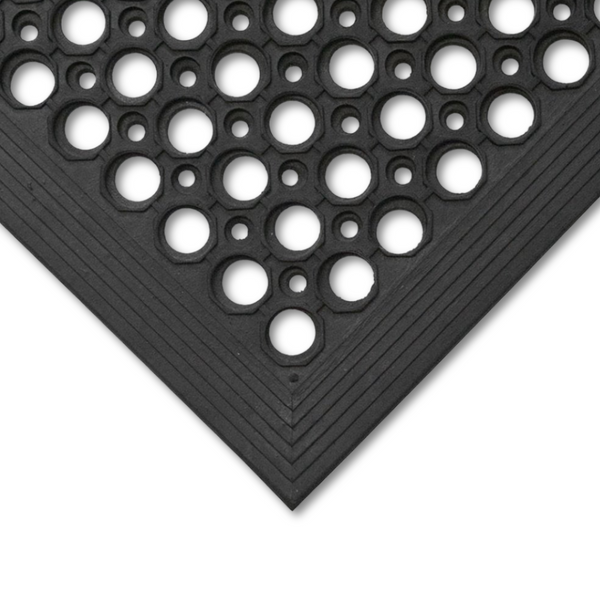
Non-Slip Rubber Anti-Fatigue Mat
The Non-Slip Rubber Anti-Fatigue Mat is a practical choice for busy workshops, factories, and wet work areas. Designed to provide reliable comfort and grip, it supports staff through daily standing…
- Swarf Management: Holes trap swarf and isolate debris for easy cleaning.
- Slip Resistant: Rated 4/5 for secure footing in wet and dry conditions.
- Anti-Fatigue Comfort: Reduces discomfort with a 4/5 fatigue rating.
- Durable Construction: Made from natural rubber for long-term reliability.
From £24.90 + VAT
That said, anti-fatigue designs are not always the best fit for routes with frequent wheeled traffic or contamination that blocks openings. If the area is mainly a through-route rather than a standing point, prioritise layout and traffic pattern before underfoot comfort.
Examples by environment
Factory walkways near wet processes
For linear routes or defined pedestrian zones near recurring splash or dampness, the priority is usually clear coverage, stable placement and a surface that helps keep people off the wet floor rather than in it. SiteStep Walkway Matting Roll is the kind of option to compare when the need is a simple walkway format rather than a workstation mat.
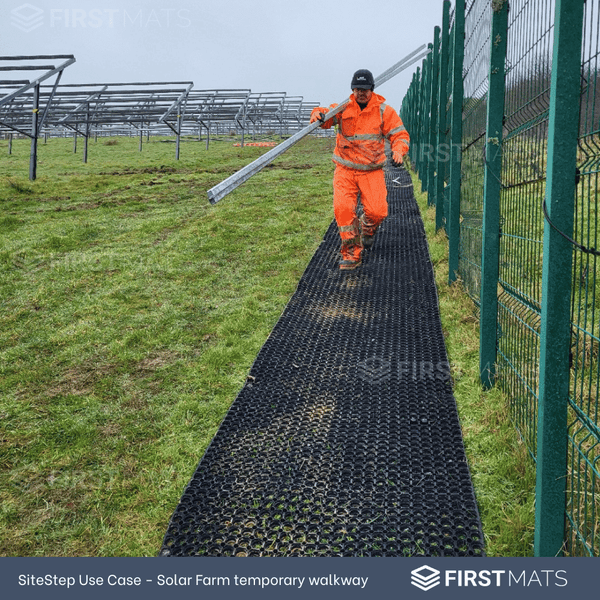
SiteStep Walkway Matting Roll
The SiteStep Walkway Matting Roll is the ultimate solution for creating clean, safe, and defined walkways across grass, gravel, and other uneven outdoor surfaces. Ideal for temporary footpaths at events,…
- Slip-Resistant Surface: Improves safety on grass, gravel, and uneven ground.
- Mud-Scraping Holes: Help remove dirt and debris from footwear.
- Durable Rubber: Built to endure heavy foot traffic and outdoor conditions.
- Portable Format: Supplied in a roll for easier transport and deployment.
From £24.50 + VAT
This kind of layout works best where the main issue is foot traffic passing through a wet area. It is less likely to suit locations where people stand in one spot for long periods or where contamination is oily or clogged with process debris.
Wash bays and water-heavy service areas
Where water exposure is regular and the area needs a raised standing surface, a duckboard-style format can be worth considering. Plastic Duckboard Standard Pool Matting Rolls are aimed at wet floor environments with standing water underfoot, so they may be useful to review for water-led areas where barefoot use is not the issue but raised drainage-style construction is the main attraction.
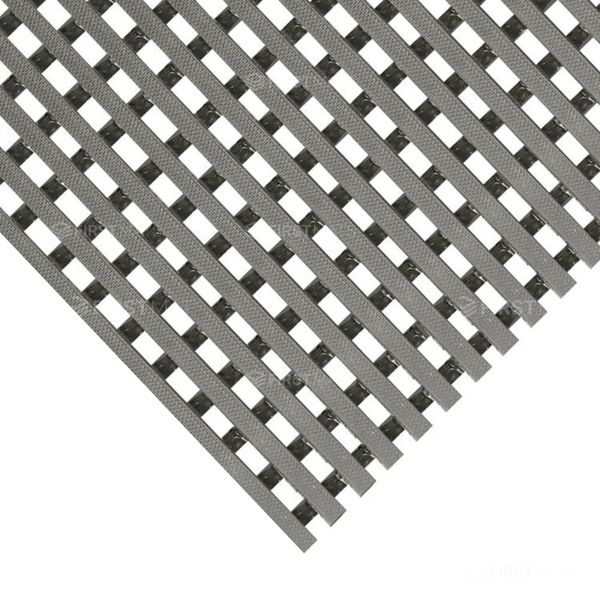
Plastic Duckboard Standard Pool Matting Rolls
The Plastic Duckboard Standard Pool Matting Rolls are a long-lasting and practical choice for wet floor areas such as swimming pools, changing rooms, and leisure centres. Constructed from robust, non-porous…
- Custom Lengths: Choose a size up to 10 metres for a perfect fit.
- Slip-Resistant Surface: Etched texture ensures stability in wet areas.
- Hygienic & Durable: Resists bacterial and fungal growth for cleanliness.
- Oil & Chemical Resistant: Ideal for industrial and wet environments.
From £406.95 + VAT
This should still be checked carefully against industrial cleaning methods, footwear, traffic and contamination. A leisure-focused wet-floor product is not automatically suitable for workshop chemicals, oils or heavy industrial use.
Machining or food-adjacent oily splash zones
If the floor sees oil-like contamination as well as liquid, material suitability becomes central. Oil-Resistant Non-Slip Drainage Mat is a product to review where drainage is needed but water is not the only contaminant on the floor.
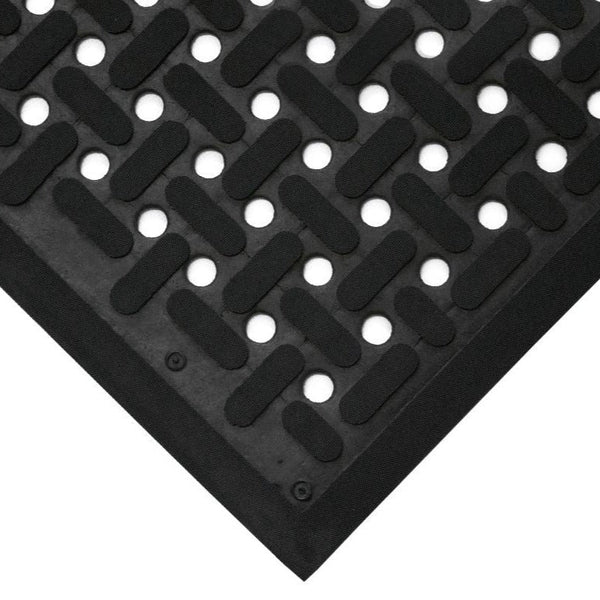
Oil-Resistant Non-Slip Drainage Mat
The Oil-Resistant Non-Slip Drainage Mat is designed for the busiest, most spill-prone areas in commercial kitchens. Made from high-quality nitrile rubber, it's fully resistant to cooking oils, grease, and kitchen…
- Oil Resistant: Nitrile rubber construction withstands grease and cooking oils.
- Enhanced Safety: Raised 'Kross' pattern for superior slip resistance.
- Efficient Drainage: 12.5mm holes channel away liquids, keeping surfaces dry.
- Trolley Friendly: Robust enough to accommodate wheels without damage.
From £58.40 + VAT
Its original market does not remove the need for checks. In a workshop or process setting, confirm suitability for the exact contamination, cleaning method and traffic before specifying it outside its usual environment.
When to seek specialist advice
Ask for specialist input when any of these apply:
- the floor is contaminated by oils, coolants, chemicals or mixed residues
- fine swarf, sludge or debris may block drainage openings
- trolleys, carts or frequent wheeled traffic cross the mat
- the mat will cover a large area or multiple connected zones
- cleaning is intensive, frequent or done with specific washdown products
- you need product-specific slip test data or technical confirmation
A short site review usually saves time here. It helps you avoid buying wet area safety matting that shifts, clogs, creates awkward edges or turns routine cleaning into a bigger problem.
The fastest way to shortlist the right wet-area matting is to map the contamination, cleaning routine and traffic first, then compare products against that real-world use case.