Buying Guides
How to Keep Your Site Cabin Floors Clean

Keeping a site cabin clean may not be the first thing on a busy site manager’s checklist, but it plays a major role in maintaining a safe, organised, and compliant working environment. With workers constantly moving between muddy ground and welfare areas, site cabins can quickly become difficult to keep clean. The right site cabin mats can make a noticeable difference, helping to control dirt, manage moisture, and reduce slip risks.
This guide, by the experts at First Mats, explains why matting matters, what features to look for in mats used in tough construction settings, and which First Mats products are best suited to the job.
Why Clean Site Cabin Floors Matter
Far more importantly than improving appearances, Site Cabin Mats are also about safety, efficiency, and compliance.
Under the Workplace (Health, Safety and Welfare) Regulations 1992 and CDM 2015, employers must ensure floors are suitable, in good condition, and free from obstructions, and that people can move around safely even when mud and water are common on construction sites.
Mats are not specifically named in legislation, but they are one of the simplest and most effective ways to meet these requirements. A well-chosen mat captures mud and moisture before it spreads, reducing cleaning time while supporting safer foot traffic.
How Mats Help in Harsh Site Conditions
On construction and demolition sites, workers will often walk through mud, dust, aggregate and standing water before entering the cabin. Without the right matting in place:
- Floors quickly become slippery
- Dirt spreads into rest areas, creating hygiene concerns
- Maintenance time and costs increase
- Trip hazards can occur from uneven or wet ground being walked in
High-quality floor mats, such as the Site Cabin Mat by First Mats, provide a simple system of control. An outdoor scraper mat helps remove the worst of the dirt, while an indoor mat manages finer debris and water. Together, they create a safer and more pleasant working environment.
Key Features to Look For in Site Cabin Mats
Not every mat is suitable for construction environments. Domestic-style carpets or lightweight reception mats will compress quickly, hold moisture, and become ineffective within days.
Below are the features site managers should prioritise when selecting mats for cabins.
1. Heavy-Duty Rubber Backing
Rubber-backed mats stay firmly in place, even when placed on vinyl or safety flooring. This reduces the risk of slips caused by mats sliding underfoot and ensures consistent performance during busy periods.

2. Textured Scraping Surfaces
The surface of the mat determines how effectively it removes debris. Construction cabins benefit from:
- Deep scraping ridges
- Coarse fibres
- Raised patterns such as chevrons or ribs
These textures dislodge stubborn mud and aggregate that standard carpet mats cannot cope with.
3. Crush-Resistant Fibres
Unlike domestic mats, commercial-grade site cabin mats use fibres engineered to resist compression. This ensures the mat continues to perform after heavy footfall, maintaining scraping ability and water control.

4. Washable, Durable Construction
Site cabins require mats that cope with:
- Repeated cleaning
- High foot traffic
- Heavy dirt loads
- Water and occasional contaminants
Durable industrial materials such as nitrile rubber and polypropylene are ideal due to their longevity and resistance to flattening or tearing.
Outdoor vs Indoor Mats: Using Both for Best Results
A two-mat system works best on construction sites:
Outdoor Scraper Mat
Placed directly outside the cabin, this mat reduces the amount of mud entering the welfare area by scraping off the majority of dirt.

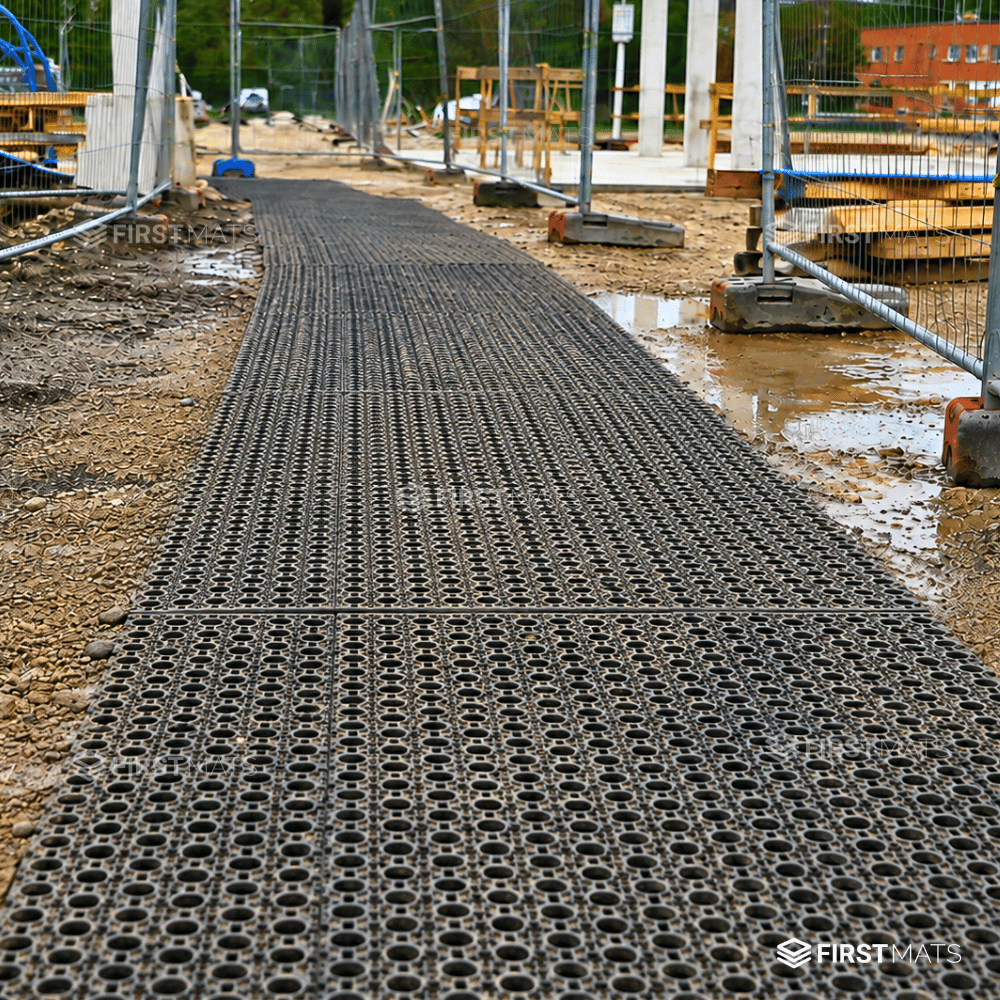
This heavy-duty rubber mat features drainage holes that allow mud and water to pass through, preventing a slippery surface at the doorstep and keeping the entrance area clear.
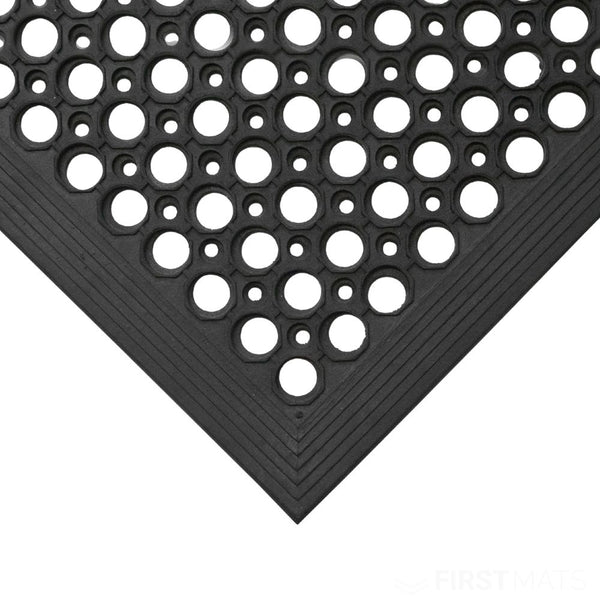
EntraGuard Rubber Door Mat with Holes
The EntraGuard Rubber Door Mat with Holes is built for tough outdoor use, combining durability with smart design. Its open hole pattern scrapes dirt and stones from shoes while allowing…
- Durable Natural Rubber: Long-lasting and wear-resistant material.
- Improved Drainage: Hole pattern removes water and debris efficiently.
- Slip Resistant: Meets EN 13552 Cat R10 standards for safety.
- Temperature Resistant: Performs in extreme conditions from -20°C to +130°C.
From £19.45 + VAT
Indoor Cabin Mat
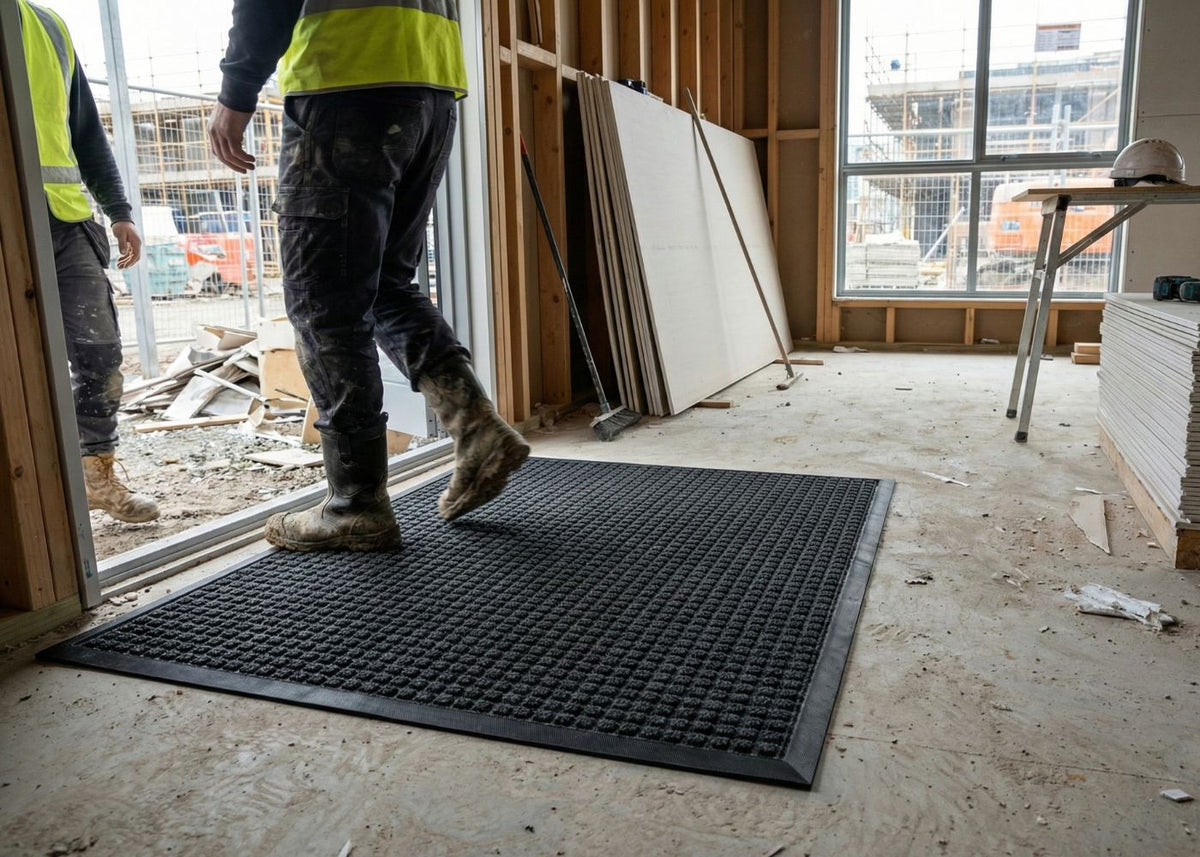
Once the worst of the dirt has been removed outside, the indoor mat captures finer particles and absorbs moisture to keep the floor dry.

Designed by First Mats specifically for this environment, it features a tough pile, crush-resistant fibres, and a non-slip rubber backing. It withstands constant boot traffic and is easy to clean, making it ideal for maintaining tidiness throughout the day.
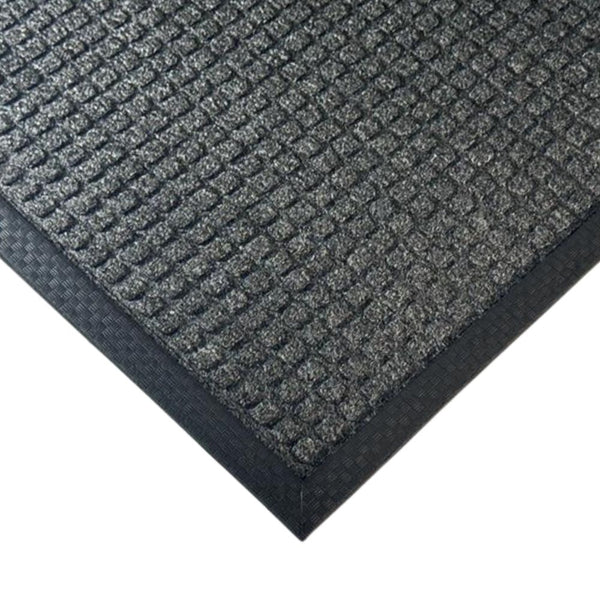
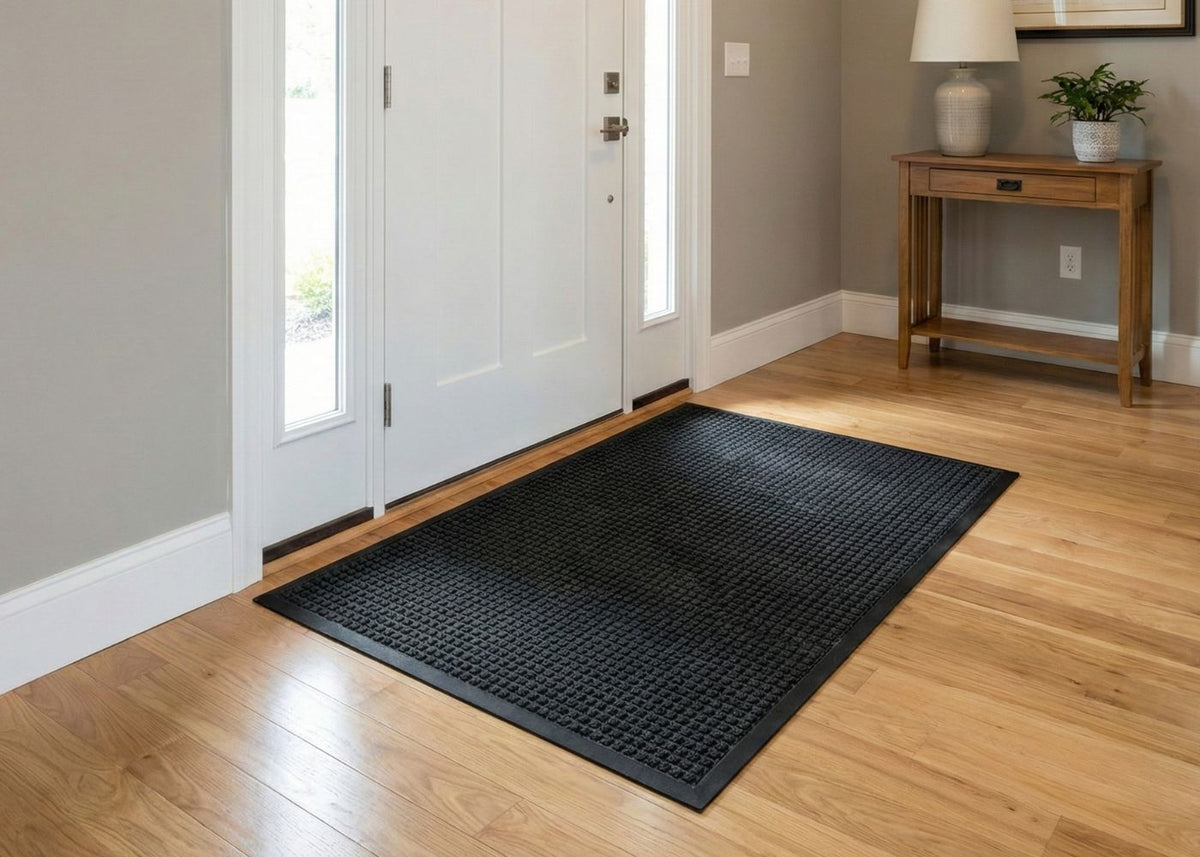
AquaProtect Super Absorbent Door Mat
The AquaProtect Super Absorbent Door Mat is made for entrances that have to deal with wet weather, muddy shoes, and heavy daily footfall. Holding up to 6 litres of water…
- Super Absorbent: Holds up to 6 litres of water per square metre.
- Highly Durable: 10.5mm thickness with Decalon fibres for long-lasting use.
- Non-Slip Design: Rubber backing prevents movement on smooth floors.
- Wheelchair Accessible: Reinforced border for added stability.
From £30.60 + VAT
How Mats Contribute to HSE Compliance
While legislation doesn’t require mats specifically, they are a highly effective control measure supporting compliance in several areas:
- Slip prevention: reduces standing water and mud on internal floors
- Clean welfare facilities: supports CDM expectations for accessible, hygienic welfare spaces
- Good housekeeping: helps maintain tidy, obstruction-free walkways
- Risk reduction: should be included in a site-specific risk assessment as a mitigation tool
Practical Tips for Keeping Site Cabins Clean
- Place outdoor mats on a level surface to maximise scraping efficiency
- Inspect mats daily and shake or wash them as needed
- Use a vacuum or hose to remove embedded dirt from indoor mats
- Replace mats that become overly worn or lose scraping ability
- Consider adding signage to encourage workers to wipe their boots
Conclusion
Clean, safe, and compliant site cabins rely on more than regular tidying, a robust matting system is essential. By choosing site cabin mats built for heavy-duty environments, site managers can significantly reduce dirt, improve safety, and stay aligned with HSE expectations.
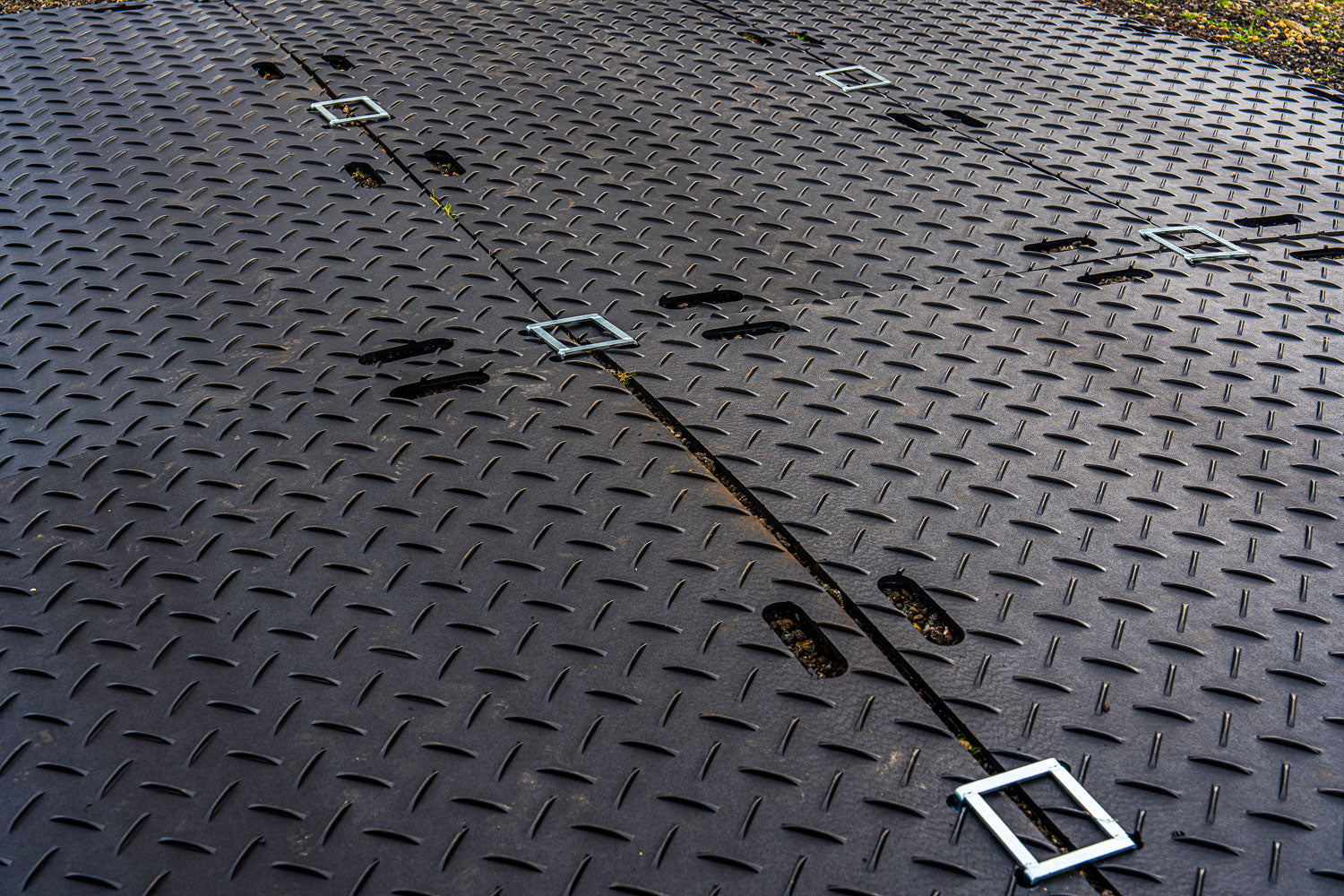
With options like the Heavy-Duty Site Cabin Mat and SiteGuard Mud Control Mat, First Mats provides reliable products designed for the demanding conditions of construction and demolition sites.
If you need guidance on choosing the right mat for your site, our team is always happy to help.