Buying Guides
The Best Mats for Schools, Universities, and Other Education Institutes

Schools, colleges, universities, and academies all have one thing in common: high footfall. From pupils rushing between lessons to staff, visitors, and parents coming and going throughout the day, education buildings place heavy demands on their flooring. Choosing the right matting plays an important role in keeping floors clean, reducing slip risks, and meeting legal responsibilities.
However, not all mats are suitable for education settings. This guide explains where mats are most useful in schools and higher education environments, what to look for when choosing them, and why the right choice matters for safety and liability.
Why Matting Is Essential in Education Environments
Education buildings experience constant movement, often in wet or muddy conditions. Children and students are naturally less cautious than adults, particularly during busy changeovers or break times. Without effective matting, moisture and debris are quickly spread throughout corridors, entrances, and communal areas.
Well-chosen mats help to:
- Reduce slip risks by keeping floors dry
- Protect flooring from wear and damage
- Support a cleaner, more hygienic environment
- Demonstrate reasonable care under health and safety law
For schools and universities, matting is not just a practical consideration — it is part of a wider duty of care.
Entrance Mats for Schools and Universities
Handling Heavy Foot Traffic
School and university entrances are the first and most important place to install matting. These areas must cope with hundreds, sometimes thousands, of people every day. Mats used here need to be hard-wearing, stable, and capable of performing consistently over time.
Look for entrance mats that are designed specifically for high-traffic environments. They should sit flat, resist movement, and maintain their structure even with constant use. The School Mats range from First Mats includes options designed with education buildings in mind.

Water Absorption and Floor Safety
Wet shoes are one of the leading causes of slips in education buildings. Effective entrance mats must be able to soak up significant amounts of water to prevent it being tracked inside.
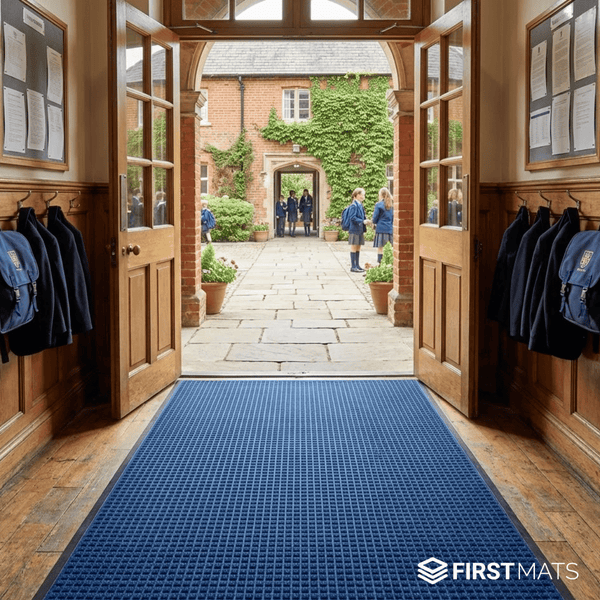
Products such as the Ultra-Absorbent School Entrance Mat are designed to capture moisture quickly, helping to keep internal floors dry and safer during wet weather. For larger entrances, made to measure school entrance mats ensure full coverage, eliminating gaps where water can bypass the mat entirely.
Ultra-Absorbent School Entrance Mat
The Ultra-Absorbent School Entrance Mat is designed to keep school floors cleaner, drier, and safer, even on the wettest days. Made from durable Decalon fibres with a 10.5mm thickness, it…
- Super Absorbent: Holds up to 6 litres of water per square metre.
- Highly Durable: 10.5mm thickness with Decalon fibres for long-lasting use.
- Non-Slip Design: Rubber backing prevents movement on smooth floors.
- Wheelchair Accessible: Reinforced border for added stability.
From £30.60 + VAT
Outdoor Entrance Matting
For best results, many schools and universities use a two-stage approach: outdoor mats to scrape off dirt and grit, followed by indoor absorbent mats to deal with moisture.
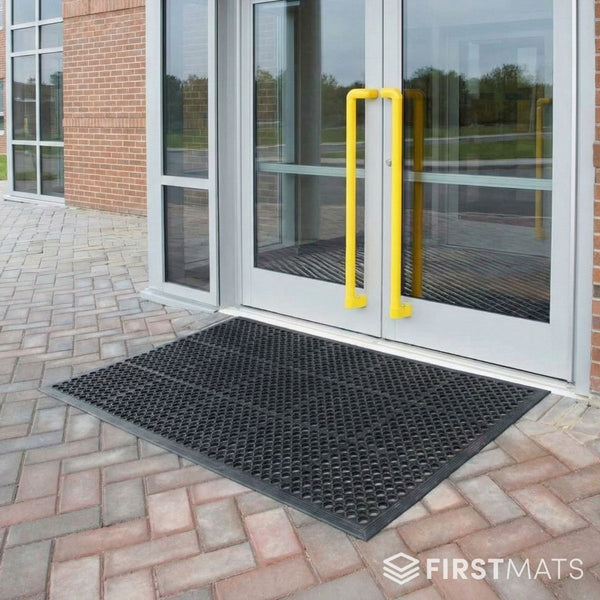
Durable outdoor school entrance mats made from rubber are ideal for exposed areas, particularly where mud and debris are common.
Outdoor Rubber School Entrance Mat
The Outdoor Rubber School Entrance Mat is built to keep dirt, stones, and water out of your school, even during the wettest months. Made from heavy-duty natural rubber, it's tough…
- Durable Natural Rubber: Long-lasting and wear-resistant material.
- Improved Drainage: Hole pattern removes water and debris efficiently.
- Slip Resistant: Meets EN 13552 Cat R10 standards for safety.
- Temperature Resistant: Performs in extreme conditions from -20°C to +130°C.
From £19.45 + VAT
Matting for Other High-Risk Areas
Changing Rooms and Sports Facilities
Changing rooms, sports halls, and poolside areas are naturally prone to moisture. Non-slip matting in these spaces helps reduce slip risks while providing a more comfortable surface underfoot.
Mats used here should be water-resistant, easy to clean, and suitable for frequent washing or hose-down cleaning.
Outdoor Paths and Play Areas
Slippery or muddy outdoor walkways can pose a risk, particularly during winter months. Anti-slip outdoor matting helps create safer routes between buildings and is especially useful in temporary problem areas where resurfacing is not practical.
Canteens and Dining Areas

School and university canteens benefit greatly from well-placed matting. Mats near serving areas help contain small spills, reduce the spread of food debris on footwear, and support better hygiene standards.
Containing contamination at source also makes cleaning easier and helps prevent hazards spreading into corridors and classrooms.
Custom Size Canteen Floor Mat
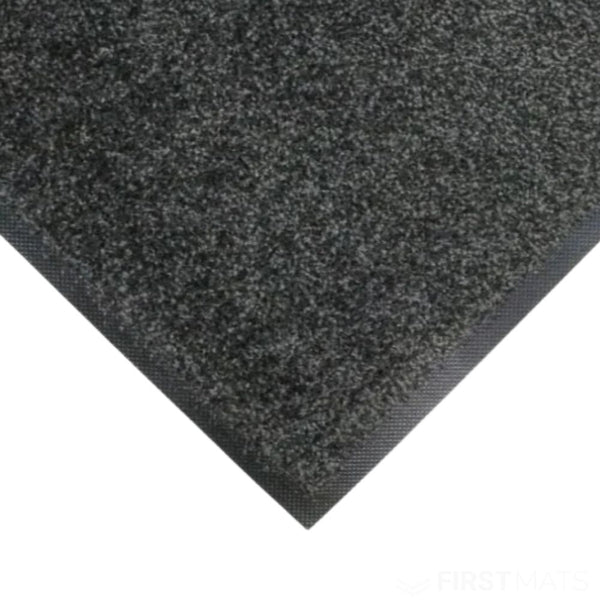
The Custom Size Canteen Floor Mat is designed for canteens that need reliable floor protection in specific areas where standard mat sizes simply don’t fit. Ideal for entrances, food counters,…
- Versatile Floor Matting: Ideal for canteen entrances, serving aisles, and walkways.
- Custom Size Options: Available in widths from 50cm to 150cm and lengths from 100cm to 550cm.
- Superior Absorption: Traps moisture and dirt to keep shop floors clean.
- Durable & Long-Lasting: Heavy-duty construction withstands high foot traffic.
From £0.83 + VAT
Legal Responsibilities and Duty of Care
Schools and education providers have clear legal responsibilities under the Occupiers’ Liability Act 1957, which requires them to take reasonable care to ensure visitors are safe while using their premises. This duty is particularly important in schools, where it is recognised that children may not take the same level of care as adults.
Failure to manage slip risks can have serious consequences. In 2021, a teacher was awarded compensation after slipping at a school event, where the absence of non-slip matting was cited as a contributing factor in the case. You can read more about this school slip compensation case.
Installing appropriate matting in known risk areas is a clear, visible way of demonstrating reasonable care.
Choosing the Right Mats for Education Settings

When selecting mats for schools, colleges, or universities, consider the following:
- Traffic levels: Entrances and corridors require heavy-duty construction
- Moisture control: Absorbent mats are essential for internal entrances
- Slip resistance: Particularly important in wet or food-handling areas
- Coverage: Mats should be large enough to be effective, especially at main entrances
- Maintenance: Mats should be easy to clean and quick to dry
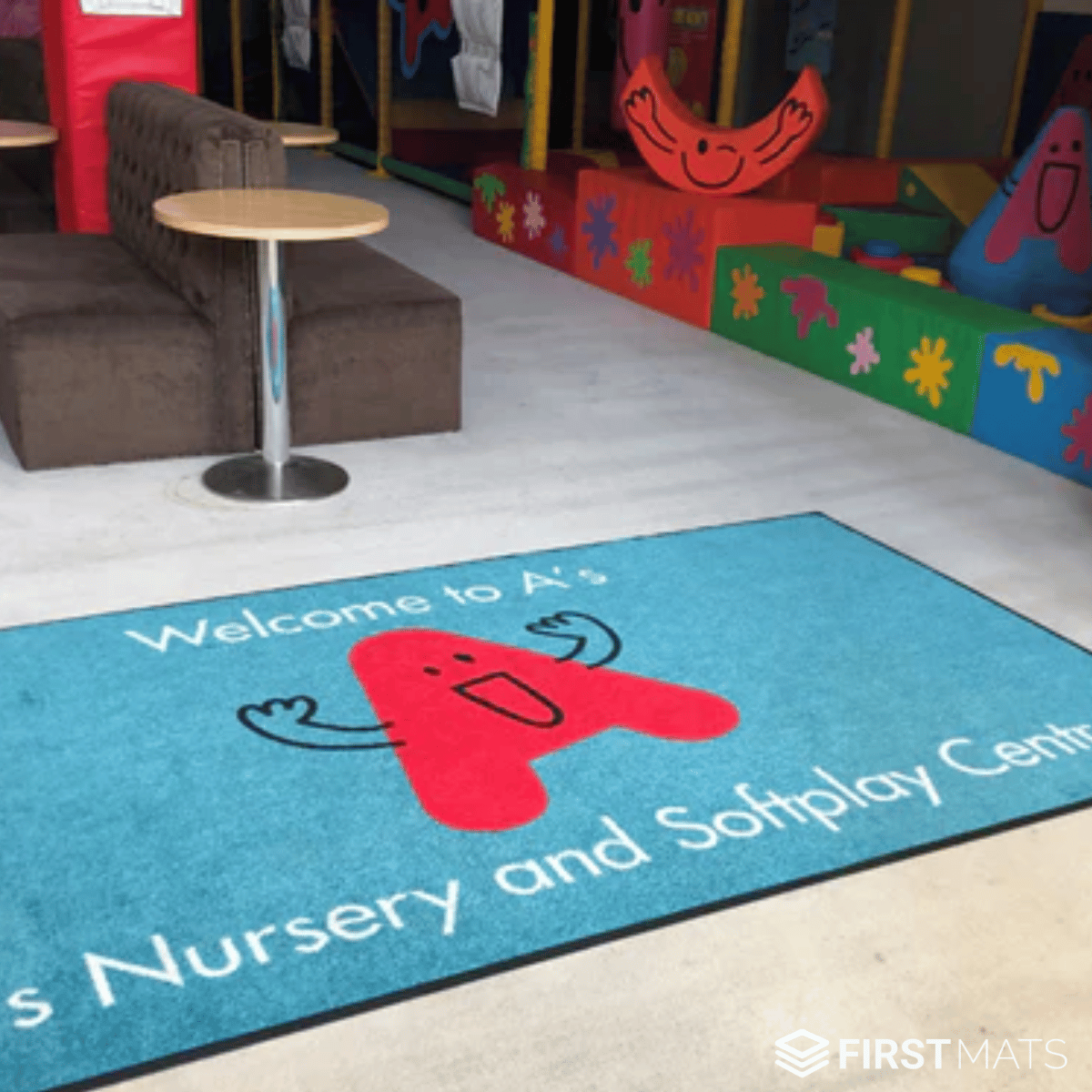
For branding and identity, school logo mats are also popular in reception areas, combining practical performance with a professional first impression.

School Logo Mats
School Logo Mats: Enhance Your School's Entrance First Mats is the premier choice for school logo mats, offering an outstanding way to promote your educational institution's identity right from the…
- Customisable Design: Feature your school’s logo and colours.
- High-Traffic Durability: Built to withstand daily use in busy entrances.
- Slip-Resistant Backing: Ensures stability on various floor surfaces.
- Machine Washable: Easy to clean for long-lasting performance.
From £59.00 + VAT
A Smarter Approach to Safer Floors
From primary schools to large university campuses, matting plays a vital role in maintaining safer, cleaner environments. The key is understanding that different areas require different types of matting, and that performance matters far more than appearance alone.
By choosing mats designed for education environments, facilities teams can reduce slip risks, protect their buildings, and meet their duty of care with confidence. The right mats are a simple but effective step towards safer floors across the entire campus.