Advice
How to Clean Rubber Mats and Rubber Flooring
Rubber mats and rubber flooring are usually safest to clean with a simple method first: remove dry dirt, then wash with warm water and a small amount of mild soap or a suitable neutral cleaner. Use the tool that matches the job: a cloth for spots and edges, a mop for larger fitted floors, and a soft-bristled brush for textured mats or dirt worked into the surface. This guide explains what changes between loose mats and fixed rubber flooring, which cleaners and tools are usually the safest starting point, what to avoid, and when cleaning stops being worth the effort.

A rubber entrance mat full of grit needs cleaning without making the area slippery or damaging the surface. The safest default for rubber matting and rubber flooring is to remove loose debris first, then clean with warm water and a small amount of mild soap or a suitable neutral cleaner, using a cloth, mop or soft-bristled brush depending on the surface. Get it wrong and you can leave residue, trap moisture underneath, or shorten the life of the mat or floor. This guide shows the day-to-day method, what changes between loose mats and fitted floors, what to avoid, and when deeper cleaning or replacement makes more sense.
Choose the safest basic method first
For most workplace matting and floors, a simple routine is the right one. Start dry. Sweep, vacuum or shake off loose dirt before you add any water. That stops grit turning into an abrasive paste when you start scrubbing.
After that, use warm water with a small amount of mild soap or a cleaner the manufacturer says is suitable. Keep the mix light. You want enough cleaning action to lift everyday dirt, not a strong residue left on the surface.
Which tool to use
-
Use a microfibre cloth for spot cleaning, edges, corners and smaller mats.
-
Use a mop for fitted flooring and other larger sealed areas.
-
Use a soft-bristled brush for textured mats, open-hole mats, or dirt that has settled into the pattern.
Work the cleaner across the surface, rinse or wipe away the dirty water, then let the area dry properly before full use. If the floor is still damp, treat it as a slip risk until it is dry enough for safe foot traffic.
How to clean loose rubber mats
Loose mats are easier to clean well because you can get to the edges and, if practical, the underside too. That matters in entrances, kitchens, workshops and washdown areas where dirt and moisture build up underneath as well as on top.
-
Lift the mat if it is safe and practical to do so.
-
Remove dry debris from the top surface and from the floor beneath.
-
Wash the mat with warm water and mild soap or a suitable neutral cleaner.
-
Use a cloth for light dirt or a soft-bristled brush where mud, grit or debris has settled into the texture.
-
Rinse off any residue.
-
Dry both the mat and the floor underneath before putting it back.
Cleaning both sides helps stop trapped moisture and dirt being ground into the floor below. It also gives you a chance to check whether the edges are still lying flat and whether the mat is still worth keeping in service.

Outdoor rubber entrance mats
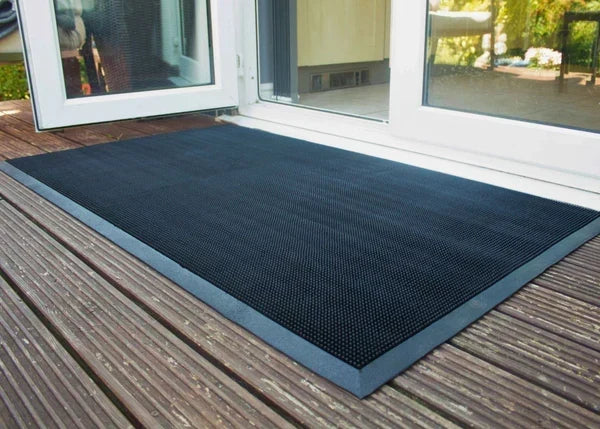
Outdoor entrance mats often collect heavier mud, stones and leaf debris than indoor mats, so the dry-clean stage matters more. Knock out loose debris first, then wash down with controlled water and a soft brush if needed. The aim is to clear the surface without leaving the surrounding entrance slick.
If you are choosing replacements for weather-exposed thresholds, it helps to look at purpose-made options in the outdoor entrance mat range.
One example is the EntraGuard Rubber Door Mat with Holes for outdoor entrances that need straightforward routine cleaning.
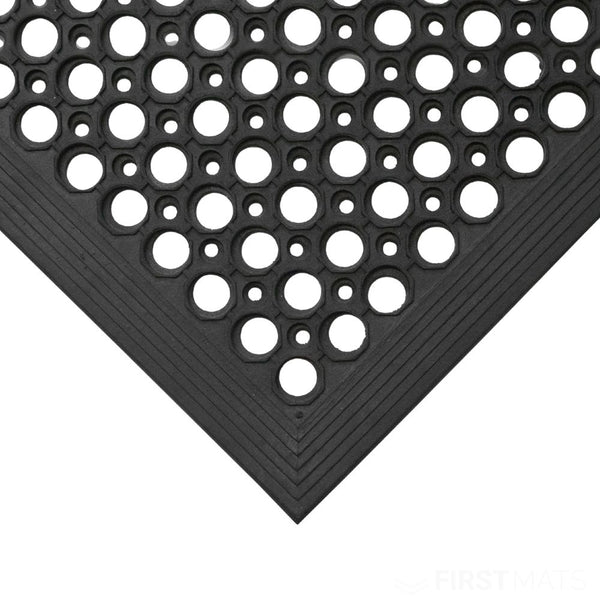
EntraGuard Rubber Door Mat with Holes
The EntraGuard Rubber Door Mat with Holes is built for tough outdoor use, combining durability with smart design. Its open hole pattern scrapes dirt and stones from shoes while allowing…
- Durable Natural Rubber: Long-lasting and wear-resistant material.
- Improved Drainage: Hole pattern removes water and debris efficiently.
- Slip Resistant: Meets EN 13552 Cat R10 standards for safety.
- Temperature Resistant: Performs in extreme conditions from -20°C to +130°C.
From £19.45 + VAT
If door clearance is tight, profile is one of the things to check before you buy. Make sure the mat can be lifted, cleaned and put back without catching on the door or threshold.
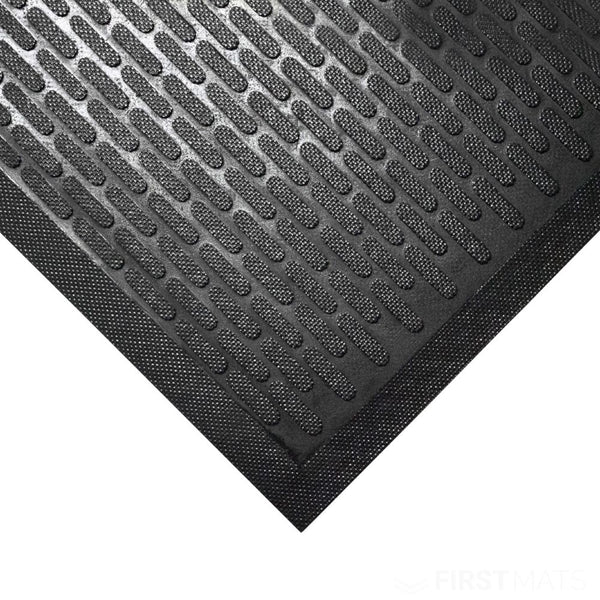
Low-Profile Outdoor Rubber Door Mat
The Low-Profile Outdoor Rubber Door Mat is a tough, practical choice for keeping dirt and debris out of your building. Made from 100% weatherproof nitrile rubber, it’s built to withstand…
- Durable Material: 100% nitrile rubber construction for maximum durability.
- Raised Scraper Pattern: Removes dirt, stones, and moisture from footwear.
- Non-Slip Backing: Keeps the mat securely in place, reducing movement.
- Crush Resistant: Maintains its shape even under heavy foot traffic.
From £38.82 + VAT
How to clean fitted rubber flooring
Fitted flooring needs a bit more control because you cannot lift it, and you do not want water pushed into edges, joins or surrounding finishes. Use less water than you would on a loose mat. Damp cleaning is usually the safer route for day-to-day care.
Sweep or vacuum first, then mop with warm water and a mild soap or suitable neutral cleaner. Change dirty water before it starts spreading soil back across the floor. For marks near skirtings, equipment legs or corners, use a cloth rather than over-wetting the area with the mop.
If the floor has a textured surface and holds dirt in the pattern, a soft-bristled brush can help, but keep the water controlled and lift the dirty solution away as you go. Do not leave puddles sitting on the floor.
Busy areas and cleaning frequency
In high-traffic workplaces, clean as often as the soil level demands rather than leaving it to a fixed long interval. Entrances in wet weather, kitchen work lines, gym routes and warehouse walkways often need attention daily or more than once in a day.
If you are comparing formats for different work areas, the wider rubber matting collection is a useful place to look at loose mat options alongside fitted-flooring alternatives.
What to avoid on rubber surfaces
The safest rule is not to jump straight to strong chemicals or aggressive cleaning methods. Some products can discolour rubber, dry it out, damage the finish, leave a slippery residue, or affect the backing or surrounding floor. Suitability can vary, so check the care guidance for the specific mat or floor where you have it.
-
Avoid harsh solvents and other strong chemical cleaners unless the manufacturer says they are suitable.
-
Be cautious with bleach-heavy products, especially for routine cleaning.
-
Avoid abrasive pads or very stiff brushes that can mark the surface.
-
Do not flood fitted flooring with water.
-
Be careful with steam, machine scrubbing and pressure washing unless the product guidance says they are suitable.
If site policy requires disinfection, treat that as a separate step rather than assuming your normal disinfectant is safe for rubber. Some products may need rinsing afterwards, and some may not suit the surface at all.
Heavier soiling, grease and ingrained dirt
When a mat looks beyond a quick mop or wipe, do not start with the harshest product on the shelf. Repeat the basic method more thoroughly: dry debris first, warm water, mild soap or a suitable neutral cleaner, and a soft-bristled brush where dirt has worked into the texture.
For mud and ingrained dirt on open-hole or textured mats, lift the mat if you can and clean the full surface rather than only the visible top face. For greasy contamination, check the manufacturer instructions before using any stronger degreasing product, because compatibility can vary by rubber type and finish.
In wetter production areas, pay attention to any openings, textures and the underside during deeper cleans, because debris can collect where you do not see it at first glance.
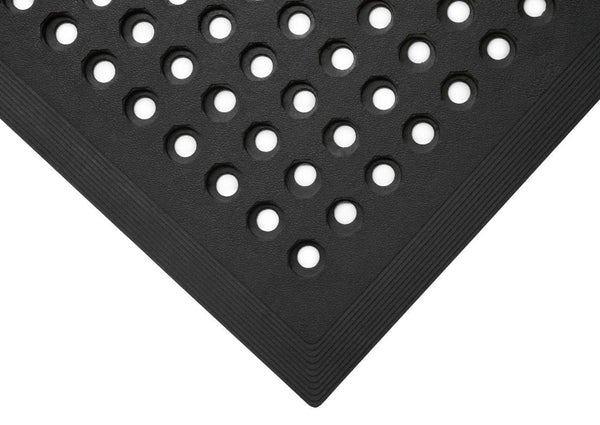
Heavy-Duty Rubber Anti-Fatigue Mat
Formerly known as the SturdySafe, this rubber mat is built to excel in demanding industrial environments, offering unmatched durability and safety. Constructed from a robust rubber mix with 50% recycled…
- Recycled Material: Made with 50% recycled rubber for sustainability.
- Durable Design: High wear resistance rated 5/5 for long-lasting performance.
- Slip Resistance: Textured surface with 22mm holes rated 3/5 for safety in wet and dry environments.
- Temperature Tolerance: Operates from -20°C to +130°C, ideal for extreme conditions.
From £58.55 + VAT
In food prep or wash areas, clean little and often rather than letting grease and dirt build up into the surface pattern. Early debris removal during the shift usually makes the end-of-day clean easier.
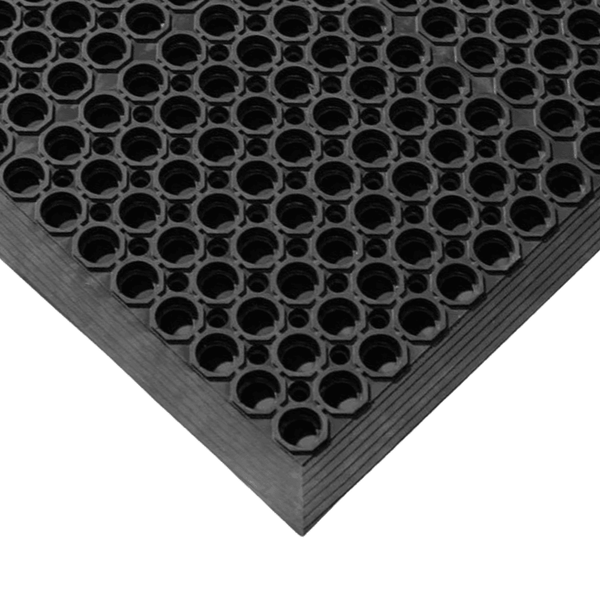
Kitchen Non-Slip Rubber Floor Mat
The Kitchen Non-Slip Rubber Floor Mat is a practical choice for busy commercial kitchens, offering comfort underfoot and reliable slip resistance in wet or dry areas. Made from durable natural…
- Natural Rubber Construction: Combines comfort and durability for intensive use.
- Honeycomb Surface: Enhances grip and fatigue resistance.
- Effective Drainage: Mat wells remove liquids to keep areas safe.
- Versatile Application: Suitable for wet or dry environments.
From £19.45 + VAT
When to dry, return or replace
Drying matters as much as washing. Before you put a loose mat back down, make sure the top, the underside and the floor beneath are dry enough for safe use. That helps stop slip issues, trapped moisture and dirt lines forming around the mat edge.
For fitted flooring, let the cleaned area dry before normal traffic returns, especially if people will be turning, carrying loads or stepping in from wet conditions.
Sometimes the right answer is replacement, not another attempt at restoration. Replace the mat if edges will not lie flat, the surface is breaking down, the backing is failing, or dirt and staining are no longer the real problem because the mat has stopped doing its job safely.
If you need a straightforward option for standing work areas, look for a format your team can clean as part of routine floor care.
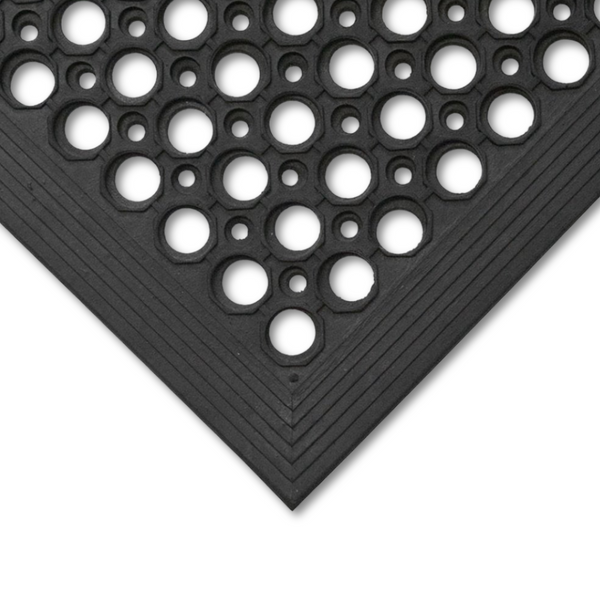
Non-Slip Rubber Anti-Fatigue Mat
The Non-Slip Rubber Anti-Fatigue Mat is a practical choice for busy workshops, factories, and wet work areas. Designed to provide reliable comfort and grip, it supports staff through daily standing…
- Swarf Management: Holes trap swarf and isolate debris for easy cleaning.
- Slip Resistant: Rated 4/5 for secure footing in wet and dry conditions.
- Anti-Fatigue Comfort: Reduces discomfort with a 4/5 fatigue rating.
- Durable Construction: Made from natural rubber for long-term reliability.
From £24.90 + VAT
Keep the cleaning method simple, check the product care guidance, and if the mat no longer sits safely, replace it before it creates more work than it saves.