Buying Guides
Are Nitrile Rubber Backed Mats Suitable for Hard Floors?
Nitrile rubber backed mats are often a good choice for hard floors, especially where you need a mat to stay put on tile, vinyl, laminate or sealed wood. The key is choosing a mat designed for hard-surface use, keeping the floor and backing clean, and checking whether your floor finish has any care restrictions. This guide explains where nitrile backing works well, where you need to be more careful, and what to compare before you buy so you avoid both sliding mats and floor-finish problems.

A hard floor at an entrance or inside doorway is exactly where mat backing matters most, because water, grit and foot traffic quickly show up any weakness. Yes, nitrile rubber backed mats are often suitable for hard floors and are commonly chosen where slip resistance matters, especially when the backing is flat and the mat is made for smooth surfaces. Get it wrong and you can end up with a mat that creeps, traps moisture underneath or leaves you worrying about the floor finish. This guide shows where nitrile backing works well, what to watch on wood, tile, vinyl and laminate, and which mat features matter before you buy.
What matters on a hard floor
On carpet, a mat can rely on the surface texture around it. On tile, vinyl, laminate or sealed timber, it has to do more of the work itself. You need the backing to grip the floor, lie flat and stay stable when people turn, stop or walk in with wet shoes.
That is why nitrile or other smooth-backed mats are often recommended for hard floors. A flat backing gives broad contact with the surface, which usually helps the mat sit more securely than a loose textile mat or one with a backing that is not intended for smooth floors.
That said, good grip is not the same as a blanket promise for every finish. Slip resistance depends on the whole setup: the floor surface, whether it is dry or wet, how clean the underside of the mat is, and whether cleaning residue or grit is trapped underneath.
How nitrile backing compares in real use
Why people choose nitrile
Nitrile-backed mats are commonly chosen because they are made to sit on hard floors without shifting too easily in day-to-day use. In busy entrances, receptions and utility areas, that stability matters as much as the absorbent surface on top.
They also tend to make sense where a mat is lifted, cleaned and put back into service regularly. For homes this might be a hallway or back door. For a facilities team it might be a main entrance with daily cleaning and steady footfall.
How they compare with other common backings
| Backing type | Often suitable on hard floors? | Main point to check |
|---|---|---|
| Nitrile rubber | Often yes | Check the mat is specified for hard floors and the floor finish has no restrictions |
| Smooth hard-floor backing | Often yes | Confirm what the backing material actually is and how it behaves with your floor |
| Vinyl or PVC backing | Can be suitable | Check finish compatibility carefully, especially on sensitive or high-value floors |
| Bare textile or very light mat | Often less reliable | More likely to move or ruck on a smooth floor |
| Cotton washable mat | Depends on construction | Grip can vary, especially once wet or after repeated washing |
The main takeaway is simple: nitrile is often a sensible hard-floor option, but you still need to check the exact mat and the exact floor. Do not buy on the word rubber alone. The backing construction matters.
Floor-by-floor guidance
Tile and stone
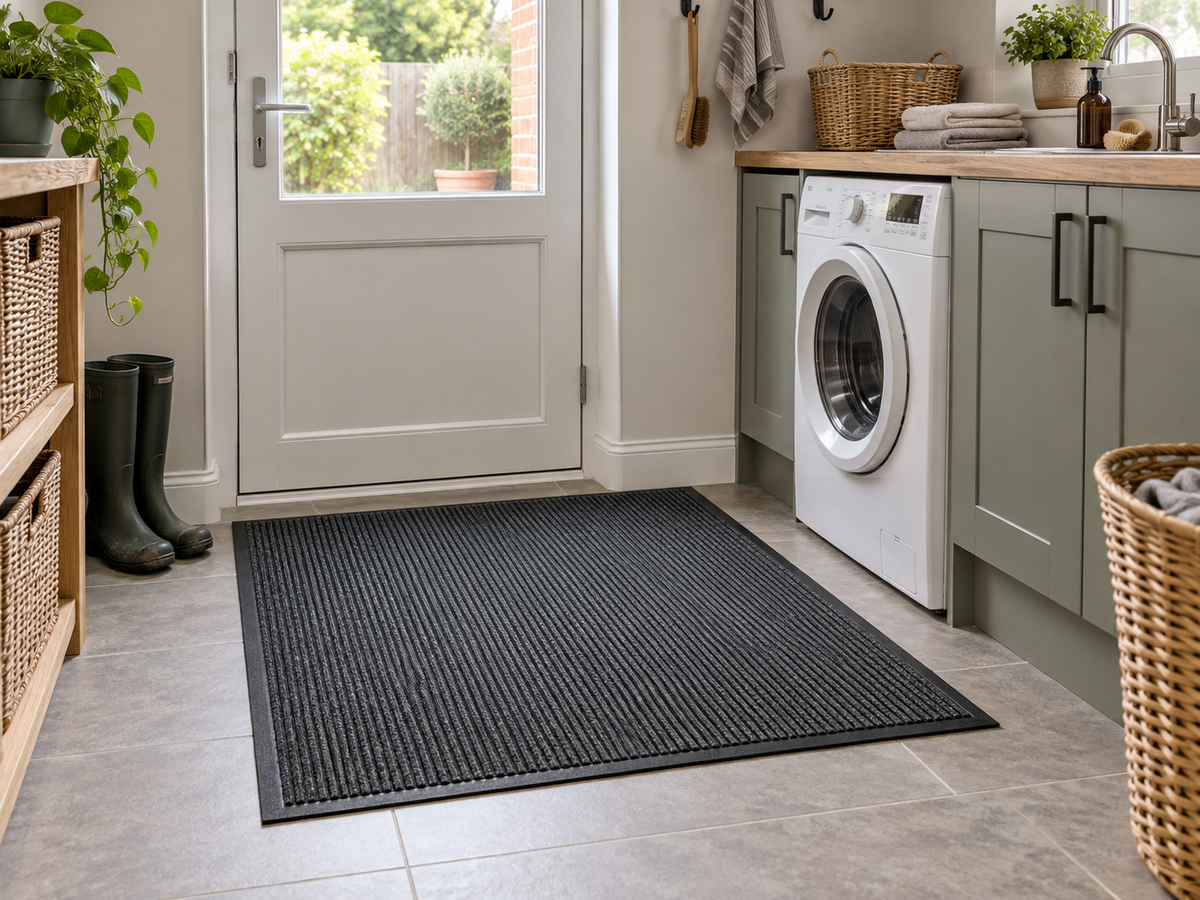
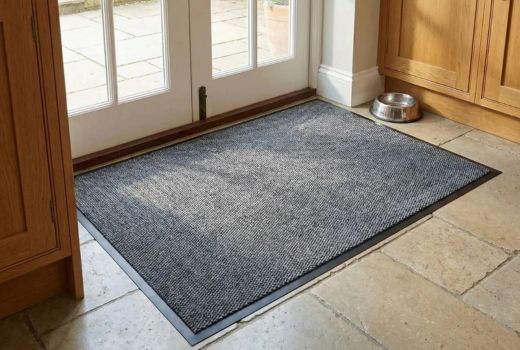
Nitrile-backed mats are often a strong fit on tile because the floor is smooth, often near an entrance, and can become slippery with tracked-in rain. A mat with a flat backing and absorbent top surface usually makes sense here. Keep the underside clean, because grit under the mat can affect both grip and the floor itself.

Vinyl and luxury vinyl
Vinyl floors are a common place to use hard-floor mats, but they are also a floor type where it is worth slowing down and checking care guidance. If the floor manufacturer gives restrictions on rubber-backed products, follow that first. If no restriction is given, a nitrile-backed mat designed for hard floors is often the safer route than a mat that slides about.
Laminate
Nitrile-backed mats can be suitable on laminate, especially at a hallway or internal entrance where staying in place matters. The caution is moisture. Laminate seams do not like water sitting around for long, so the job is not only to stop the mat sliding but also to lift it regularly, dry underneath if needed, and make sure the mat is absorbing enough for the traffic coming through.
Sealed wood
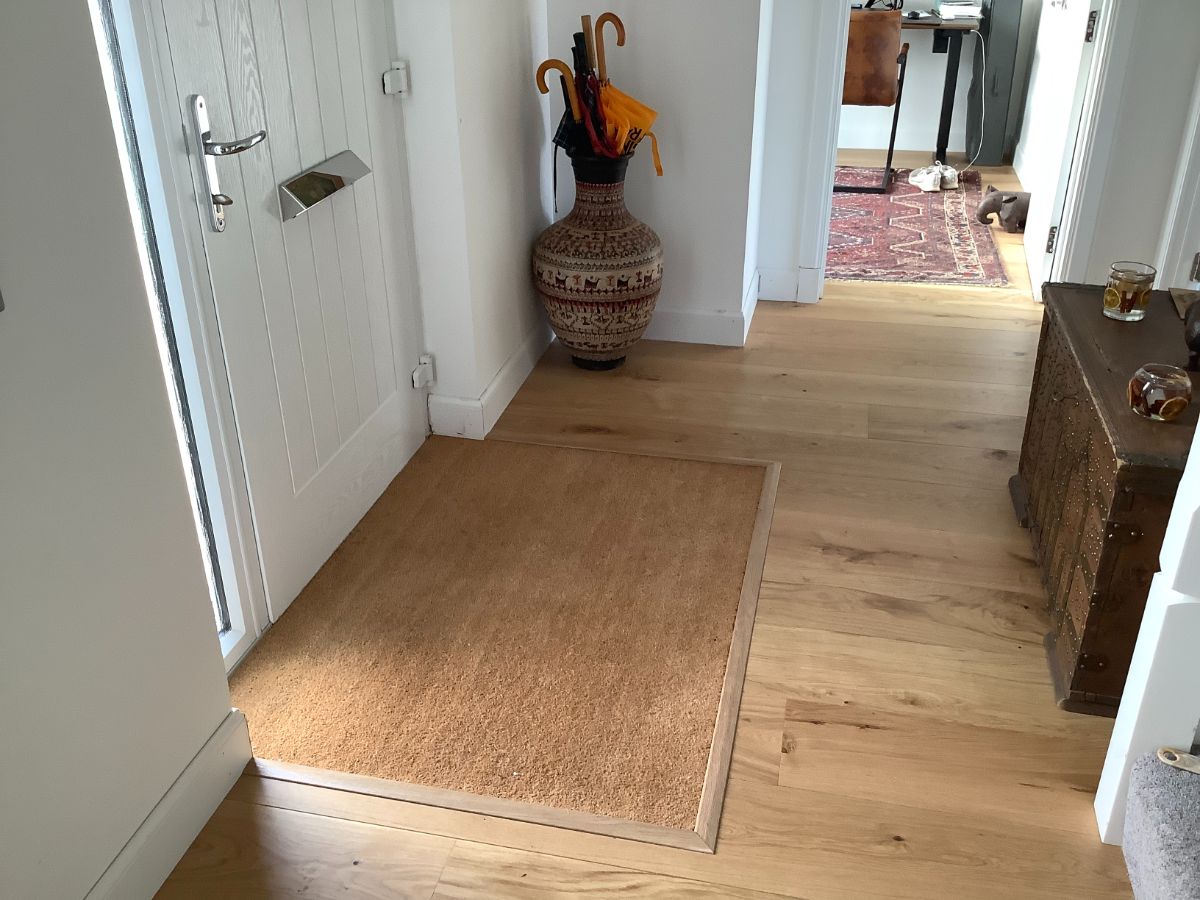
Sealed timber can work well with a nitrile-backed mat, but this is one of the floor types where finish compatibility matters most. If the finish is expensive, recently applied, delicate or difficult to replace, check the floor care guidance and test in a small, less visible area first. A mat that grips well is useful, but you do not want to leave it in one place for months without checking underneath.

Underfloor heating areas
Where hard floors are warmed from below, take extra care. Heat can change how both the floor and the mat behave over time. This is one of the areas where you should check the floor manufacturer's advice and the mat specification rather than assuming any rubber-backed mat will be fine.
What can go wrong if you choose badly
The usual worry is a mat sliding on the floor. That does happen with mats that are too light, too small for the doorway, or simply not made for smooth surfaces. A nitrile backing can help with that, but it is not the only risk.
The other issue is what happens under the mat. Water, dirt and cleaning residue can build up underneath any mat if it is left in place too long. On sensitive finishes, that can mean marking, dull patches or moisture problems. So even a well-chosen hard-floor mat needs routine lifting and cleaning.
This is why you should be careful with broad claims such as a mat being completely floor-safe or completely non-slip. Hard floors vary too much for that. A good mat reduces risk when it is correctly matched, well maintained and used on a compatible surface.
Which mat features matter most
-
A flat backing made for hard floors: this is usually the first thing to look for if your floor is tile, vinyl, laminate or sealed wood.
-
Enough absorbency for the entrance: if shoes are arriving wet, the top surface matters as much as the backing.
-
A size that matches traffic: a mat that is too short or too narrow often shifts more and leaves wet edges around it.
-
A low enough profile for the doorway: this helps the mat sit neatly and reduces the chance of a proud edge.
-
Easy routine cleaning: on hard floors, you need to be able to lift the mat, clean underneath and put it back without fuss.
If you are buying for a wetter entrance where people come in straight from outside, an absorbent indoor entrance mat is often the best companion to a grippy backing. The AquaProtect Super Absorbent Door Mat is the kind of option to look at when the floor regularly gets wet and you need the mat to deal with both water and traffic.
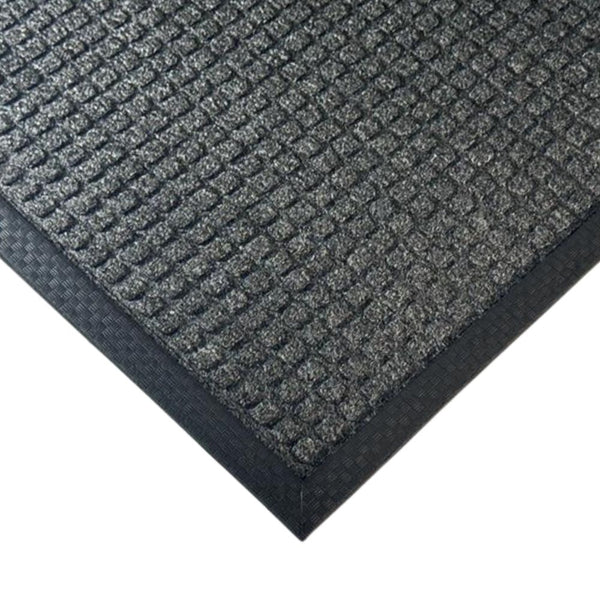
AquaProtect Super Absorbent Door Mat
The AquaProtect Super Absorbent Door Mat is made for entrances that have to deal with wet weather, muddy shoes, and heavy daily footfall. Holding up to 6 litres of water…
- Super Absorbent: Holds up to 6 litres of water per square metre.
- Highly Durable: 10.5mm thickness with Decalon fibres for long-lasting use.
- Non-Slip Design: Rubber backing prevents movement on smooth floors.
- Wheelchair Accessible: Reinforced border for added stability.
From £30.60 + VAT
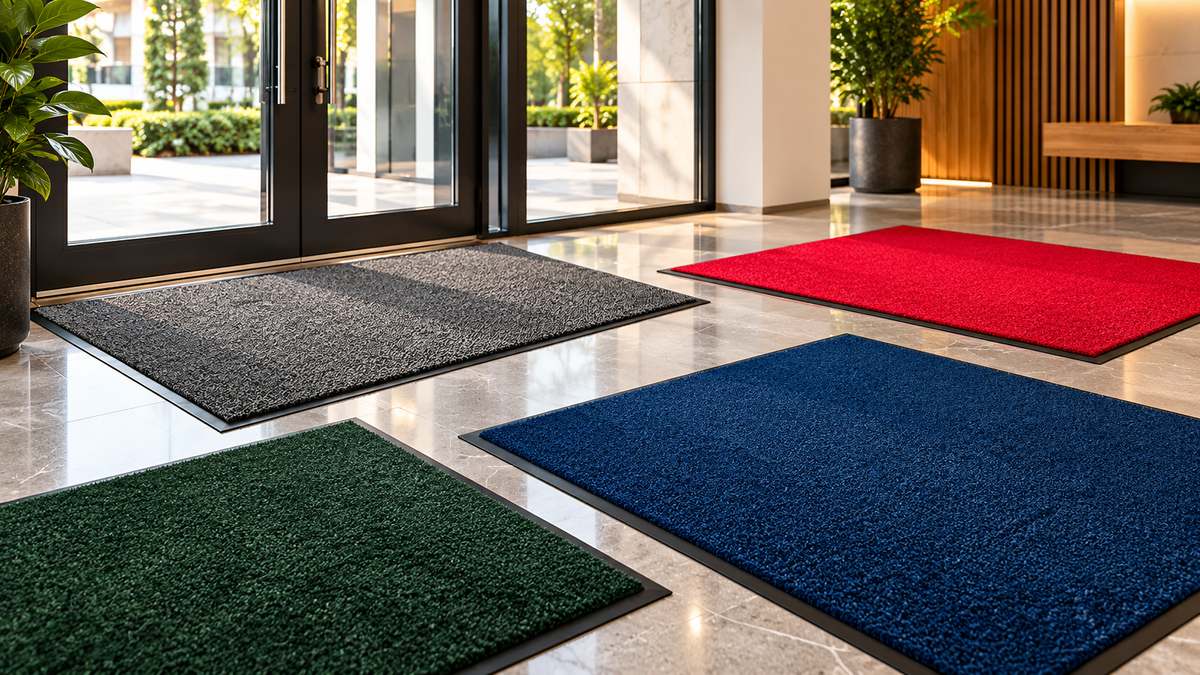
For a larger internal entrance or reception where coverage is just as important as backing stability, the EntryPlus Large Entrance Mat is worth a look. A bigger mat often performs better on hard floors simply because it gives people more steps on the surface before they reach the main floor area.
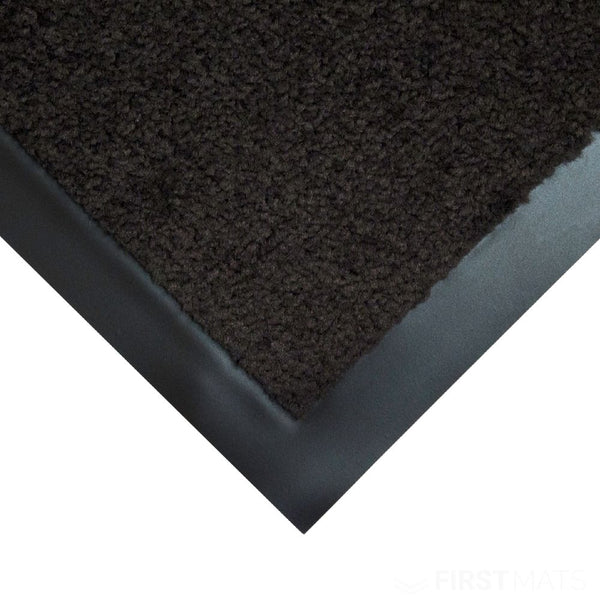
EntryPlus Large Entrance Mat
The EntryPlus Large Entrance Mat is a smart, practical entrance mat designed to keep larger doorways cleaner, safer and more welcoming. Ideal for homes, offices, schools and commercial buildings with…
- Ideal for Medium Traffic: Perfect for schools, offices, and public buildings.
- Solid colours and large sizes: Choose from four colours and sizes ranging from 60x90cm to 120x240cm.
- Durable Construction: Polypropylene fibres with a dense vinyl base for added longevity.
- Improves Cleanliness: Effectively traps dirt and water.
From £32.98 + VAT
If you are still comparing formats, it can help to browse the wider indoor entrance mat range once you know you need something suited to a smooth floor.
A simple buying checklist
-
Check what the floor actually is: tile, laminate, vinyl, LVT or sealed wood.
-
Look for a mat described for hard-floor or smooth-floor use.
-
Check the floor maker's care guidance if the finish is sensitive or high value.
-
Choose a mat large enough for the traffic and the amount of water coming in.
-
Lift and clean under the mat regularly, especially in wet weather or after floor cleaning.
-
If the floor finish is uncertain, test the mat in a small area first.
If you are at the point of choosing, the broader entrance mats collection is the sensible next place to compare backing style, absorbency and format.
For most hard floors, a nitrile rubber backed mat is a sound choice when you need better grip and everyday entrance performance, but the safest decision still comes from checking the floor finish, the moisture level and the exact mat construction. Pick the mat for the floor you actually have, not the label you hope will cover every surface.