Buying Guides
Engine Oil Trays Explained: What They Do and How to Choose the Right Size

A compact car can still need more than 4 litres of engine oil, while a 125cc motorbike may use around 1 litre. That is a useful reminder that tray size is not just about how big the vehicle looks.
If you are dealing with oil spots under a vehicle or machine, the right engine oil tray helps you catch drips before they spread across a floor, driveway or yard. The key is to match the tray to the way the oil lands, not just to pick the biggest litre figure you can find.
What an engine oil tray does
An engine oil tray, also called a drip tray, drip pan or maintenance tray, sits under a vehicle or machine to catch escaping oil. In everyday use, most people buy one for one of two jobs:
-
passive drip capture while a vehicle is parked
-
collecting drained oil during servicing or an oil change
Those two jobs are related, but they are not the same. A tray for parked leak capture needs the right footprint to sit under the actual drip point. A tray for maintenance needs enough room and capacity for fluid to drop into it cleanly while you work.
That is why litres alone do not tell the full story. A tray can have enough volume on paper but still miss the oil if the leak falls off-centre or spreads as it drops.

Why footprint matters as much as capacity
When oil drips from a sump plug, filter housing, engine casing or another low point, it does not always land neatly in the middle. The vehicle may be parked at a slight angle, the underbody may deflect the drip, or airflow and vibration may shift where it falls.
So, choose a tray that can hold the expected volume and also cover the likely drip area under the vehicle. In many cases, a wider or longer tray is more useful than a deeper one.
Look at these four sizing points
-
Footprint: Does it cover the real drip area, not just the point you think is leaking?
-
Edge height: Is there enough depth to contain drips without easy splash-out when you move it?
-
Low clearance: Will it slide under the vehicle without jacking or awkward positioning?
-
Handling: Can you remove, empty and clean it without making more mess?
If you are comparing options, it can help to look at the full range of oil drip trays and narrow them down by use case first, then by capacity.
How to estimate the right tray size
A tray does not need to match full engine oil capacity in every case. For passive drip capture, you are usually sizing for the amount likely to collect between checks, plus some margin. For maintenance, you may need capacity closer to the full drained quantity, depending on the task.
For parked vehicles with a drip or minor leak
-
Find the likely drip area under the vehicle.
-
Choose a tray footprint that covers that area with some extra room around the edges.
-
Estimate how much oil might collect before you next inspect or empty the tray.
-
Add margin so the tray is not close to full in normal use.
This is a cautious housekeeping method, not a fixed formula. The amount in the tray is not the same as the total oil the engine holds.
For oil changes or maintenance work
Check the vehicle or machine manual for the correct oil capacity and whether the stated amount changes with or without a filter. For example, Ford lists 4.6 L including the oil filter for one 1.0L EcoBoost engine, while Toyota lists 4.2 L with the filter for one 2024 Prius. Those are useful examples, but they are model-specific figures rather than a rule for all cars.
If you are draining oil during servicing, leave room for uneven flow and splash. Do not choose a tray that only just matches the stated oil capacity.
Choosing by vehicle type
Vehicle type gives you a starting point, but always check the actual machine and the likely drip pattern.
Motorbikes and scooters
Small bikes can have much lower oil capacity than cars. Honda lists 1.0 L for the CB125F, while larger models in its range vary upward, including 1.8 L for the CRF300L and 4.0 L for the X-ADV. That spread shows why one bike tray does not suit every motorcycle.
For smaller bikes, a compact tray can be enough if the drip point is predictable and space is tight. The Motorcycle Oil Drain Pan (2.5 Litre) is aimed at this kind of smaller-scale maintenance job.
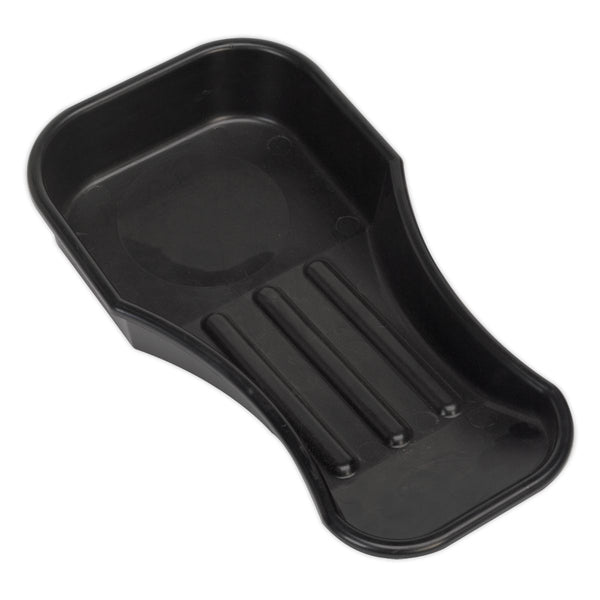
Motorcycle Oil Drain Pan (2.5 Litre)
Motorcycle Oil Drain Pan: Efficient, Clean, and Durable Motorcycle Oil Drain Pan (2.5 Litre): A must-have for motorbike enthusiasts and professional mechanics, this oil drain pan is designed for efficient…
- Designed for Motorbike Maintenance: Perfect for clean and efficient oil changes.
- Durable Polypropylene Construction: Built to last, ensuring long-term reliability.
- Thin, Contoured Design: Provides stability and prevents accidental spills.
From £15.28 + VAT
If you only need to catch occasional drips rather than carry out a full oil change, a smaller tray may be easier to place accurately under a narrow machine. The Small Oil Drip Trays (1.7L to 2.2L) can suit that kind of light-duty drip capture, provided the footprint matches the drip area.
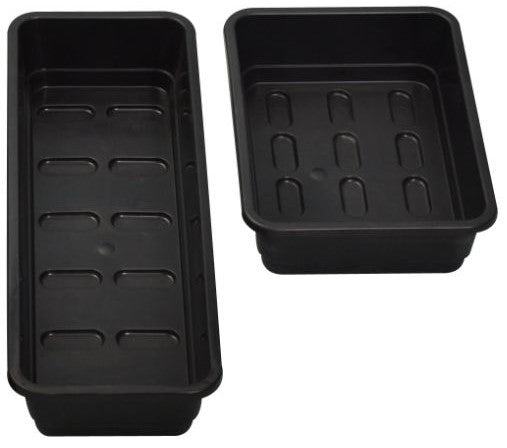
Small Oil Drip Trays (1.7L to 2.2L)
Small Oil Drip Trays: Eco-Friendly, UK-Made, Easy Clean Small Oil Drip Trays (1.7L to 2.2L): These UK-manufactured trays are perfect for catching minor vehicle drips, ensuring a clean and oil-free…
- Eco-Friendly and Reusable: Made from recycled plastic, reducing waste and promoting sustainability.
- Ideal for Minor Drips: Perfect for catching small vehicle oil drips, keeping workspaces clean.
- Available in Two Sizes: Choose between 1.7L (Small) and 2.2L (Narrow) for your specific needs.
From £14.86 + VAT
Cars and vans
Many cars sit in the rough 4 to 5 litre area, but exact fill volume varies by engine and by whether the filter is changed. For passive leak capture, the main issue is often floor coverage rather than total litres. A shallow tray can be easier to slide under lower vehicles where clearance is limited.
The Shallow Oil Drip Trays (9L to 15L) are worth considering when you need more footprint under cars or light vans without too much tray height.
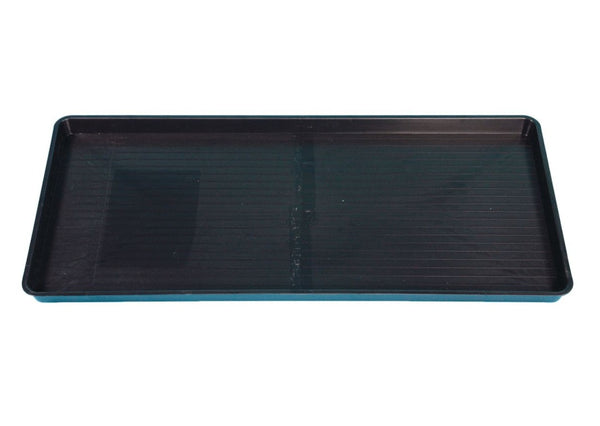
Shallow Oil Drip Trays (9L to 15L)
Shallow Oil Drip Trays: Durable, Eco-Friendly & Versatile Shallow Oil Drip Trays (9L to 15L): These cost-effective and efficient trays are designed to catch drips from cars and machinery, making…
- Low-Profile Design: At just 5cm high, these trays fit easily into tight spaces.
- Durable and Eco-Friendly: Made from recycled plastic, offering long-lasting use.
- Available in Three Sizes: Choose from 9L, 12L, or 15L capacities to suit your needs.
From £17.86 + VAT
For maintenance work where you want more volume in hand, the Standard Engine Oil Drain Pan (4 Litre) or the 16 Litre Oil Drain Pan with Pouring Lip may be more suitable depending on the vehicle and job. Check the required capacity against the actual vehicle data first.
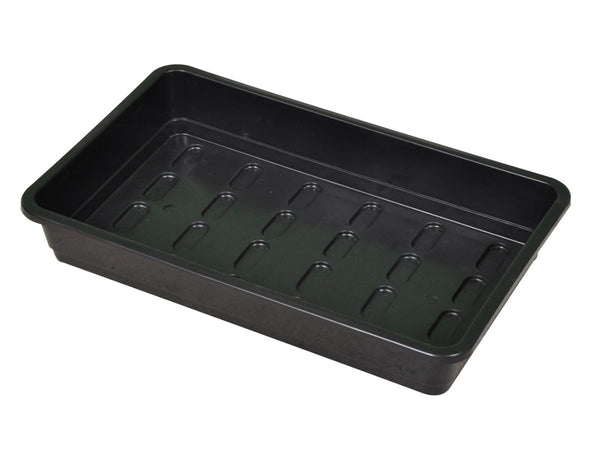
Standard Engine Oil Drain Pan (4 Litre)
UK-Made Standard Engine Oil Drain Pan: Eco-Friendly & Efficient Standard Engine Oil Drain Pan: This UK-made, eco-friendly product is designed to efficiently catch drips and oil leaks from your vehicle's…
- Eco-Friendly and Reusable: Made from durable recycled plastic, reducing environmental impact.
- Efficient Oil Capture: The wide base ensures spills are contained, keeping your workspace clean.
- 4-Litre Capacity: Large enough to handle engine or transmission oil leaks with ease.
From £15.65 + VAT
A larger maintenance tray can also make sense where several vehicles are serviced in one workshop and you want more room for draining without needing to decant straight away. The 16 Litre Oil Drain Pan with Pouring Lip is one option in that category.
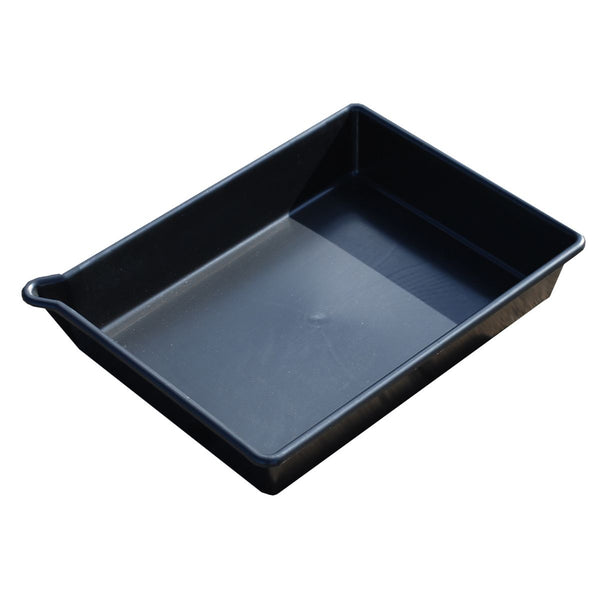
16 Litre Oil Drain Pan with Pouring Lip
16 Litre Oil Drain Pan: Efficient, Clean, and Eco-Friendly 16 Litre Oil Drain Pan with Pouring Lip: This robust and recycled plastic pan is your ideal solution for a clean…
- Large 16-Litre Capacity: Holds up to 16 litres of oil, ensuring efficient spill control.
- Integral Pouring Spout: Designed for mess-free transfer of oil into containers.
- Eco-Friendly and Durable: Made from robust recycled plastic, built to last.
From £21.35 + VAT
HGVs, plant and larger machinery
Be more cautious here. The research reviewed did not find an authoritative generic sizing rule for HGVs, plant or similar equipment. That means a simple tray-by-vehicle-category table would be misleading.
For larger machinery, start with the actual leak point, the inspection interval and the machine's own service data. If the leak is active, widespread or recurring, a basic tray may only be a short-term housekeeping measure. Some machines may need a larger footprint, more frequent checks, or a site-specific containment approach.
Where a longer capture area is needed under machinery or larger vehicles, the Long Oil Drip Trays (18L to 28L) may be a better fit than a compact square tray.
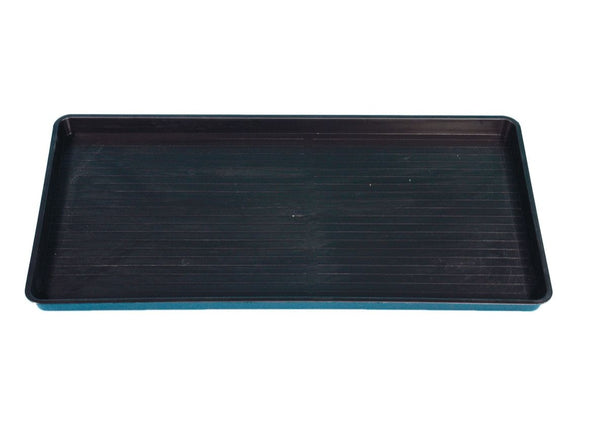
Long Oil Drip Trays (18L to 28L)
Long Oil Drip Trays: Eco-friendly, Durable & Versatile Long Oil Drip Trays: These trays are designed for garages and workshops, providing a clean and mess-free workspace by catching oil drips…
- Designed for Large Spill Areas: Perfect for catching drips from cars and machinery in garages and workshops.
- Eco-Friendly and Durable: Made from recycled plastic for long-lasting use.
- Available in Three Sizes: Choose from 18L, 25L, or 28L capacities to suit your needs.
From £29.76 + VAT
Material, cleaning and disposal checks
Do not assume any plastic tray is suitable for engine oil just because it looks similar to another model. Check the product's technical data and confirm that the material is suitable for engine oil before you buy. This matters even more if the tray will be used regularly or for longer contact times.
Used engine oil should be handled carefully. The HSE advises avoiding unnecessary skin contact with used engine oil and using protective clothing where needed. In practice, that means emptying trays carefully, cleaning them before residue builds up, and transferring waste oil into the correct container for disposal through the proper route.
If a tray keeps filling, the leak needs attention. A tray helps contain drips and protect the area underneath, but it is not a repair. Check the source of the leak and sort the fault before a minor mess turns into a bigger maintenance problem.
A simple buying checklist
-
Decide whether you need passive drip capture or a maintenance tray for oil changes.
-
Find the real drip area under the vehicle or machine.
-
Choose footprint first, then capacity and edge height.
-
Allow margin for the amount that may collect between checks.
-
Confirm the tray material is suitable for engine oil from technical data.
-
Think about how you will slide it in, remove it, empty it and clean it.
-
If the leak is recurring or heavy, arrange repair rather than relying on the tray.
If you are choosing between several tray sizes, start with the drip pattern and clearance under the vehicle, then work back to capacity.