Buying Guides
What Is a Leak Diverter Kit and When Should You Use One?

HSE says contamination is involved in almost all slip accidents, including rainwater. So if a roof or ceiling leak starts during operating hours, the issue is not only the water coming through the ceiling. It is also the wet floor, the spread of water, and the risk of that water reaching stock, equipment or busy walkways.
A leak diverter kit is a temporary way to catch water from a roof or ceiling leak and direct it into a controlled collection point. For facilities managers and maintenance teams, it can be a practical step when you need to contain an active leak quickly while arranging a proper repair.
What a leak diverter kit is
In simple terms, a leak diverter kit is a suspended tarp or funnel system that catches water over a wider area than a bucket can manage. The water is then channelled through a hose into a bucket, container, drain or another suitable discharge point, depending on the site and the kit specification.
This makes it a temporary containment tool rather than a repair. It buys time, helps keep water off the floor, and gives you more control over where that water ends up.
Some kits are available in different canopy sizes, from smaller options for localised leaks to larger ones for wider spread across a ceiling area. Some also use standard UK Hozelock fittings, which can make it easier to swap hose lengths or route water to a more suitable discharge point. Check the exact kit details before relying on those features.

If you need to compare available options, it can help to look at the range of leak diverter kits and accessories before deciding what size and setup best fits your site.
When a leak diverter kit is more useful than a bucket
A bucket can still be fine for a very small, predictable drip in a low-risk area that staff can monitor easily. The problem is that many commercial leaks do not behave that neatly. Water may track along a roof sheet, beam or ceiling grid before dropping. That can turn one apparent leak point into a much wider wet area.
A leak diverter kit is usually the better temporary option when you need more coverage, more control, or a safer way to move water away from where people work and walk.
Use a diverter kit when the leak is spreading
If water is dripping from several points across a ceiling tile, over a suspended ceiling grid, or along a wider patch above stock or equipment, a wider capture area matters. A bucket only catches what falls directly into it. A diverter can catch water across the affected area and direct it to one place.
Use a diverter kit when water is landing near people, stock or equipment
This is common in warehouses, factories, offices, supermarkets and shops. You might have water dripping over a supermarket aisle, onto pallet racking, near a workstation, or through a ceiling in a back-office corridor. In those situations, controlling the route of the water is often more useful than simply placing a bucket under the most obvious drip.

Use a diverter kit when the floor needs to stay as clear as possible
HSE guidance on slips makes the point clearly: wet floors are a serious hazard, and signs alone are not enough if people can still access the area. A diverter kit can help reduce the spread of water onto the floor while you put other controls in place, such as restricting access and using warning signage.
For wider wet-floor planning in operational spaces, this guide on how to deal with wet floors in warehouses is also useful.
Why temporary leak control matters
Leaked water should be treated as more than a housekeeping nuisance. HSE notes that slips and trips remain the single most common cause of major injury in UK workplaces, and that most slips happen on wet or dirty floors. That is the clearest reason to contain a leak quickly.
There is also an operational cost. Water can force you to close off aisles, move stock, stop work at a bench or machine, or deal with ceiling tiles and fittings affected by the leak. HSE has also reported that slip and trip accidents cost employers heavily, and one supermarket case study noted that a single slipping incident could cost £15,000 or more.
That does not mean a leak diverter kit will prevent every incident or all damage. It means fast containment is usually a sensible temporary measure while the source of the leak is inspected and repaired.
Where leak diverter kits are typically used
The most common settings are busy commercial and industrial buildings where a leak can quickly affect people, stock or operations.
-
Warehouses: for drips over aisles, packing benches, pallet racking or goods-in areas.
-
Factories: where water could reach workstations, materials or access routes around equipment.
-
Offices: especially where leaks show through suspended ceilings and start dripping into corridors, meeting rooms or open-plan areas.
-
Supermarkets and shops: where customer walkways, shelving and display areas need quick control.
-
Back-of-house areas: stockrooms, service corridors and plant-adjacent spaces where leaks still create slip and disruption risks.
Suspended ceilings are a common trigger for using a diverter kit because the visible drip point may not line up neatly with the source above. Water can travel across the ceiling void before it comes through, so a wider capture point is often more practical than trying to chase individual drips with containers.

What to check before choosing or deploying one
1. The footprint of the leak area
Look at how widely the water is spreading across the ceiling, not just where it hits the floor. If the leak covers a larger area, choose a larger tarp or funnel size that matches that footprint as closely as possible.
The 1m x 1m Leak Diverter Kit suits smaller affected areas where you need more control than a bucket can offer.
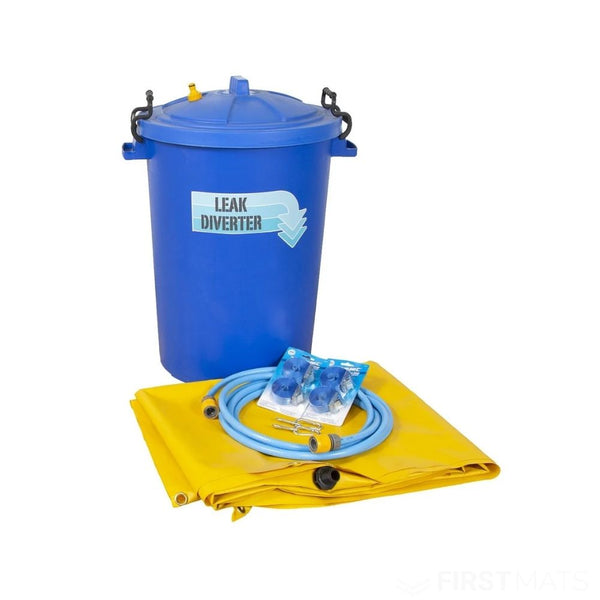
Small Leak Diverter Kit - 100cm x 100cm
The Small Leak Diverter Kit provides a fast and reliable way to manage unexpected ceiling leaks, keeping floors, equipment, and staff safe from water damage and slip hazards. With its…
- Complete Kit: Includes funnel tarp, reservoir, hose, and hanging straps.
- Easy Tool-Free Installation: Adjustable straps ensure quick and stable ceiling suspension.
- Durable and Waterproof: PVC funnel tarp provides reliable leak capture.
- Hose Compatibility: 5m hose with UK Hozelock fittings for secure water diversion.
From £104.52 + VAT
Where the spread is wider across a roof or ceiling section, a larger canopy can be more appropriate because it gives you a broader catchment area before the water is routed away.
The 3m x 3m Leak Diverter Kit is aimed at larger leak areas where a small catch point may not be enough.
Large Leak Diverter Kit - 300cm x 300cm
The Large Leak Diverter Kit allows you to take control of even the biggest leaks, keeping people, equipment, and stock safe from water damage. With its generous 300cm x 300cm…
- Complete Kit: Includes funnel tarp, reservoir, hose, and hanging straps.
- Secure Installation: Adjustable straps for quick, no-tool installation.
- Durable and Waterproof: PVC funnel tarp is reliable and reusable.
- Hose and Fittings Included: 5m hose with UK Hozelock fittings for easy setup.
From £231.52 + VAT
2. Ceiling height and access
You need a safe way to suspend and position the kit. That matters in warehouses, retail units and any building with high ceilings or suspended ceiling grids. Follow your site health and safety procedures for work at height and only use suitable access equipment and trained staff.
3. Where the water will go
Do not focus only on the tarp. Think about the full drainage route. Can the hose run safely to a container, a drain, or another site-approved discharge point? Avoid creating a new hazard with a hose across a walkway or a collection container placed where people are likely to trip over it.
A leak catcher tarp kit with hose fittings can be useful where you need flexibility around the connection and drainage setup, especially if the discharge route matters as much as the catch area.
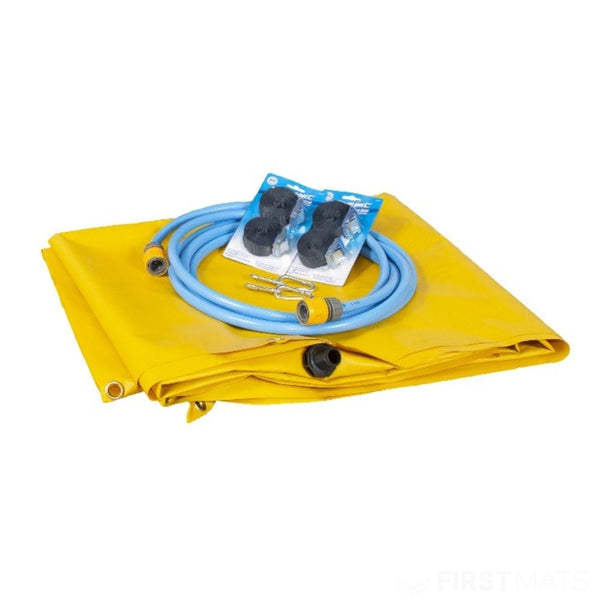
Leak Catcher Tarp Kit with Hose & Fittings
The Leak Catcher Kit with Hose & Fittings offers the same proven design as our Leak Diverter Kits but without the included reservoir drum. This makes it a practical choice…
- Compact Kit: Includes funnel tarp, hose, and hanging straps.
- Flexible Usage: Use with your own container or divert water straight to a drain.
- Easy Tool-Free Installation: Adjustable straps allow quick and secure suspension.
- Durable and Waterproof: PVC funnel tarp provides reliable leak capture.
From £79.85 + VAT
4. Monitoring and area control
Even after setup, the area still needs monitoring. Check that the hose remains clear, the collection point is managed, and access controls stay in place. Warning signage is advised, but physical restriction of access may still be needed depending on the location and the amount of water involved.
What a leak diverter kit does not do
A leak diverter kit does not fix the roof, ceiling or service penetration that is letting water through. It is not a permanent repair, and it should not be treated as one.
It also does not remove the need for a proper response plan. You still need to assess the source of the leak, check for any effect on electrics or equipment, restrict access where needed, and arrange building repairs as soon as possible.
If a leak is small, isolated and easy to supervise, a bucket may still be enough for the short term. But once water starts spreading, reaching important assets, or creating a wet-floor issue in a live area, a leak diverter kit is usually the more controlled option. Choose the kit around the leak area, ceiling access and drainage route, then arrange the repair without delay.