Buying Guides
Using Mats to Help Prevent Slips on Icy Floors and Walkways

Mats can help reduce slipping on icy floors and walkways when they add grip and let water drain away underfoot. For wet entrances and hard-surface paths, DrainAway Rubber Ground and Walkway Matting is the better loose-laid choice, SiteStep Walkway Matting Roll suits temporary routes over grass or gravel, and Anti-Slip GRP Flat Sheet is the better answer where you need a fixed long-term surface. Get this wrong and the mat either shifts, holds water where people step, or simply does too little on an exposed route. This guide shows where mats help, what separates the main options, and when to stop treating the problem as temporary and fix the surface properly.
How mats help on icy walkways
Mats help most when the problem is wet, slushy footwear or a low-grip surface rather than a sheet of untreated ice. At entrances, they give you a defined area that deals with water as it arrives. On outdoor routes, the useful features are drainage, texture and a surface that keeps mud and water from sitting under shoes.
HSE says doormats can be a sensible control measure where rainwater gets tracked indoors. For exposed icy routes, HSE puts more weight on gritting, barriers, route changes and covered walkways. So mats are part of the answer, not the whole answer.
What actually separates the options in winter
The right choice comes down to four things: whether the ground is solid or soft, whether the water needs to drain through or off the surface, whether the route is temporary or fixed, and how much thickness you can live with underfoot.
| Product | Format and thickness | What it is best at | Use it where |
|---|---|---|---|
| DrainAway Rubber Ground and Walkway Matting | Loose-laid roll, 10mm | Draining water through a hole pattern on wet routes | Entrances, hard-surface walkways, outdoor areas |
| SiteStep Walkway Matting Roll | Loose-laid roll, 23mm | Creating temporary pedestrian routes over grass, gravel and uneven ground with self-draining cells | Gateways, access routes, grass or soil paths |
| Anti-Slip GRP Flat Sheet | Fixed sheet, 4mm | Giving a permanent anti-slip surface in wet and dry conditions | Walkways, steps, ramps and industrial zones |
Which mat to choose for an icy route
Three options cover most winter routes, and the choice turns on what sits under the mat: finished paving, soft ground, or a surface that needs a permanent fix. To browse more widely, see the outdoor entrance mat range and the walkway matting collection.
Best for: Wet hard-surface paths and entrances DrainAway Rubber Ground and Walkway Matting
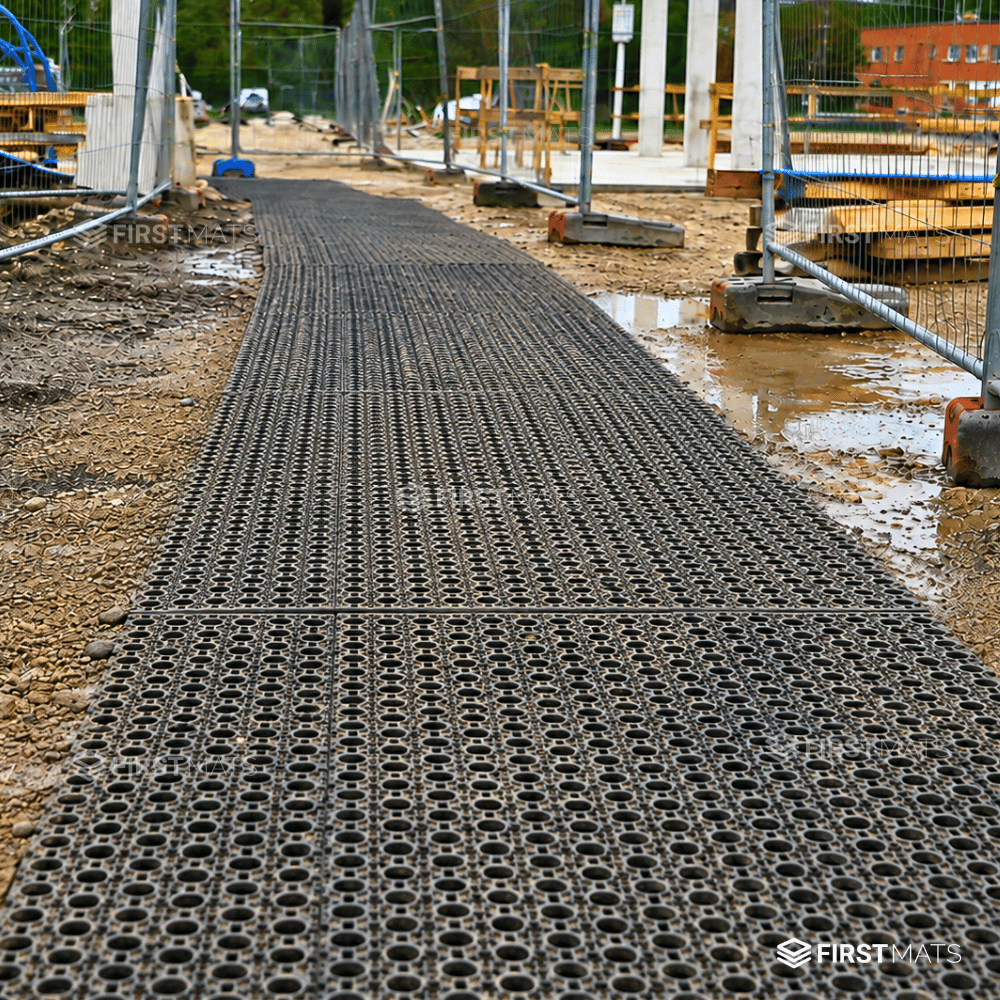
First Mats recommendationA hole pattern that drains water straight through, so it suits a doorway, a short concrete path or a threshold where slush keeps getting walked in. Best where the ground underneath is already firm.

- Durable Natural Rubber: Long-lasting construction for both indoor and outdoor use.
- Efficient Water Drainage: Keeps surfaces dry and reduces slip hazards.
- Slip Resistant: Rated 2/3 for excellent safety in wet and dry environments.
- Versatile Sizes: Available in 5m or 10m rolls with a 100cm width.
From £194.68 + VAT
Best for: Temporary routes over grass or gravel SiteStep Walkway Matting Roll
First Mats recommendationDrains mud and water from footwear and can be pegged or tied down, so it holds a safe path across soil rather than finished paving. Suits site access routes, winter event paths and school grounds.
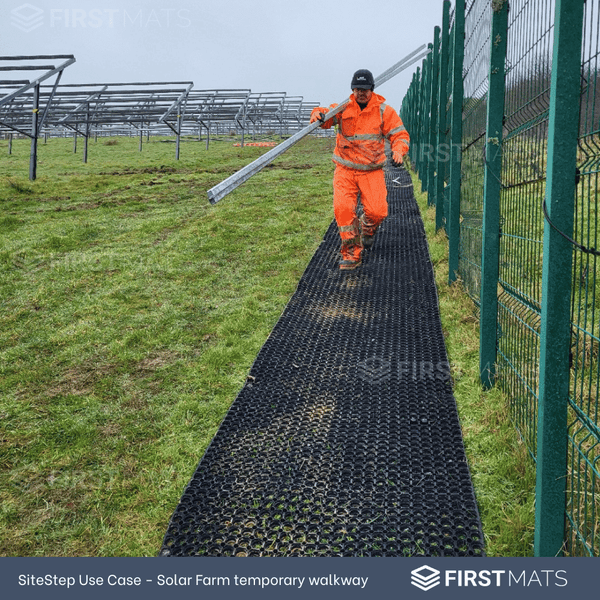
- Slip-Resistant Surface: Improves safety on grass, gravel, and uneven ground.
- Mud-Scraping Holes: Help remove dirt and debris from footwear.
- Durable Rubber: Built to endure heavy foot traffic and outdoor conditions.
- Portable Format: Supplied in a roll for easier transport and deployment.
From £24.50 + VAT

Best for: A fixed long-term anti-slip surface Anti-Slip GRP Flat Sheet 4mm thick
First Mats recommendationA permanent sheet that bonds or screws down, with wet and dry slip resistance to BS7976.2 and a wide working temperature range. Choose it where a movable mat is too temporary for the risk.

- Heavy-Duty Construction: Built from durable glass-reinforced plastic and silicone carbide granules.
- Forklift Safe: Designed to withstand industrial vehicle traffic.
- Fire-Tested: Meets DIN4102 - CLass B2 fire safety standards.
- Customisable Sizing: Available in 0.8m x 1.2m, 1.2m x 1.2m and 1.2m x 2.4m and 1.2m x 3m sheets.
From £81.49 + VAT
Where rubber walkway matting works best in winter
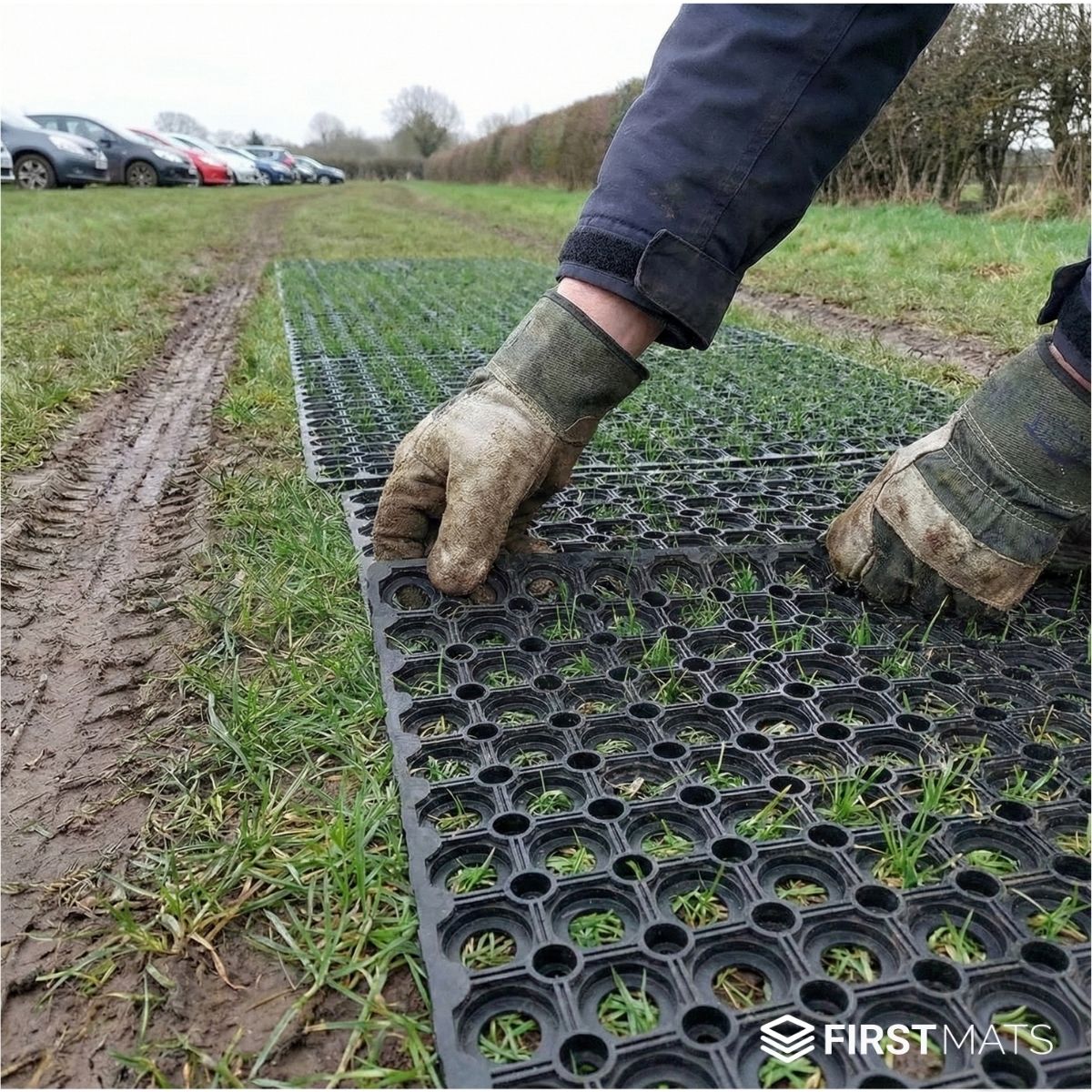
Rubber walkway matting works best where you need a safer route now, but the route itself is still changeable. That includes gateways, access paths, paths across turf, gravel approaches, and places where mud and standing water make footing worse before you even get to the ice.
For a wet doorway or short hard path, use a drainage mat that lets water pass through rather than pool on top. That keeps the walking surface clearer underfoot.
For a route across grass, soil or gravel, use a thicker open-grid walkway mat that can sit on uneven ground and still form a clear pedestrian line.
For a managed temporary route, anchor the mat where fixing options are available so it stays put under traffic.
For high-turnover entrances, keep cleaning simple. A mat that can be hosed or pressure washed is easier to keep working through winter use.
Loose-laid rubber matting is less convincing where the hazard never really goes away. If the same ramp, step edge or exposed walkway stays slippery all season, the surface itself usually needs attention.
When a permanent anti-slip surface is better than a mat
A permanent anti-slip surface is the better choice when the area is always low grip, not just bad in short spells. That includes ramps, step runs, regularly wet walkways, and work areas where traffic keeps pushing loose matting out of place. HSE says floors should be suitable for the conditions and still safe where contamination is frequent.
Anti-Slip GRP Flat Sheet fits that job because it can be bonded or screwed to the base and is suitable indoors and outdoors. It also has slip resistance for wet and dry conditions and withstands forklift traffic, so it suits areas where a loose mat would be knocked, curled or shifted out of position.
If winter conditions are part of a wider access issue, this guide on accessible entrance matting is worth reading next. Then choose the route treatment that matches the surface you actually have, not the one you wish you had.