Buying Guides
Best Alternatives to Coir Matting: What to Choose and Where to Use It
If coir matting no longer feels right for your entrance, the best replacement depends on where the mat sits and what you need it to do. Some alternatives cope better with repeated wet weather, some create less visible fibre shedding, and some fit modern interiors or recessed mat wells more neatly. This guide compares the main options people actually use instead of coir: synthetic coir-style brush matting, needle-punch or carpet-style entrance matting, rubber styles, and standard loose entrance mats. It also explains when coir can still be the right choice, so you can pick a material that suits the doorway rather than following a one-size-fits-all rule.

Tired of coir fibres spreading through the hall or a doorway that stays wet for days? That is usually the point where homeowners start looking for an alternative. The good news is that you do not need to guess. The right replacement depends on where the mat sits, how much water reaches it, whether it needs to fit a recess, and how much maintenance you are happy to do.
Coir is still useful in the right setting, especially where you want a natural look and the entrance is fairly sheltered. But it is not the only sensible choice. If your priority is less shedding, easier upkeep or better tolerance of repeated wet weather, other materials may suit you better.
What people use instead of coir matting
Most alternatives fall into four practical groups. Each does a slightly different job, so it helps to compare them by real use rather than appearance alone.
- Synthetic coir-style brush matting uses man-made fibres in a coir-like format. It is often chosen by people who want a similar scraping feel without the natural fibre look.
- Needle-punch or carpet-style entrance matting has a tidier, more textile-like appearance and often suits indoor entrances or modern interiors.
- Rubber loop or rubber utility matting is a more practical, less decorative option for exposed or messy doorways.
- Standard loose entrance mats can work well where you do not need a fitted mat well and simply want something easy to place at the door.
If you are comparing against traditional coir, it helps to think in terms of trade-offs. Coir often gives a distinctive natural look and a firm scraping texture, but some homeowners want less visible shedding, easier vacuuming or a material that may cope better with repeated damp conditions.
How the main alternatives compare
Synthetic coir-style brush matting
This is usually the closest visual and functional alternative to natural coir. It may suit you if you like the fitted brush-matting look but want a different fibre type. It will not look exactly the same as natural coir, so it is best seen as a practical substitute rather than a perfect copy.
Brush matting is often considered for recessed entrances because it can give a similar built-in appearance to coir-style matting.
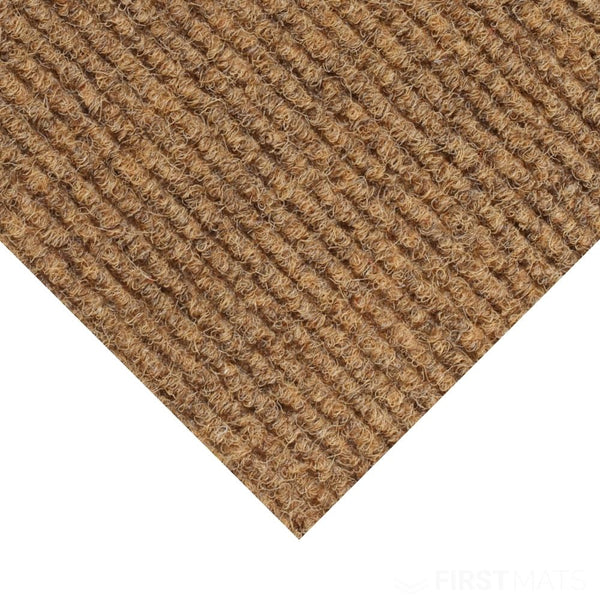
12mm Brush Matting - Synthetic Coir - Made to Measure
The 12mm Synthetic Coir Brush Matting is a smart alternative to traditional coir, offering the same dirt-scraping performance without the downsides. Made from durable polypropylene fibres, it won’t shed like…
- Durable Synthetic Fibres: Made from looped polypropylene for a long-lasting, non-shedding surface.
- Lower-Height Coir: 12mm thickness makes it perfect for shallow recesses.
- Secure Backing: Granulated rubber and latex base prevents slipping and movement.
- Easy to Maintain: Synthetic fibres are less prone to staining and require minimal upkeep.
From £125.93 + VAT
Before buying for a recess, check the actual well depth and the finished floor height around it. A mat that is too proud of the floor can feel awkward underfoot, while one that sits too low may not look finished.
Needle-punch or carpet-style entrance matting
This type usually looks neater and more understated indoors. It can suit hallways, porches and modern home entrances where you want a mat that blends in rather than stands out. It may also be easier to keep looking tidy if your main concern is dust, dry dirt and everyday foot traffic rather than heavy mud.
The trade-off is that it does not usually give the same coarse, rustic feel as coir or brush-style matting. If your doorway gets very muddy boots straight from the garden, you may prefer a more aggressive scraper at the threshold and a textile-style mat slightly further inside.
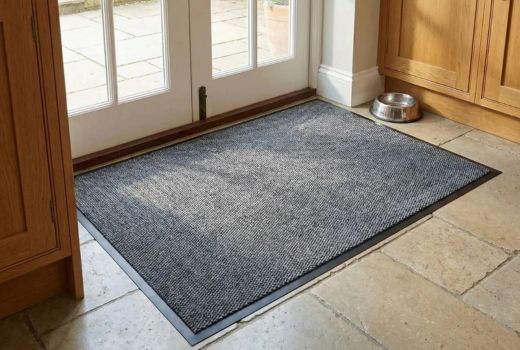
For a neater indoor entrance, a made-to-measure barrier mat such as Entra Nib Heavy Duty Barrier Matting is the kind of option many people look at.
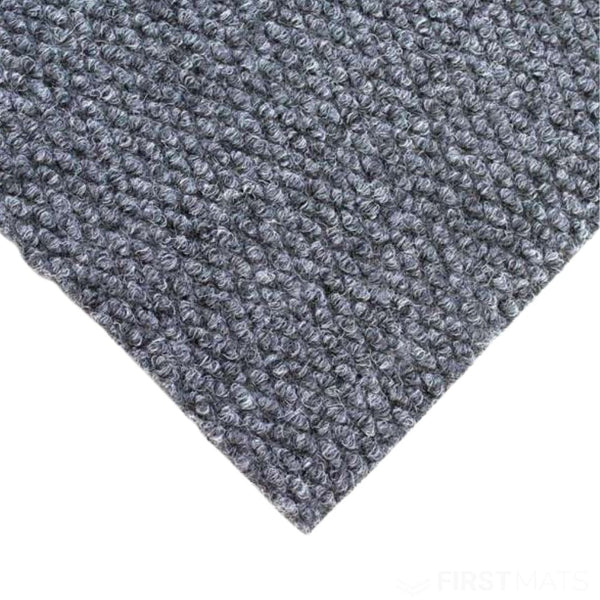
EntraNib Heavy-Duty Borderless Barrier Matting
The EntraNib Heavy-Duty Borderless Barrier Matting is designed for high-traffic commercial entrances, corridors, and mat wells where safety, cleanliness, and a seamless finish are essential. With a robust nibbed pile…
- Heavy-Duty Material: Made from solution-dyed polypropylene for durability.
- Effective Moisture Control: Absorption rated 4/5 for retaining water.
- High Soil Resistance: Rated 4/5 for trapping dirt and debris.
- Safety Features: Flame retardant, UV resistant, and slip-resistant.
From £91.81 + VAT
If you are fitting matting into a recess, borderless styles are often worth looking for because standard borders can make trimming and fitting harder. If you are not using a recess, a loose-laid entrance mat may be the simpler route.
Rubber loop or rubber utility matting
Rubber styles are visually very different from coir, but they can make sense where the doorway is exposed and practicality matters more than a soft interior look. They are often considered for back doors, side entrances, utility areas or spots where wet shoes, pets or garden traffic are common.
They are less likely to satisfy someone who specifically wants the classic recessed coir look at a front entrance. But if your main question is what works in a wet, messy spot, rubber is often one of the first materials worth considering.
Standard loose entrance mats
If you do not have a mat well, a standard loose entrance mat can be the most straightforward alternative. This is often the better choice when all you need is a practical mat by the door rather than fitted matting. Backed mats with borders can be easier to place and replace, though those same borders are one reason they are usually not ideal for recessed installations.
For readers who want a simple loose-laid indoor entrance mat, Aquaprotect Entrance Mat or Dirt Trap Entrance Mat are the sort of options to compare.
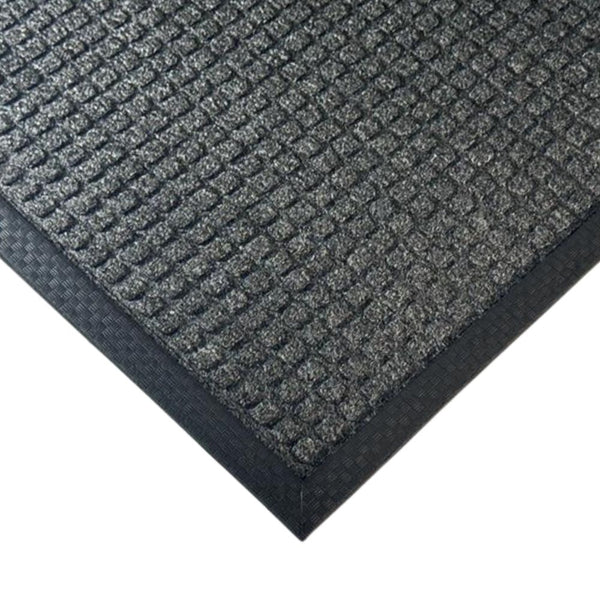
AquaProtect Super Absorbent Door Mat
The AquaProtect Super Absorbent Door Mat is made for entrances that have to deal with wet weather, muddy shoes, and heavy daily footfall. Holding up to 6 litres of water…
- Super Absorbent: Holds up to 6 litres of water per square metre.
- Highly Durable: 10.5mm thickness with Decalon fibres for long-lasting use.
- Non-Slip Design: Rubber backing prevents movement on smooth floors.
- Wheelchair Accessible: Reinforced border for added stability.
From £30.60 + VAT
Loose entrance mats are usually best judged by placement, profile and ease of cleaning. Measure the available floor area, check door clearance, and think about whether the mat will stay in one defined spot or need moving often for cleaning.
Best choice by location
Indoor recessed mat well
If the mat must fit a recess neatly, synthetic brush matting or a suitable borderless entrance matting style will often be the main alternatives to coir. Your key checks are depth, finished floor level and whether the look suits the space. For a natural appearance, coir may still be the best visual match. For a cleaner-lined or more modern look, needle-punch style matting may suit better.
Sheltered front entrance
If the entrance is under cover and does not stay wet for long, you have more freedom. This is where coir can still make sense if you like its character and do not mind some upkeep. If shedding has become the main irritation, synthetic coir-style matting is often the most direct alternative.
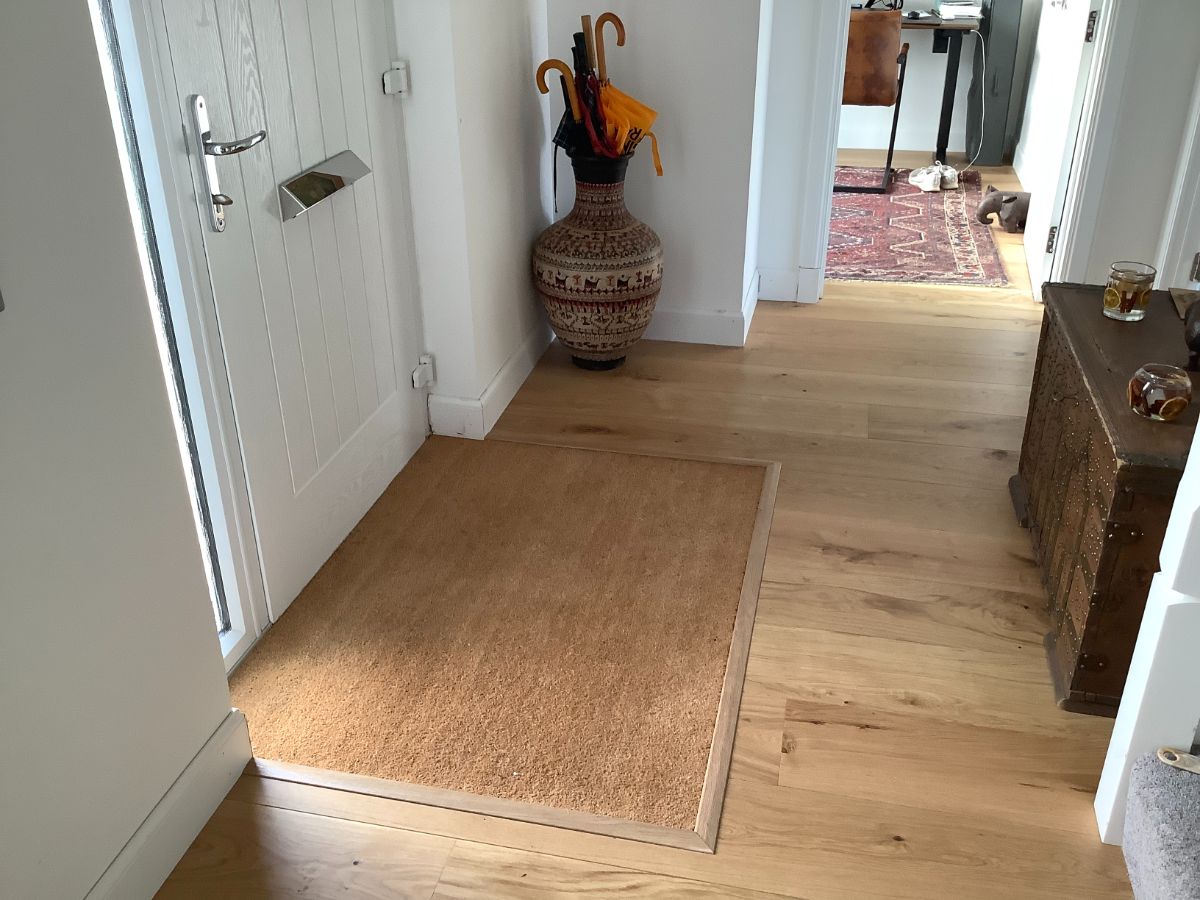
Natural Coir Matting is still a reasonable option where the doorway is sheltered and you are happy with the look and maintenance that comes with it.
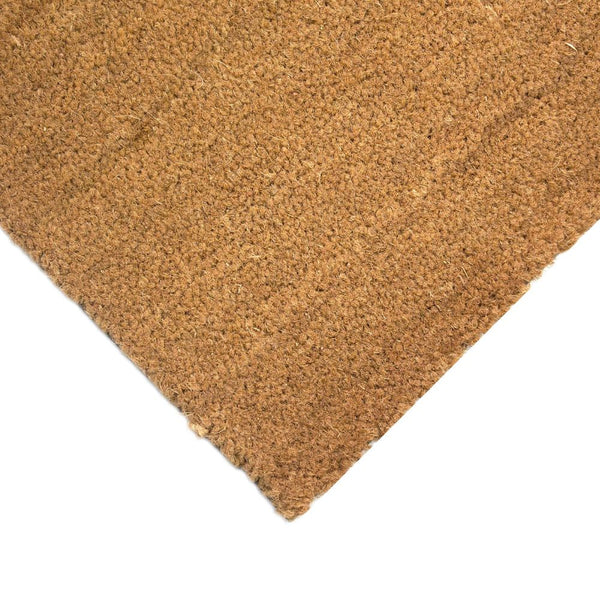
17mm Premium Coir Coconut Matting - Cut to Size
The 17mm Premium Coir Coconut Matting is the gold standard for natural entrance matting. Crafted from 100% natural coconut husk fibres on a tough PVC backing, it combines rustic charm…
- Custom-Fit Matting: Cut to length for a precise fit.
- Highly Durable: Made from tough, 100% natural coconut husk fibres.
- Strong PVC Backing: Securely fits into mat-wells, preventing movement.
- Superior Absorbency: Highly rated for moisture retention, keeping floors dry.
From £150.60 + VAT
If you want to compare coir formats more closely, the coir matting collection is the obvious place to look. Keep the position of the doorway in mind rather than choosing on appearance alone.
Exposed outdoor doorway
If rain regularly reaches the mat and water may sit on it, coir is often not the first material people choose. In these spots, practical rubber styles or other mats intended for wetter entrances are usually more sensible to consider. The exact construction still matters, so avoid assuming every product in a material category will behave the same way.
Busy family entrance
Where children, pets, visitors and deliveries all use the same door, maintenance usually becomes the deciding factor. Think about what annoys you most now: visible fibres, wet patches, tracked dirt, or a mat that looks untidy quickly. Once you know the real issue, the choice becomes easier. Synthetic brush matting may help if you want a coir-like fitted look with a different fibre type. Textile-style entrance matting may suit if you want a tidier indoor finish and easier everyday cleaning.
If you need a made-to-measure entrance mat rather than a fixed-size doormat, it is worth looking at the wider range of made to measure door mats before deciding on one material type.
A simple way to choose
- Start with location. Is the mat indoors, under cover, or exposed to weather?
- Decide the main job. Heavy scraping, handling damp shoes, keeping a neat look, or reducing upkeep?
- Check whether it must fit a recess. If yes, measure the recess depth and opening carefully.
- Look at profile and edge detail. Borders may be fine for loose mats but awkward in mat wells.
- Be honest about maintenance. If you do not want to vacuum fibres or replace natural-looking matting more often, rule that into the decision early.
If you are still unsure, narrow it down like this: choose synthetic brush matting for a coir-style fitted look with a different fibre type, choose needle-punch entrance matting for a neater indoor finish, choose rubber for exposed and messy spots, and choose a standard loose entrance mat when you do not need a recessed fit.
When coir may still be the right choice
This does not need to be an anti-coir decision. Coir can still suit a sheltered doorway, a period-style property, or any entrance where the natural appearance matters more than having the lowest-maintenance option. If you like the traditional look and you are happy to manage the extra tidying that may come with it, there is no reason to rule it out.
The better question is not whether coir is good or bad. It is whether coir suits your doorway better than the alternatives. Match the material to the entrance, measure carefully if you have a recess, and you are much less likely to buy the wrong mat twice.