Buying Guides
Best Mats for Muddy Entrances: How to Choose the Right Combination
Muddy entrances rarely stay clean with one mat alone. If the problem is a mix of soil, wet shoes, pets and repeated foot traffic, the better approach is usually to match mat type to the job: scrape dirt outside, absorb moisture inside, and give people enough mat area to actually wipe their feet. This guide explains how to choose that combination for a front door, back door, porch or utility entrance. It covers when one mat may be enough, when a two-mat setup makes more sense, and what to look for in size, texture, backing and cleaning practicality.

Muddy entrances usually become a problem because one mat is being asked to do every job. Thick mud, damp shoes and repeated foot traffic need different kinds of matting, so the best setup is often a combination rather than a single mat by the door.
If you are choosing for a porch, hallway, back door or utility entrance, start with the source of the mess. Garden soil, dogs, school runs and wet weather all leave different amounts of dirt and moisture behind. Once you know what is arriving at the door, it becomes much easier to choose the right mix of scraping, absorbency and coverage.
Start by matching the mat to the mess
The first question is simple: are you mainly dealing with clumps of mud, wet footprints, or both? A muddy garden entrance needs a different setup from a sheltered front door that only gets the odd rainy day.
Outdoor scraper mats are best used to remove heavier dirt before it comes inside. Indoor absorbent mats are there to catch the moisture and finer dirt that the first mat leaves behind. If you expect one mat to handle both jobs in a busy, muddy entrance, it will often struggle.
For a closer look at how surface texture affects performance, see this guide to entrance mat textures.
When one mat may be enough
One mat can work if the entrance stays fairly sheltered, traffic is light and users have enough space to wipe their feet properly. This is more common at a front door with occasional rain than at a back door used for gardens, pets or muddy boots.
When a two-mat setup is better
A two-mat setup is usually the better choice when mud arrives often, more than one person uses the entrance, or the doorway doubles as the main family route in and out. In those cases, an outdoor scraper mat and an indoor absorbent mat tend to work better together than either type on its own.
Use an outdoor mat for scraping, not soaking
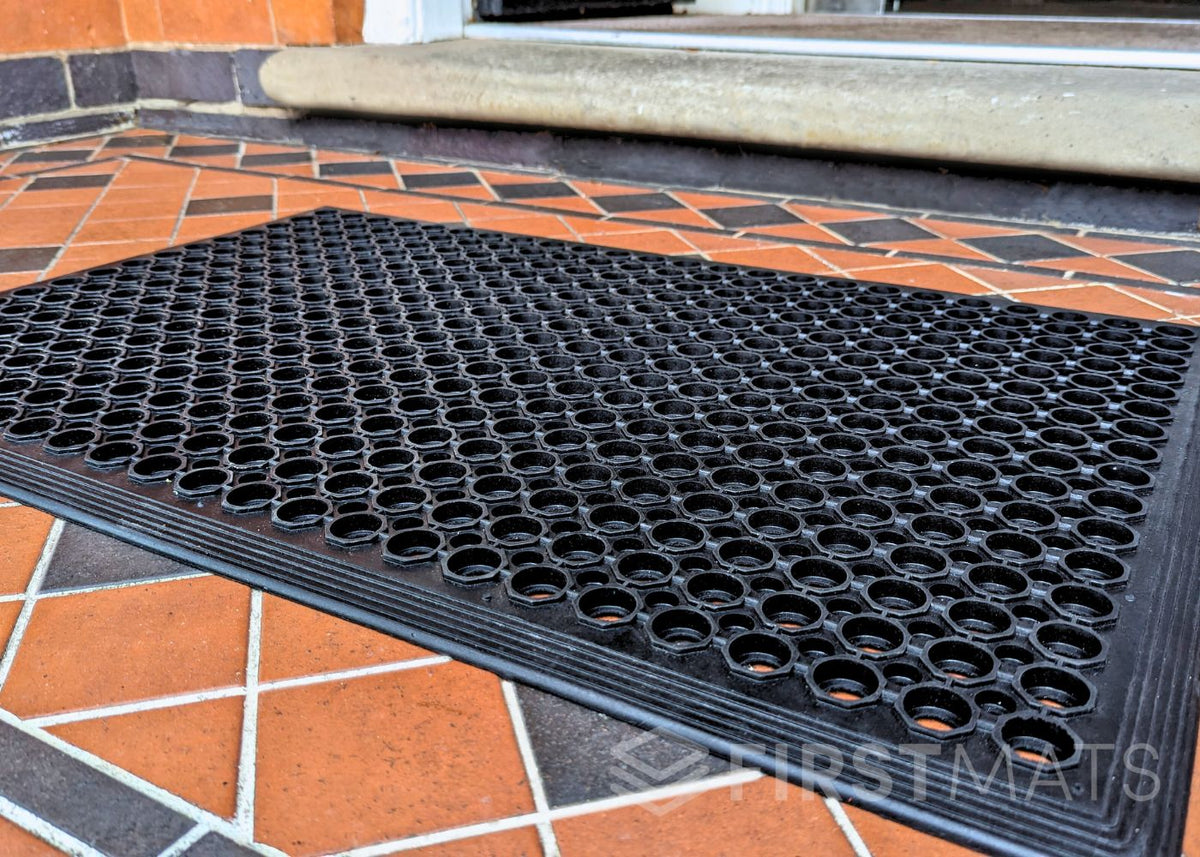
If people are bringing in visible mud, start outside where practical. A textured outdoor mat helps remove the bulk of dirt before it reaches your hallway or kitchen floor. This is especially useful at back doors, side entrances and thresholds used after gardening, dog walks or wet school runs.
Outdoor mats are most useful when they sit where people naturally pause before entering. If the doorway has very limited space, opens tightly over the floor area, or lacks shelter, that may affect what size and style you can use.
For buyers looking at weather-suitable options, the Entraguard Outdoor Rubber Door Mat is the kind of product that fits this scraping role.
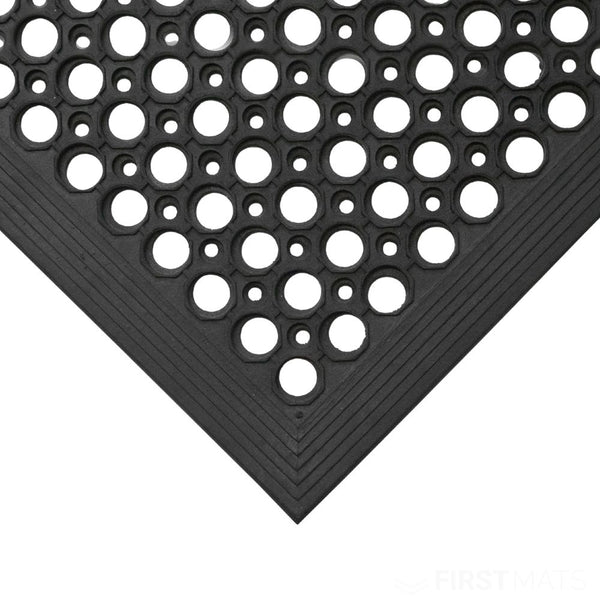
EntraGuard Rubber Door Mat with Holes
The EntraGuard Rubber Door Mat with Holes is built for tough outdoor use, combining durability with smart design. Its open hole pattern scrapes dirt and stones from shoes while allowing…
- Durable Natural Rubber: Long-lasting and wear-resistant material.
- Improved Drainage: Hole pattern removes water and debris efficiently.
- Slip Resistant: Meets EN 13552 Cat R10 standards for safety.
- Temperature Resistant: Performs in extreme conditions from -20°C to +130°C.
From £19.45 + VAT
Keep expectations realistic though. A scraper mat can help with heavier dirt, but it is not there to absorb all the water from wet shoes. That is why muddy entrances often still need an indoor mat as the second stage.
If you are unsure whether a mat is suitable for outdoor use, this article on which mats can be used outdoors is a useful starting point.
Use an indoor mat to catch moisture and fine dirt
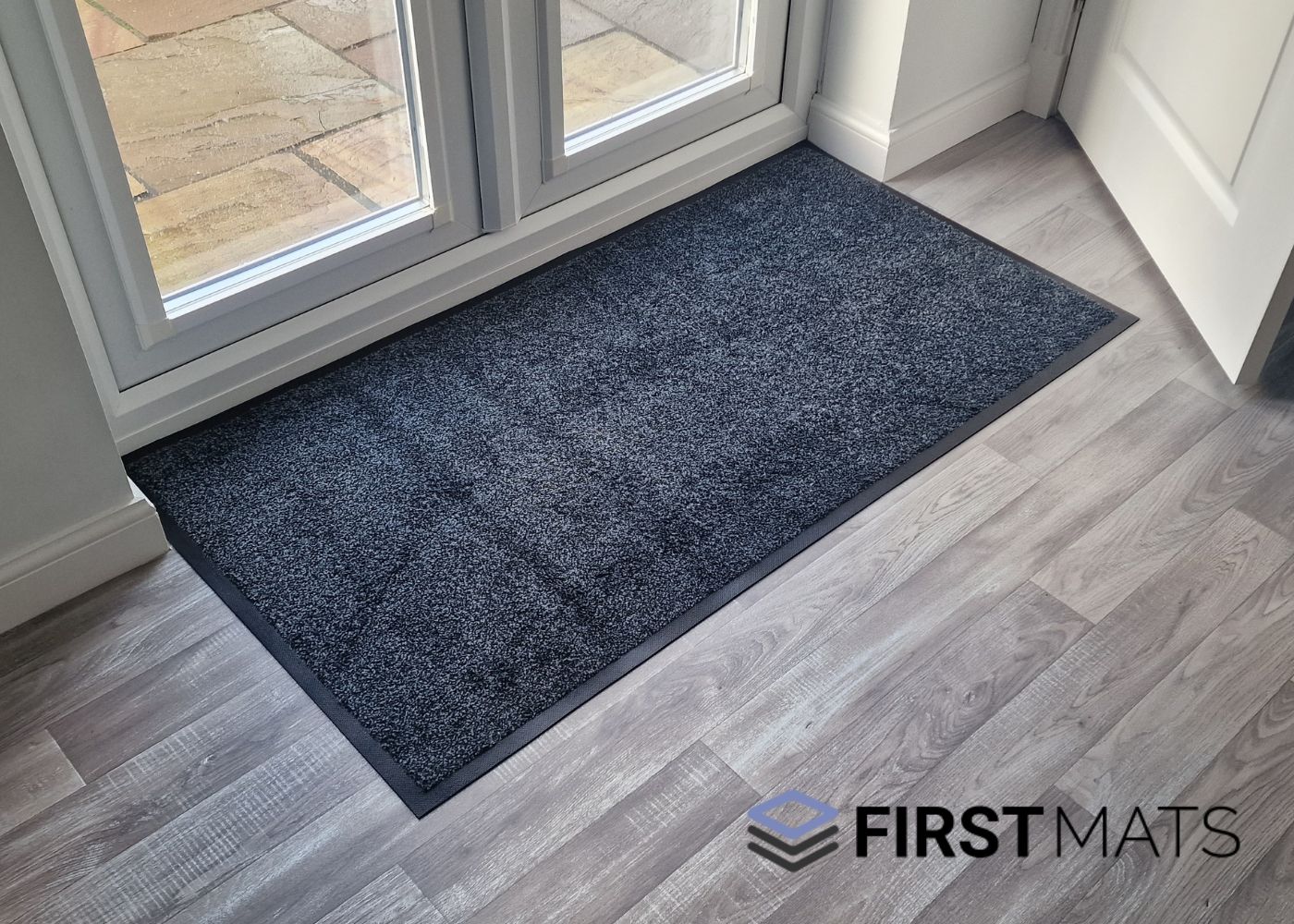
Once bulk dirt has been dealt with, the indoor mat takes over. This is where absorbency matters most. An indoor entrance mat should help catch dampness and the finer dirt that would otherwise spread further into the house.

For many homes, this second mat is the one that makes the biggest day-to-day difference. It helps contain the mess close to the entrance instead of letting it travel into hallways, kitchens or living areas.
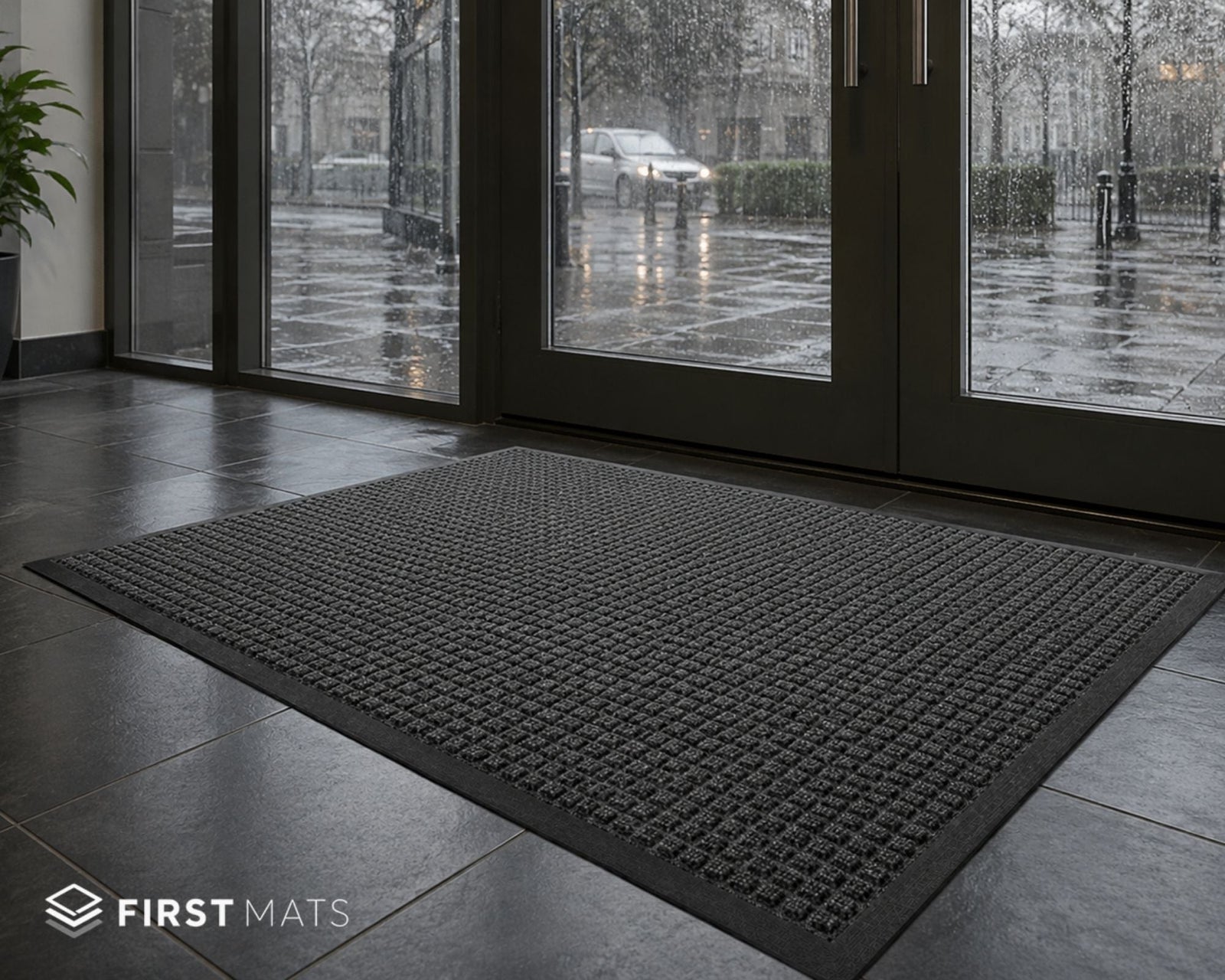
The Aquaprotect Entrance Mat is an example of the kind of indoor absorbent mat that suits this role.
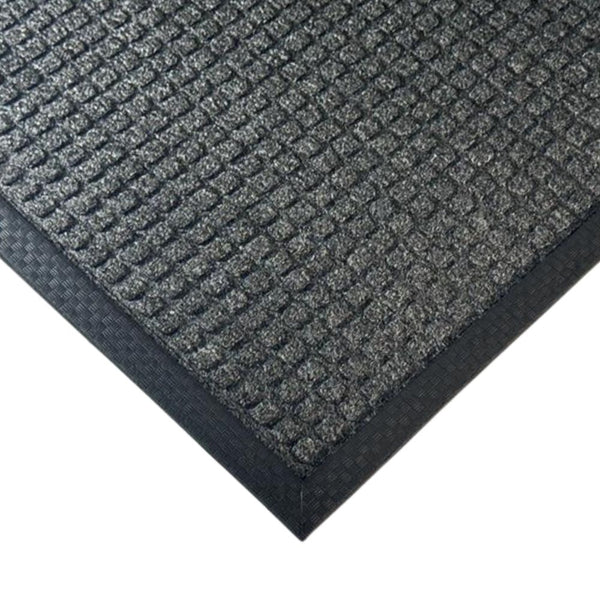
AquaProtect Super Absorbent Door Mat
The AquaProtect Super Absorbent Door Mat is made for entrances that have to deal with wet weather, muddy shoes, and heavy daily footfall. Holding up to 6 litres of water…
- Super Absorbent: Holds up to 6 litres of water per square metre.
- Highly Durable: 10.5mm thickness with Decalon fibres for long-lasting use.
- Non-Slip Design: Rubber backing prevents movement on smooth floors.
- Wheelchair Accessible: Reinforced border for added stability.
From £30.60 + VAT
Some buyers need something tougher because the entrance gets more traffic or more dirt than a standard domestic doorway. In that case, a heavy-duty entrance mat may be worth considering, especially for utility doors, shared family entrances or workplace-style thresholds at home.
The Entrybrush Entrance Mat is an example of a more robust entrance mat to consider where the doorway sees regular muddy use.
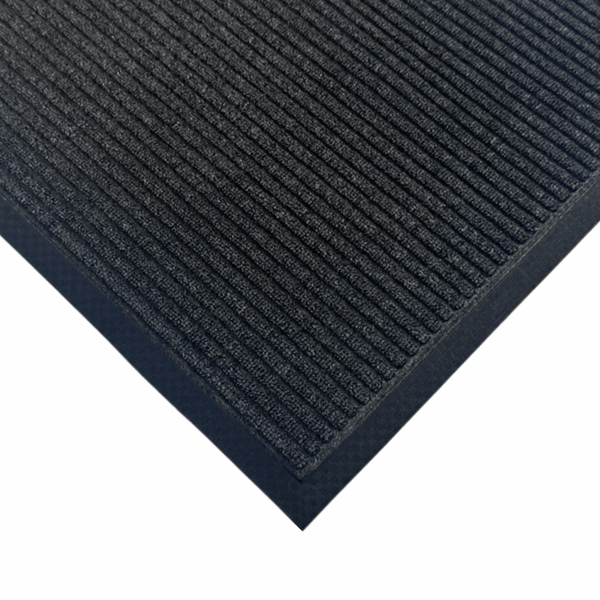
EntryBrush Ribbed Door Mat
The EntryBrush Ribbed Door Mat's unique double-ribbed design expertly keeps your floors clean and protected. This innovative pattern effectively scrapes away dirt, stones, and moisture from shoes, ensuring a pristine…
- Double Ribbed Design: Ensures effective brushing and wiping of dirt and stones.
- High Durability: Made from tough polypropylene fibres for heavy use.
- Moisture Retention: Absorbs water effectively, keeping floors drier.
- Non-Slip Backing: Vinyl backing prevents slipping, enhancing safety.
From £30.60 + VAT
Do not rely on absorbent matting alone if people are walking in with thick mud on their boots. Indoor absorbent mats can help with wet footprints and residual dirt, but they are not the best first line of defence against clumps of soil.
Size matters more than many buyers expect
A common mistake is choosing a mat that is too small for the doorway and traffic. Larger mats usually work better because they give each person more contact with the surface. That means more chance to remove dirt and hold moisture before it spreads further indoors.
Think about how people actually enter. Do they step straight in without pausing? Do children and dogs rush through? Does the door open into a narrow hall where shoes only land on the mat for one step? These details often matter as much as the mat material.
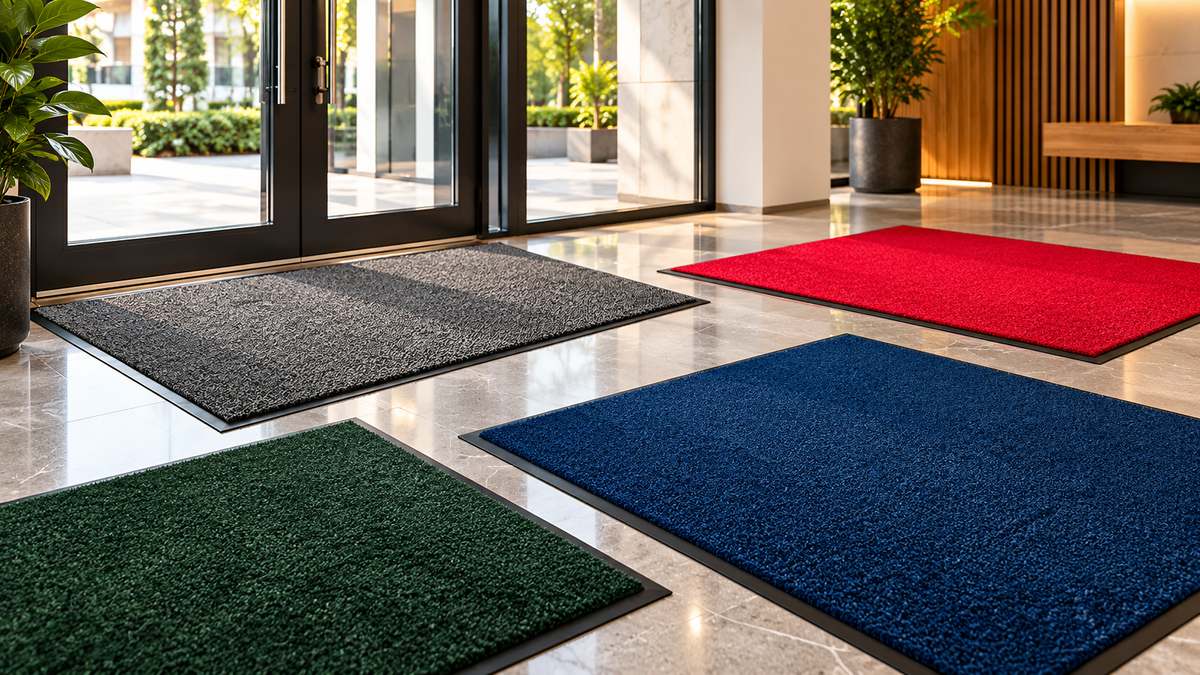
If space allows, a larger indoor mat can improve coverage noticeably at busy entrances. The Entry Plus Entrance Mat is the kind of option worth considering where a standard door mat feels too limited.
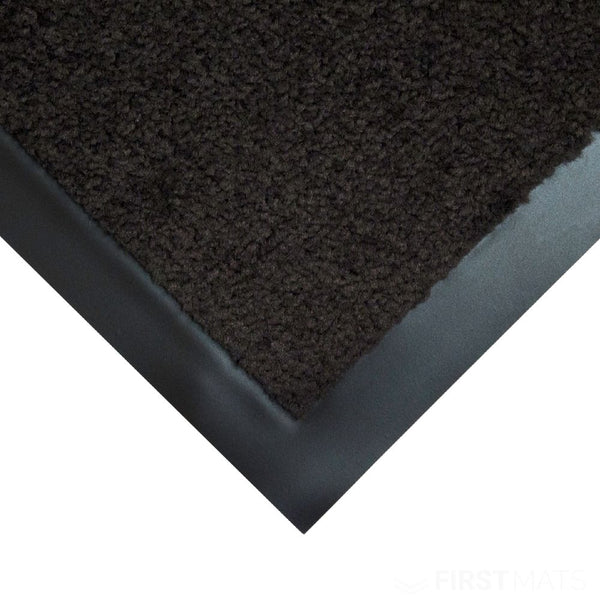
EntryPlus Large Entrance Mat
The EntryPlus Large Entrance Mat is a smart, practical entrance mat designed to keep larger doorways cleaner, safer and more welcoming. Ideal for homes, offices, schools and commercial buildings with…
- Ideal for Medium Traffic: Perfect for schools, offices, and public buildings.
- Solid colours and large sizes: Choose from four colours and sizes ranging from 60x90cm to 120x240cm.
- Durable Construction: Polypropylene fibres with a dense vinyl base for added longevity.
- Improves Cleanliness: Effectively traps dirt and water.
From £32.98 + VAT
That said, bigger is not always better if it creates cleaning problems. Large mats are heavier to move, slower to dry and less practical if you want to wash them often. Choose the biggest size you can clean and manage without turning mat care into a chore.
Washable options: useful, but only if they fit your routine
Washable mats can be a good choice for muddy areas, especially in homes with children, pets or frequent bad weather. The key point is practicality. A washable mat only helps if you can clean it at a frequency that matches the mess, and if its size and care method suit your home.
Before choosing a washable design, check a few things:
- Whether the mat can be cleaned in the way you intend to use
- Whether its size fits your washing machine or cleaning setup
- How long it takes to dry before it can go back into use
- Whether the material and backing suit the entrance conditions

Washable does not automatically mean right for every entrance. If the doorway regularly receives heavy mud, an outdoor scraper mat may still be needed first so the indoor washable mat is not overloaded too quickly.
If maintenance is a key concern, this guide on how to clean door mats can help you compare what ownership may look like in practice.
What to look for in backing, texture and durability
Texture is what helps a mat interact with dirt and moisture. Rougher or more defined surfaces often suit scraping roles better, while indoor entrance mats usually focus more on holding onto fine dirt and dampness.
Backing matters because a muddy entrance mat needs to stay in place and suit the floor beneath it. This is less about making broad claims and more about checking whether the construction looks appropriate for the doorway, traffic level and cleaning routine.
Durability also depends on where the mat is going. A typical home front door may cope well with a simpler setup. A back door used all day by family members, boots and pets often needs tougher materials and more frequent cleaning. Workplaces or home workshop entrances can place even higher demands on the mat, so it makes sense to choose more hard-wearing entrance matting and allow for greater coverage.
Choosing the right setup for your entrance
If your front door gets occasional rain and not much mud, one good indoor entrance mat may be enough. If your back door leads straight to a garden, lawn or muddy path, a two-stage setup is usually the safer choice: scraper mat outside, absorbent mat inside.
For busy family homes, look closely at the door that gets used most rather than the one guests see first. A smart mat at the front entrance will not solve the problem if everyone actually comes in through the utility room.
As a simple guide:
- Choose one mat if traffic is light, the entrance is sheltered and mud is occasional
- Choose two mats if the entrance gets regular mud, wet weather, pets or repeated traffic
- Choose a larger mat if people move quickly through the doorway and rarely stop to wipe their feet
- Choose a washable indoor option if you know you will keep up with cleaning
- Choose tougher matting if the entrance behaves more like a workplace threshold than a quiet domestic door
The best mat for a muddy entrance is rarely one universal product. It is the combination that matches your doorway, your mess and the amount of maintenance you will realistically keep up with. Start with the entrance you use most and build the setup around how people actually come through it.