Buying Guides
The Best Types of Floor Mats for Shops & Retail Environments

Retail entrances work harder than almost any other area of a building. Every customer that walks through the door brings moisture, dirt, grit, and debris with them, all of which can quickly create safety risks and increase cleaning costs. Choosing the right floor mats for a retail environment is not simply about appearance, it’s about performance, durability, and suitability for the space.
Different retail environments have different demands, and understanding those differences is key to choosing matting that genuinely works.
Why the Right Retail Matting Matters
In busy shops, floors can become hazardous very quickly, particularly during wet weather. Without suitable matting, water is spread throughout the store, increasing the likelihood of slips and trips and placing additional strain on cleaning staff.
High-performing retail mats help to:
- Reduce slip risks by removing moisture from footwear
- Trap dirt and grit before it damages flooring
- Lower cleaning and maintenance costs
- Create a professional and welcoming first impression
The challenge is ensuring the matting chosen is fit for purpose.
How Different Retail Environments Have Different Needs
There is no single “one-size-fits-all” mat for retail. The best option depends on footfall levels, entrance design, and the type of traffic moving through the store.
High-Street Shops and Smaller Retail Units
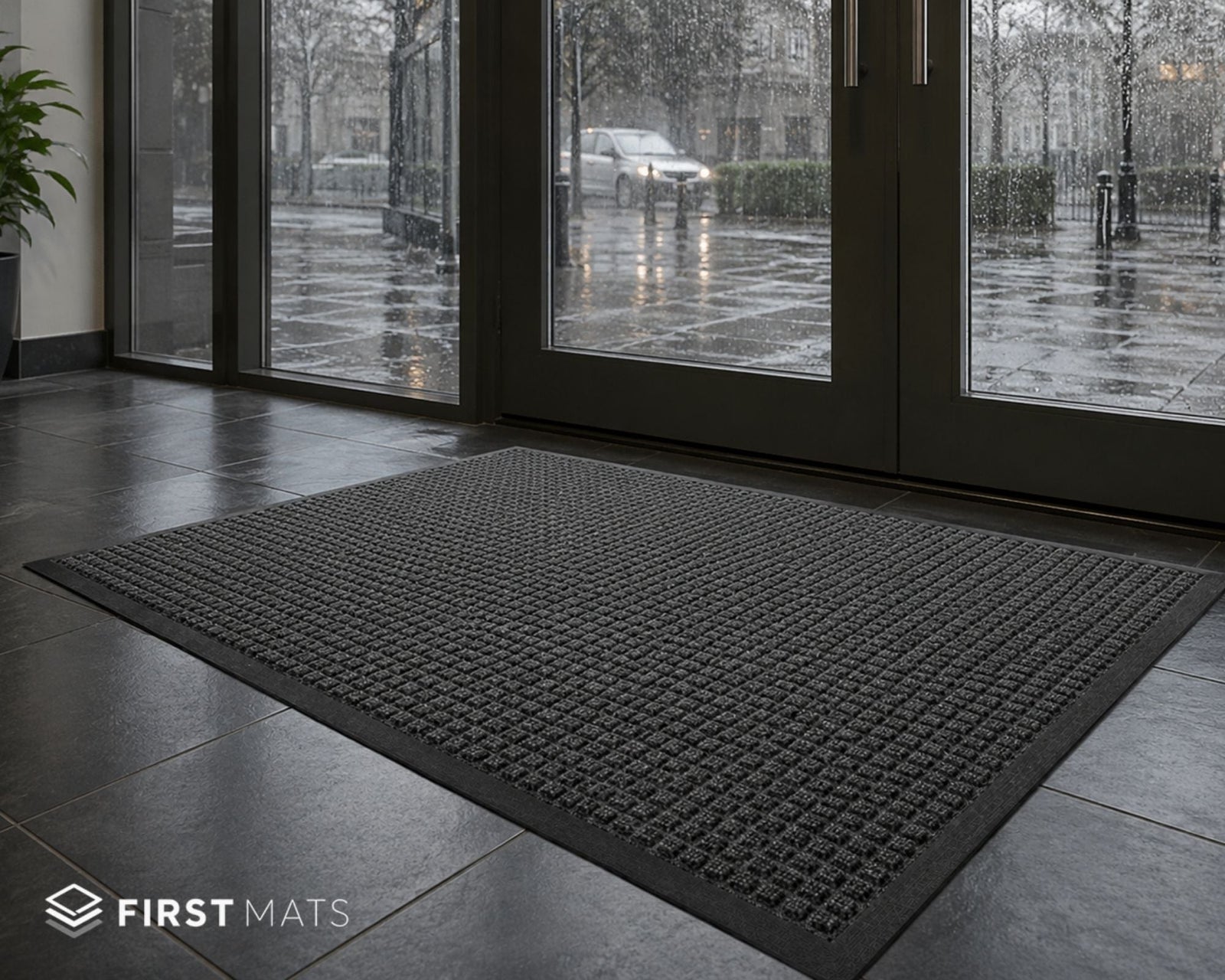
High-street shops often deal with customers moving directly from the pavement into the store. In these environments, entrance mats need to scrape dirt and absorb water effectively, particularly during rainy months.

For these spaces, loose-laid commercial entrance mats with heavy-duty rubber backing and strong borders work well. Larger mats are especially effective, as the more steps a customer takes on the mat, the more moisture and debris is removed before they reach the shop floor.
Choosing a mat that lies flat and remains stable is essential to prevent movement and curled edges, both of which can create trip hazards in customer-facing areas.
Heavy-Duty Shop Entrance Mat
First Mats recommendationThe Heavy-Duty Shop Entrance Mat is built to handle the constant foot traffic of busy retail entrances while keeping floors clean, dry, and safe. With the ability to absorb up…
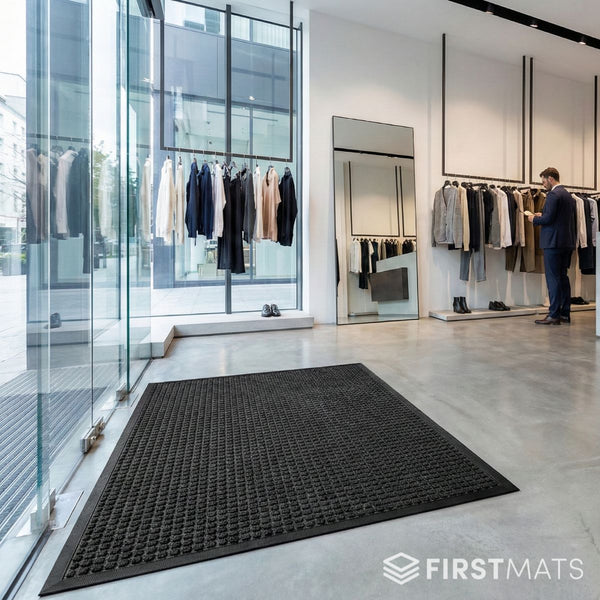
- Super Absorbent: Holds up to 6 litres of water per square metre.
- Highly Durable: 10.5mm thickness with Decalon fibres for long-lasting use.
- Non-Slip Design: Rubber backing prevents movement on smooth floors.
- Wheelchair Accessible: Reinforced border for added stability.
From £30.60 + VAT
Large Supermarkets and High-Footfall Stores

Supermarkets and large retail stores face a different challenge. Thousands of customers pass through the entrance every day, many using shopping trolleys that place constant pressure on matting.
In these environments, permanently fitted matting systems such as mat-well mats are often the most suitable option. These mats sit flush with the surrounding floor and are designed to withstand continuous trolley traffic without shifting or degrading.
Their fitted design reduces trip risks while providing a neat, professional finish that can cope with sustained heavy use.
Mat-Well Tile Pro - 16mm Thick Tiles
First Mats recommendationThe Mat-Well Tile Pro is a premium 16mm modular entrance matting system designed for contractors and building designers specifying flooring for busy commercial spaces. Whether for offices, shopping centres, schools,…
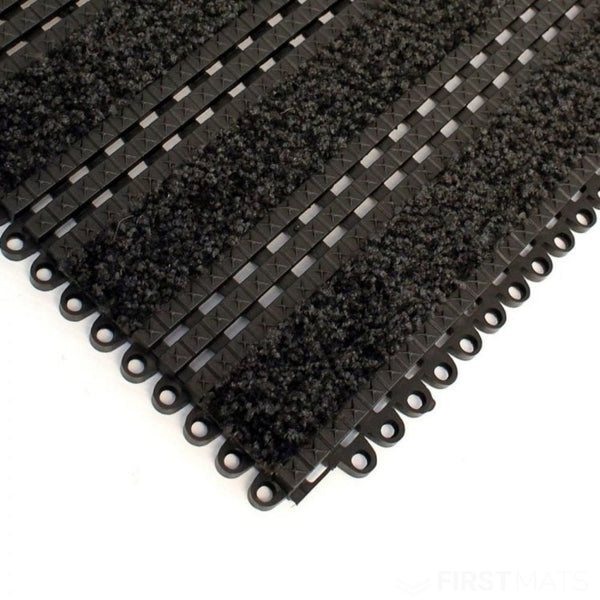
- Custom Tile Designs: Open or closed options for optimal dirt management.
- Fire Resistance: Certified to EN13501 Euro Classification B(F2)S2.
- Slip Resistance: Complies with BS 7976-2:2002 Pendulum Test.
- Durable Carpet: Heavy-duty nylon for dirt and moisture prevention.
From £27.65 + VAT
Seasonal and Transitional Areas
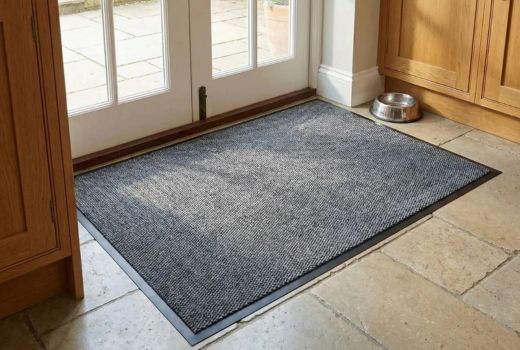
Many retail stores benefit from using additional mats during wetter months. Extra absorbent mats placed just inside the entrance help manage increased water and dirt levels during autumn and winter.
These additional mats can be stored away during drier periods, making them a practical and cost-effective way to adapt to seasonal conditions without permanent changes to the entrance layout.
Commercial Made to Measure Entrance Mat
First Mats recommendationThe Commercial Made to Measure Entrance Mat is the perfect choice for shops and retail environments that need a precise fit and professional performance. Custom-made to your exact dimensions, it’s…
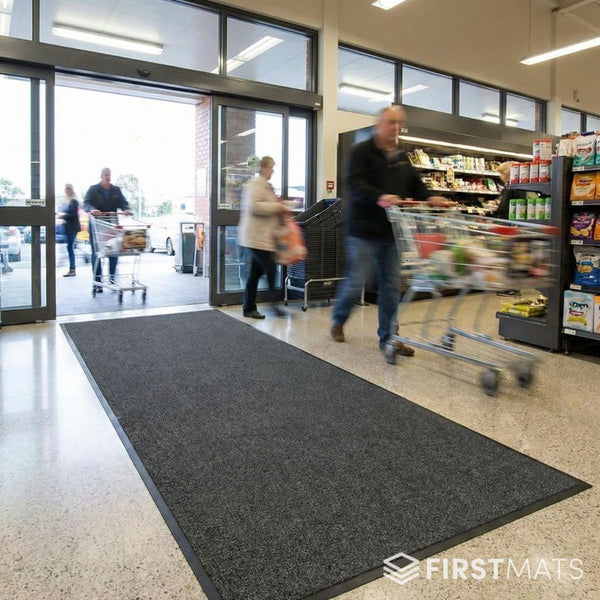
- Custom Size Options: Available in widths from 50cm to 150cm and lengths from 100cm to 550cm.
- Superior Absorption: Traps moisture and dirt to keep shop floors clean.
- Durable & Long-Lasting: Heavy-duty construction withstands high foot traffic.
- Non-Slip Backing: Smooth for hard floors, claw for carpets.
From £0.83 + VAT
Slips, Trips, and the Cost of Poor Matting Choices
Slip and trip accidents in retail environments are a serious concern, and inadequate matting is often a contributing factor. A number of real-world cases demonstrate the financial and reputational risks of getting entrance matting wrong.
In one case, the lack of suitable entrance matting led to a customer slipping on a wet floor, resulting in a £17,500 compensation payout . The absence of effective water control at the entrance was cited as a key factor.
In another case from 2025, a customer slipped in an Asda supermarket, leading to a £4,350 compensation claim . Once again, water brought in from outside played a significant role.
A further case from 2018 highlighted the risks of using matting that cannot cope with wet weather. The entrance mat became saturated, allowing water to spread onto the surrounding floor. The accident resulted in £41,835.55 in damages being awarded.
Poor mat quality can be just as dangerous as having no mat at all. In 2021, a trip accident occurred in an Iceland store after a mat’s edges curled upwards, resulting in a £9,500 damages payout .
These cases clearly demonstrate that retail matting must not only be present, but must also be capable of absorbing sufficient moisture and be of a high enough quality to remain flat and secure over time.
Accessibility and Safety Go Hand in Hand
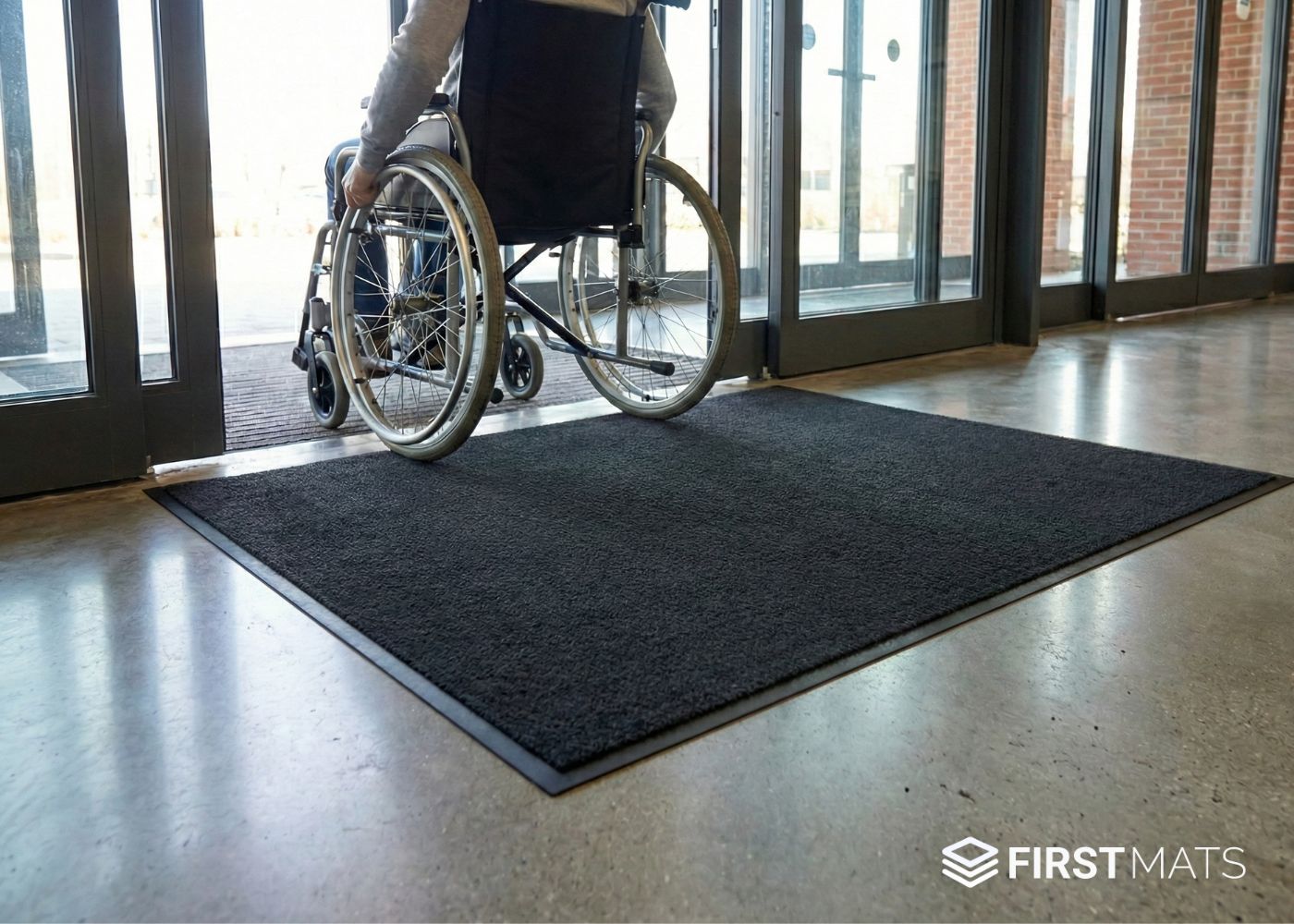
Accessibility should always be considered when selecting retail entrance mats. Mats must allow smooth access for wheelchairs, pushchairs, and mobility aids without creating resistance or trip risks.
Natural coir matting, while popular for its appearance, is not ideal for accessible entrances. Instead, low-profile mats with rubber backing or recessed mat-well systems provide a safer and more suitable option.
For further guidance, the DDA compliant matting guide explains what to choose and what to avoid when planning accessible retail entrances.
Balancing Performance and Appearance

Retail matting does not have to look purely functional. Branded logo mats allow retailers to reinforce their brand at the entrance while still benefiting from effective dirt and moisture removal.
When designed correctly, these mats provide a balance between presentation and performance, making them well suited to customer-facing retail spaces.
Logo Mats - Premium Custom Floor Mats
First Mats recommendation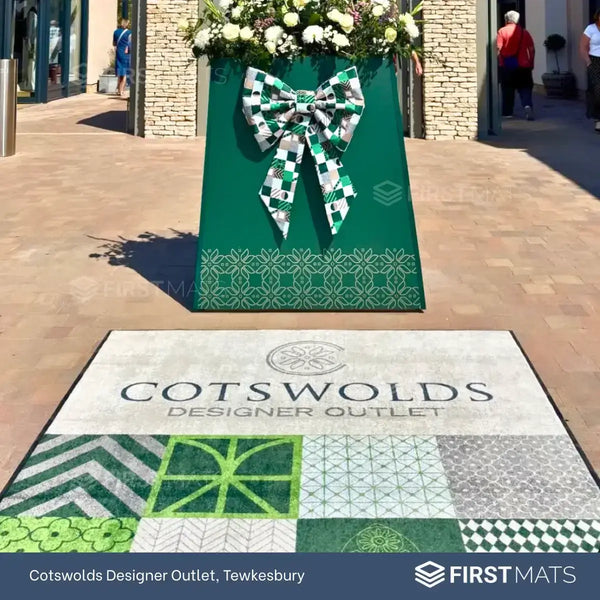
- Custom Branding: Feature your logo, company name, or message.
- Slip-Resistant: Rubber backing ensures stability on different floor surfaces.
- High-Quality Print: Vibrant, long-lasting logo and colours.
- Dirt & Moisture Control: Helps keep floors cleaner in busy areas.
From £45.00 + VAT
Choosing the Right Matting for Your Store
The best floor mats for retail environments are:
- Heavy-duty and designed for high footfall
- Rubber-backed with strong, bevelled edges
- Large enough to allow multiple foot contacts
- Suitable for wheeled traffic such as trolleys
- Capable of coping with seasonal weather changes
Cutting corners on matting can lead to increased cleaning costs, damaged flooring, and serious safety risks. Investing in the right matting from the outset helps protect customers, staff, and your business.
By understanding the demands of your retail environment and choosing matting that meets those needs, you can create a safer, cleaner, and more professional entrance that performs reliably all year round.