Buying Guides
What Are Tacky Mats Used For and How to Choose One
Need to reduce tracked-in dust and debris at the entrance to a cleaner area? Tacky mats are peel-off adhesive floor mats designed to pick up contamination from shoes and, in some cases, light wheeled traffic before it travels further indoors. They can be useful in cleanroom support areas, laboratories, healthcare back-of-house spaces, server rooms and refurbishment zones, but they are not a complete contamination-control system. The key is matching the mat to the traffic, the space and the way people actually move through the entrance.

Choosing the wrong entrance control is easy when every cleaner area seems to have different needs. If you need to reduce tracked-in dust and debris at a defined threshold point, tacky mats can help, but only when the traffic, placement and expectations are right.
Tacky mats, sometimes called sticky mats or adhesive mats, are disposable peel-off floor mats with a tacky surface. People step on them before entering a cleaner space, and the surface lifts dust and loose debris from footwear. Some sites also use them for light wheeled equipment, but that depends on the product and the traffic involved.
What a tacky mat is designed to do
A tacky mat is a layer-based mat placed at an entrance to catch contamination carried in on contact. Each top sheet is adhesive enough to grab loose dirt from soles and, where suitable, wheels. When that top layer becomes visibly dirty or less effective, staff peel it away to reveal a fresh sheet underneath.
This makes tacky mats useful where the main issue is tracked-in dust or debris crossing from one zone into another. They are most effective at clearly defined access points where people have to step on the mat before entering.
They are not a replacement for cleaning routines, zoning, overshoes, or more specialised flooring where a site needs a broader contamination-control approach.
Where tacky mats work best
Cleanroom and controlled-area entry points
Tacky mats are often used at the transition into cleaner working areas where sites want to reduce loose debris carried in on footwear. They make most sense when the entry path is controlled and users will actually step on the mat rather than around it.
For a quick look at the available range, the First Mats tacky mats collection is here: tacky mats.
Healthcare support spaces
In healthcare estates or support areas, tacky mats may be used to reduce tracked-in dust and debris at selected thresholds. The practical value depends on how predictable the traffic is, how often staff can inspect the mat, and whether the entrance stays dry and well managed.
Laboratories and technical spaces
Labs, server rooms and other technical environments can benefit when the main concern is debris transfer from shoes between adjacent spaces. In these settings, a tacky mat works best as one simple control at the doorway rather than as a claim about overall cleanliness.
One example is the Standard Tacky Step Mat, which is aimed at controlled entry points where footwear contact matters.
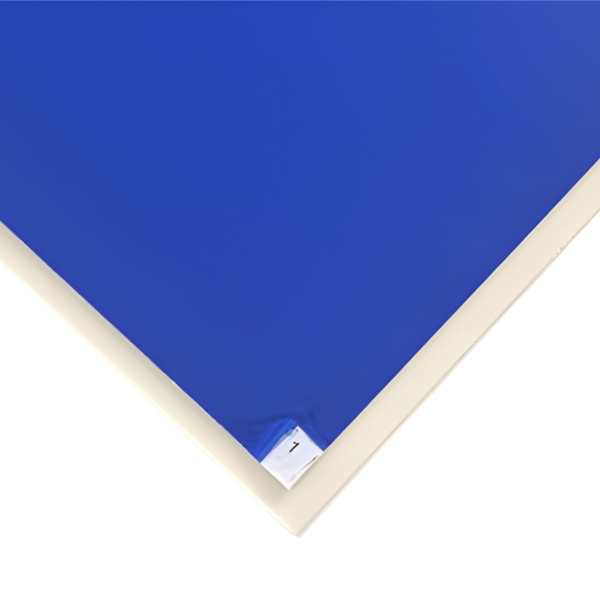
Standard Disposable Tacky Dust Mats - 60cm x 76cm
Enhance cleanliness and hygiene with our standard-size Disposable Tacky Dust Mats, expertly designed to capture dust, germs, and fine particles. Ideal for sterile environments like hospitals and clean rooms, these…
- Hygienic Design: Antimicrobial additive inhibits bacteria and mould.
- Effective Dust Capture: Tacky surface traps dust, dirt, and fine particles.
- Peelable Layers: 30 numbered layers for simple maintenance.
- Durable Frame: Made of rigid polystyrene with non-slip backing.
From £42.90 + VAT
Refurbishment, fit-out and temporary dust-control zones
Contractors also use tacky mats during refurbishment or fit-out work to reduce dust transfer from work areas into occupied parts of a building. This can be especially useful where a temporary clean-to-dirty transition has been created and housekeeping needs support at one doorway.
A relevant example is the Claro Enterprise case study, which shows tacky mats used to reduce sawdust transfer in a practical site setting.
Foot traffic, wheels and traffic volume
This is the point many buyers need to check more carefully. Not every tacky mat suits the same traffic.
-
Mainly foot traffic: This is the most typical use. If people are walking through a controlled doorway one by one, tacky mats are often a straightforward fit.
-
Occasional trolleys or light wheels: Some sites use tacky mats for light wheeled traffic, but product choice matters. You should verify whether the specific mat is intended for that use.
-
Frequent wheels or heavier traffic: This is where expectations need to be more cautious. High wheel loads, constant rolling traffic or rough site movement can shorten mat life or make a tacky mat the wrong choice.
If your doorway has heavy use, unreliable user behaviour, or constant wheeled equipment, look at whether a more robust entrance control method or a wider site procedure would be more suitable.
Large Disposable Tacky Dust Mats may suit buyers who need a larger disposable format for a defined threshold point, but the editor should verify exact traffic suitability before publication.
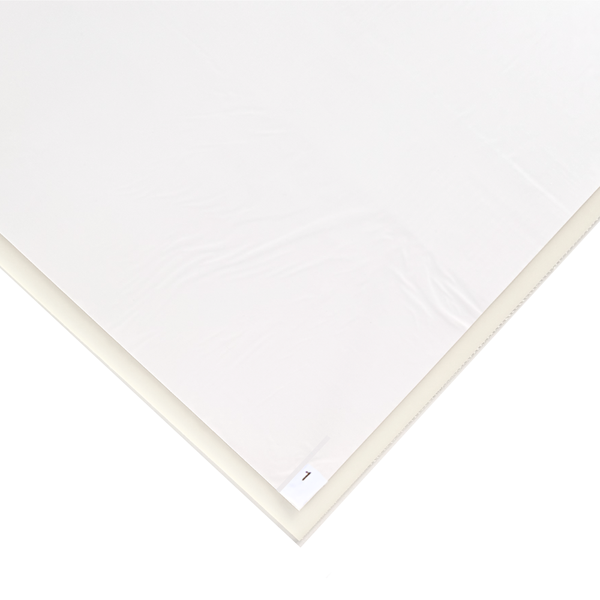
Large Disposable Tacky Dust Mats - 80cm x 130cm
Maintain impeccable hygiene with our Large Tacky Dust Mats, expertly designed to trap fine dirt, dust, and debris. Featuring a high-tack adhesive surface, these mats are perfect for construction sites,…
- Large Size: 80cm x 130cm for double-width doorways.
- Hygienic Design: Non-toxic antimicrobial adhesive ensures cleanliness and safety.
- Long-Lasting Use: Each mat includes 30 peel-off adhesive sheets.
- Slim Profile: 6.5mm thickness ensures a trip-free, seamless fit.
From £84.90 + VAT
Another practical example is the nLighten UK case study, which shows tacky dust mats used to support server room cleanliness at an entry point.
How to choose the right tacky mat
Start with the contamination problem
Ask what you are actually trying to reduce. Tacky mats are designed to catch loose dust and debris transferred by contact. They are a poor fit if the main problem is moisture, airborne contamination, or dirt carried in across a wide uncontrolled entrance.
Check the entrance layout
The mat needs to sit where people or wheels must cross it before entering the cleaner area. If users can step around it, the mat will not do much. A clean, dry and level floor beneath the mat also matters for stable placement.
Choose a size people will actually use
If the mat is too small, people can miss it with part of the foot or bypass it entirely. A larger format can make sense where the doorway is wider, traffic is less disciplined, or trolley alignment needs more contact area.
Think about inspection and replacement
A tacky mat only works well if someone checks it. Layers should be peeled away when the surface looks soiled, the tack has dropped, or debris starts to transfer past the mat. Busier and dirtier areas will use layers faster than cleaner, low-traffic entrances.
If you already use a base mat and only need replacement layers, Tacky Step Mat Refill Pads may be the relevant option.
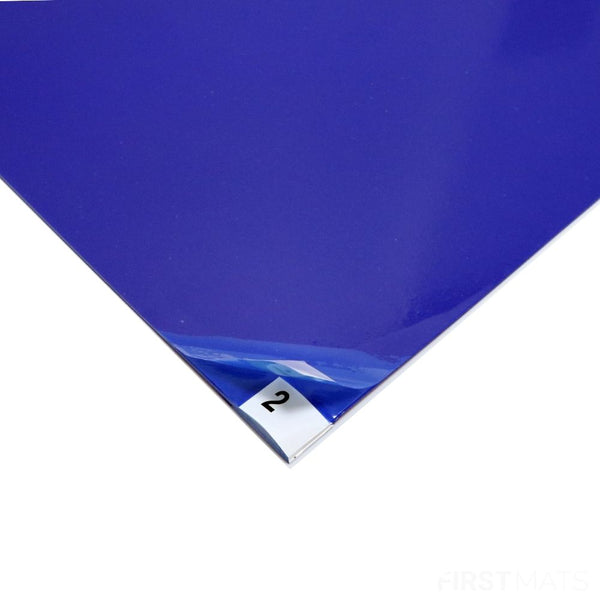
Tacky Dust Mat Refill Pads
The Tacky Dust Mat Refill Pads are designed to keep your tacky mats working at their best, ensuring dust, dirt, and fine particles are trapped before they enter sensitive areas.…
- Multi-Layer Design: 30 numbered peel-off layers for continuous cleanliness.
- Antimicrobial Adhesive: Prevents bacterial, mould, and mildew growth.
- FDA-Approved: Safe for direct food contact environments.
- Durable and Slim: Polyolefin resin construction with a 6.5mm height.
From £42.90 + VAT
Limits, maintenance and when to consider something else
Tacky mats have clear limits. They do not clean the whole room, they do not remove airborne contamination, and they should not be treated as proof of sterility, compliance or infection control performance.
They also need day-to-day attention. Staff need a simple routine for checking the surface, peeling used layers and disposing of waste sheets in line with site practice. If nobody owns that task, performance usually drops quickly.
You may need an alternative or an added control when:
-
traffic is very high
-
the entrance is often wet
-
wheels are frequent or demanding
-
users can enter from several directions
-
you need a wider contamination-control system, not just doorway contact capture
In those cases, look at cleaning procedures, zoning, overshoes, standard entrance mats for general dirt control, or more specialised flooring designed for the environment.
Quick buyer checklist
-
What contamination am I trying to reduce: loose dust and debris, or something else?
-
Is traffic mostly shoes, occasional wheels, or frequent wheeled equipment?
-
How much daily traffic crosses this exact point?
-
Can I place the mat where everyone must step or roll over it?
-
Is the floor clean, dry and level?
-
Do I need a larger format to avoid people missing the mat?
-
Who will inspect it and peel layers when needed?
-
How will used sheets be disposed of on this site?
If you can answer those questions clearly, you are much more likely to choose a tacky mat that fits the job instead of expecting too much from it.