Buying Guides
Floor Mats Guide for Housing Associations and HMOs

Housing associations, HMO landlords, and property managers are responsible for shared spaces that see constant daily use. Communal entrances, corridors, stairwells, and facilities experience high foot traffic, frequent cleaning, and an ongoing need to remain safe for all residents.
At First Mats, we work with housing providers across the UK who face these challenges every day. Matting is often treated as a minor detail, but in reality it plays a key role in reducing slip risks, protecting floors, and supporting good hygiene in communal areas.
Selecting the right matting for housing associations and HMOs is therefore not just a practical decision, it directly supports landlords’ duties to manage risks such as slips, trips, and falls. While no legislation specifies the exact type of mat required, the Housing Health and Safety Rating System (HHSRS) under the Housing Act 2004 identifies hazards such as falls on level surfaces and stairs as priority concerns.
In HMOs, the Management Regulations 2006 require floors, staircases, and communal areas to be kept clean, sound, and free from obstructions. In practice, well-chosen, fit-for-purpose matting forms an important part of meeting these obligations.
Below, we outline the most suitable types of matting for communal entrances, corridors, kitchens, and shared amenities, explaining the problems they solve and the safety features landlords and property managers should prioritise.
Entrance Areas: Managing Water, Dirt, and Footfall
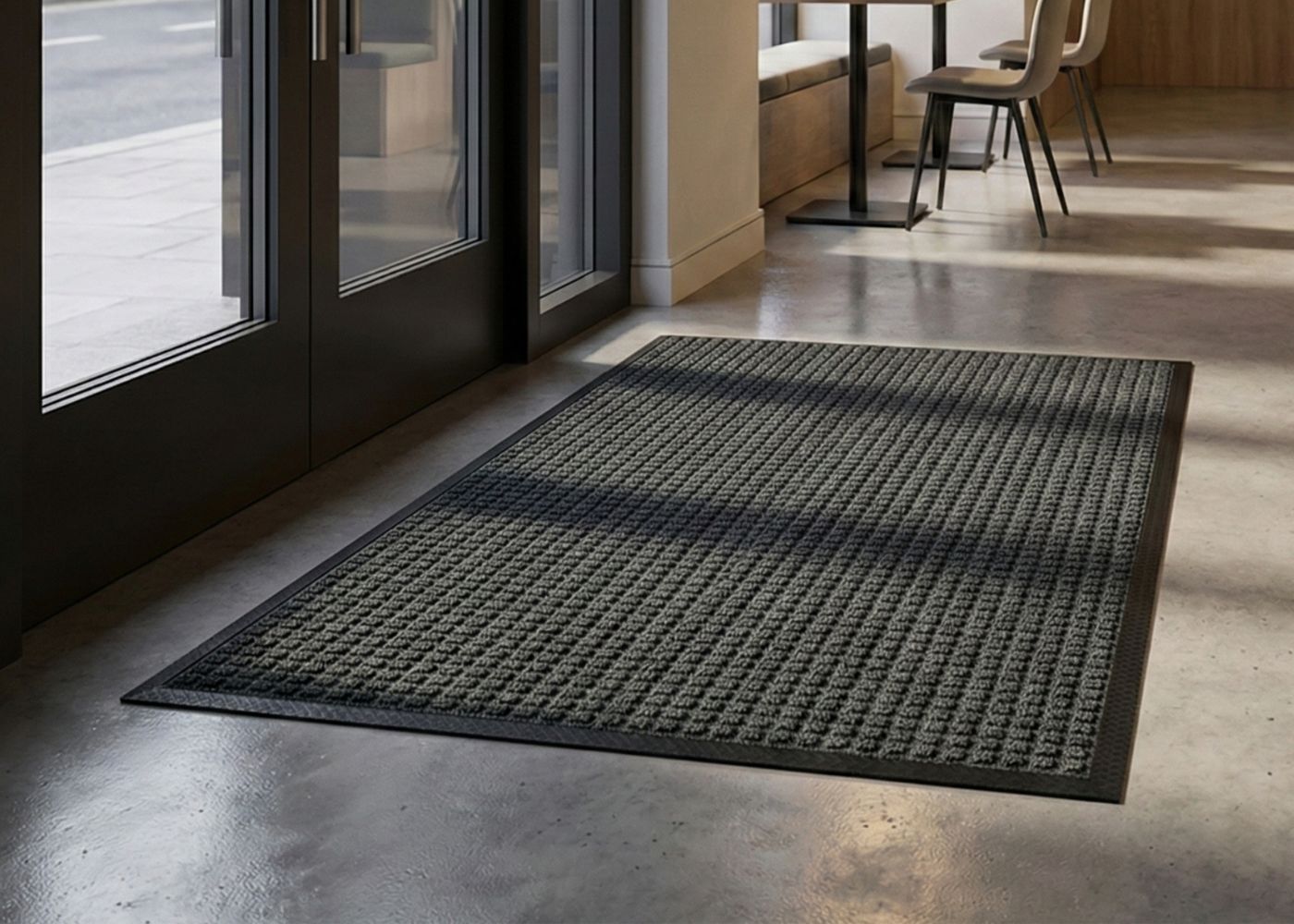
The entrance lobby is the busiest part of any shared building. Residents and visitors bring in water, mud, and grit that can spread across hard flooring, creating slip hazards and increasing the workload for cleaning teams. Durable, well-fitted entrance matting is the first and most important line of defence.

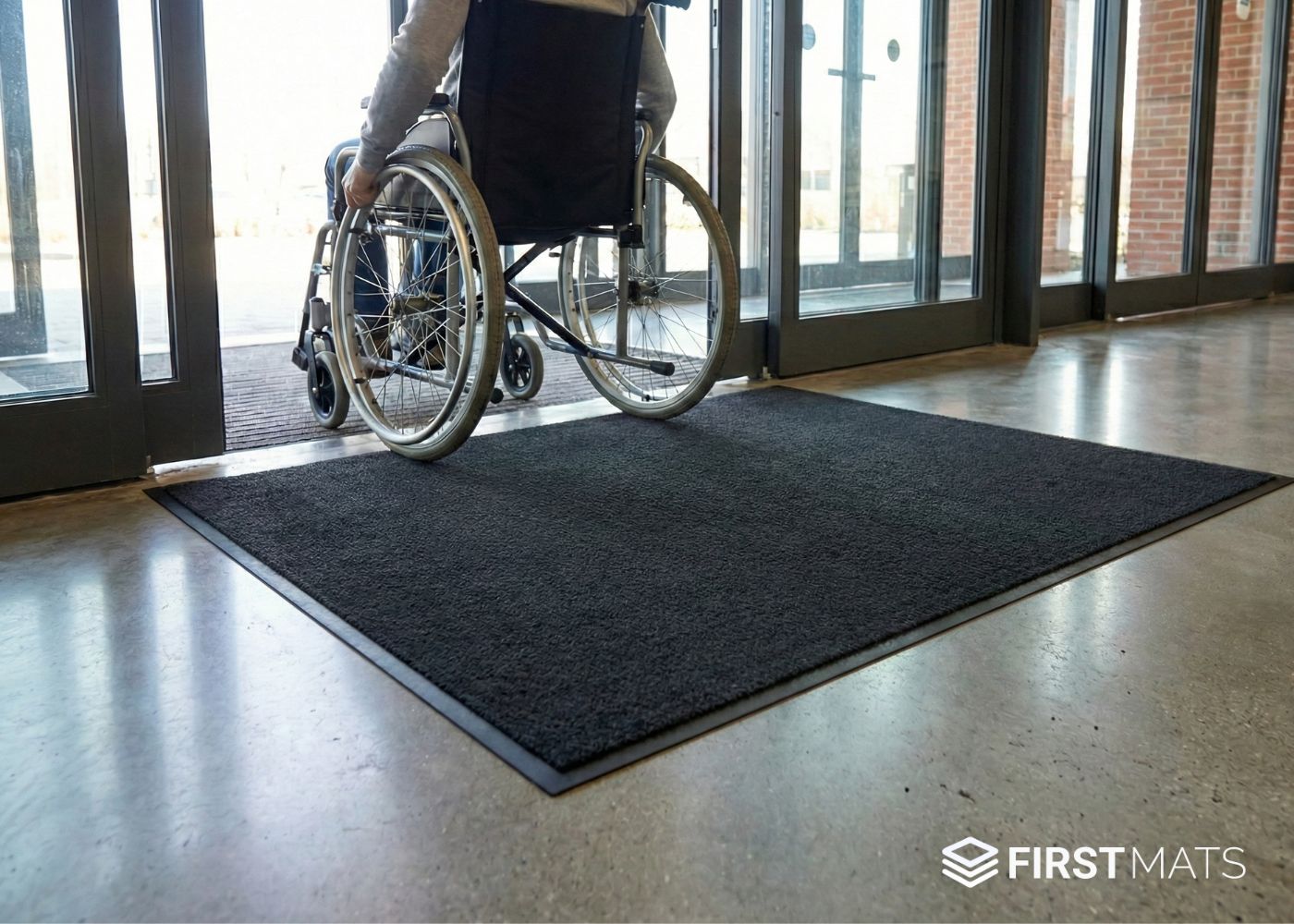
The problem: High foot traffic quickly leads to dirty floors, moisture build-up, and slip risks, particularly during wet weather. Landlords must also consider wheelchair accessibility, meaning mats must be low-profile and easy to roll over. Traditional coir matting, while effective at scraping dirt, is often too rough and uneven for wheelchair users.
The solution: The experts at First Mats suggest using robust, commercial-grade entrance mats with strong scraping fibres, high absorbency, and anti-slip rubber backings. These types of mats are ideal for communal entrances, offering reliable performance in busy environments. For buildings that require wheelchair-friendly mats, look for options with a smooth, accessible surface that still absorb moisture effectively.
AquaProtect Super Absorbent Door Mat
First Mats recommendationThe AquaProtect Super Absorbent Door Mat is made for entrances that have to deal with wet weather, muddy shoes, and heavy daily footfall. Holding up to 6 litres of water…
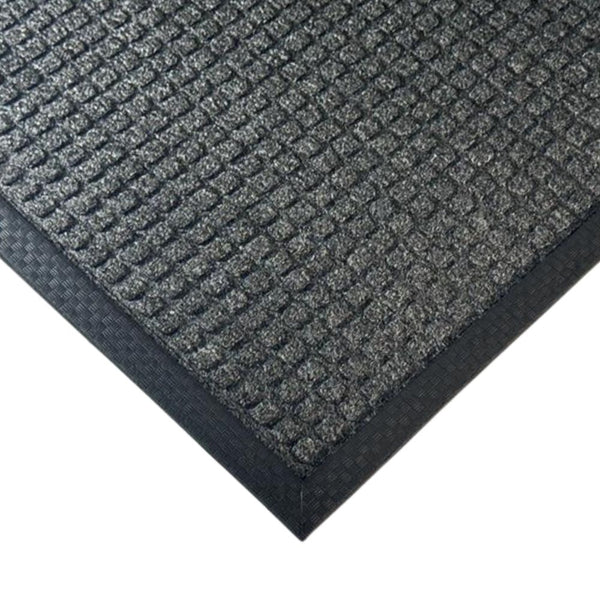
- Super Absorbent: Holds up to 6 litres of water per square metre.
- Highly Durable: 10.5mm thickness with Decalon fibres for long-lasting use.
- Non-Slip Design: Rubber backing prevents movement on smooth floors.
- Wheelchair Accessible: Reinforced border for added stability.
From £30.60 + VAT
Where a matwell is already installed, selecting the right insert is crucial. The Matwell Mats collection includes DDA-compliant options suitable for accessible housing and local authority buildings.

Coir Matting remains a popular choice, but isn't the best option for wheelchair users or fire safety.
Coir matting remains a good choice for certain buildings, especially older properties or those aiming for a traditional appearance. The Coir Matting range by First Mats offers durable natural fibre options, but these should be avoided where wheelchair access is required.
Fire Safety: A Key Requirement for Social Housing
In many housing associations and HMOs, fire safety is a central management responsibility. While most commercial entrance mats are considered low risk, many local authorities and institutional landlords want reassurance that mats have been tested to specific standards.
The problem: Some low-cost mats may not meet fire safety expectations, which can be an issue in communal areas governed by strict housing safety policies.

The Dura-Plush is a Fire-Resistant door mat from First Mats
The solution: Choose independently tested, flame-retardant matting, such as the Dura-Plush from First Mats. These are a popular choice among housing associations due to their robust construction and certified flame-retardant properties, offering reassurance for high-occupancy buildings.
Dura-Plush Flame Retardant Door Mat
First Mats recommendationThe Dura-Plush Flame Retardant Door Mat is designed to meet strict fire safety standards, making it a reliable choice for housing associations, local councils, and multi-occupancy buildings. Fully certified to…
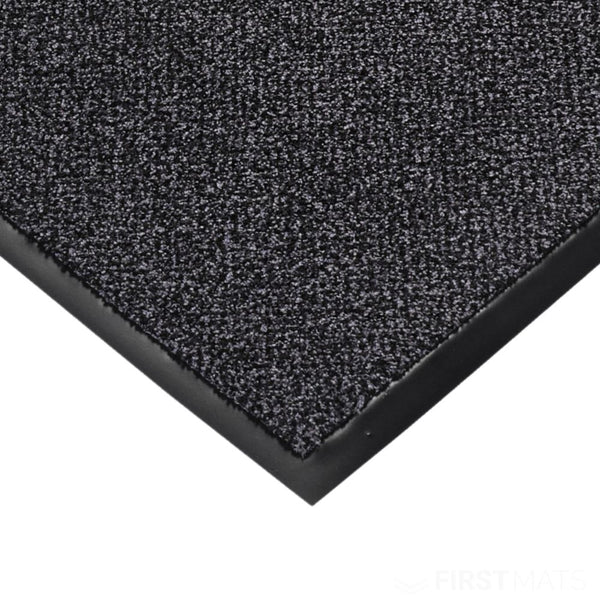
- Flame Retardant: Certified to Cfl-S1 standards for fire safety.
- Durable Fibres: Hard-wearing polyamide pile ensures long-lasting performance.
- UV Resistant: Maintains vibrant colours even in direct sunlight.
- Anti-Slip Backing: Vinyl backing keeps the mat securely in place.
From £34.62 + VAT
Corridors and Transitional Areas
Corridors in HMOs and apartment blocks experience frequent foot traffic from multiple occupants. These areas are often narrow, increasing the risk of trips or slips if mats move out of place or curl at the edges.
The problem: Loose or poorly chosen mats can become hazards themselves, particularly where residents carry items, move furniture, or access staircases.
The solution: Select mats with low-profile, bevelled edges and high-grip rubber backings to prevent movement. Mats in these zones should be durable, easy to clean, and designed to stay flat. While coir is attractive, its higher profile means DDA-compliant matwell inserts or accessible entrance mats are preferable for corridors and narrow walkways.
Communal Kitchens: Reducing Slips and Improving Cleanliness
Shared kitchens in HMOs and supported housing must tolerate heavy use throughout the day. Spills from sinks, kettles, and cooking can quickly create slip risks on vinyl or laminate floors, and landlords must take reasonable steps to reduce these hazards.
The problem: Moisture and food spills make floors slippery, increasing the risk of falls and elevating cleaning demands.
The solution: Use hard-wearing, absorbent mats that help manage spills and protect flooring. Mats with rubber backings prevent movement, while absorbent fibres help keep surfaces dry and hygienic. These are especially beneficial in buildings with frequent staff visits or support workers who rely on safe flooring conditions.

Premier-Plush Made to Measure Door Mat
First Mats recommendationThe Premier-Plush Made to Measure Door Mat is the ideal choice for anyone who needs a mat tailored to their exact space. With widths from 50cm to 150cm and lengths…
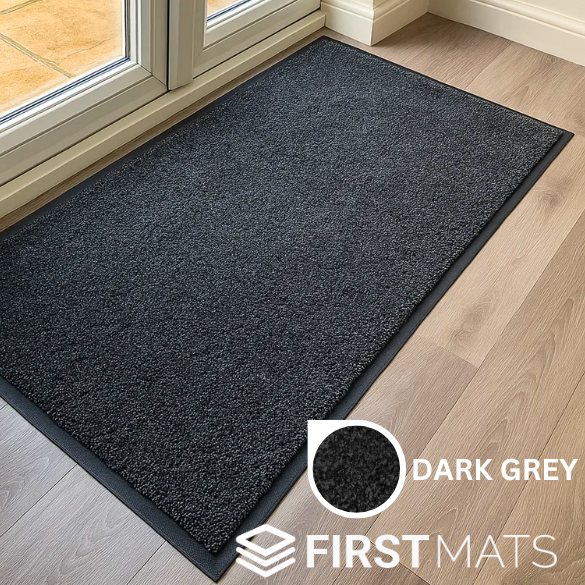
- Custom Size Options: Available in widths from 50cm to 150cm and lengths from 100cm to 550cm.
- Superior Absorption: Traps moisture and dirt to keep entrances clean.
- Durable & Long-Lasting: Heavy-duty construction withstands high foot traffic.
- Non-Slip Backing: Smooth for hard floors, claw for carpets.
From £0.83 + VAT
Legal Responsibilities and Best Practice
Although no legislation mandates the use of a specific mat, several regulatory frameworks require landlords and managers to reduce risks:
Housing Health and Safety Rating System (HHSRS): Identifies falls on level surfaces and stairs as key hazards. Using suitable matting is a recognised way of reducing these risks.
HMO Management Regulations 2006: Require that floors, staircases, and communal areas are kept clean, safe, and free of obstructions. Mats must therefore be secure, durable, and appropriate for the setting.
HSE Slips and Trips Guidance: Advises that flooring must remain safe even when contaminated. Good-quality entrance and kitchen matting is a practical method to meet this obligation, especially in buildings with regular staff or visitor access.
Fire Safety Standards: Many housing associations now specify flame-retardant mats for communal areas.
Choosing the Right Mats for Housing Associations and HMOs
Selecting the right HMO floor mats depends on the building layout, resident needs, and the flooring materials in place. Entrance areas benefit from durable, absorbent mats; matwells require fitted inserts; communal kitchens need spill-resistant options; and corridors call for low-profile, non-slip designs. Fire resistance and DDA compliance are also increasingly important considerations for modern housing providers.