Buying Guides
The Facility Manager’s Guide to Matting Strategy

Why matting is a contamination control system—not a decorative afterthought
1. The “Hidden” Asset: Why Matting Is a Strategic Control
Research consistently shows that up to 80% of dirt in a building is carried in on footwear. For Facility Managers, this is a cost and liability problem more than simply an aesthetic issue. Dirt increases cleaning frequency, accelerates floor wear, and dramatically raises the risk of slip-and-fall incidents.
Under the Health and Safety at Work Act 1974, employers have a duty to provide a safe working environment. Wet, contaminated floors are a foreseeable risk, and FMs are often the first line of accountability.
The solution recommended by First Mats is not buying “a mat.” It is implementing a contamination control system based on zoning. A single mat cannot scrape, wipe, and dry shoes effectively, which is why British Standard BS 7953:1999 (Entrance Flooring Systems) explicitly defines entrance matting as a system that must scrape, wipe, and retain soil.
2. The Entrance Defence System (The 3-Zone Strategy)
The most effective matting strategies follow the “Rule of 15”: it takes approximately 15–20 feet (4.5–6 metres) of walking on matting to remove close to 100% of dirt and moisture. This distance is achieved through zoning, not a single oversized mat. At First Mats, we often advise customers that the bigger the mat, the better it will perform.
Zone 1: Exterior — The Heavy Scrapers

Goal: Stop heavy mud, grit, and snow before it enters the building.
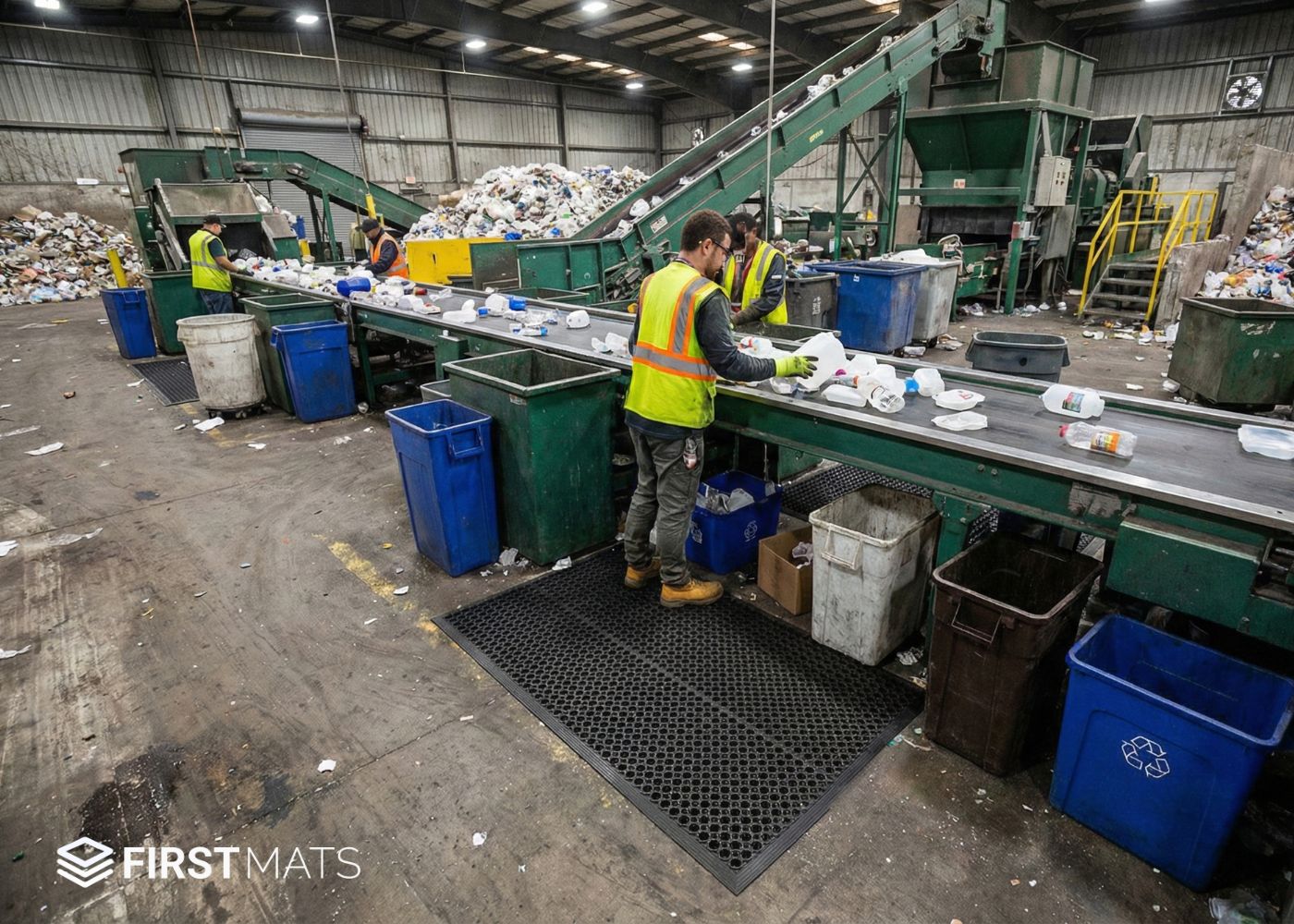
Exterior mats must be aggressive and durable. The most important design feature is flow-through drainage, using holes or channels that allow water to drain away rather than pooling on the surface.
EntraGuard Rubber Door Mat with Holes
First Mats recommendationThe EntraGuard Rubber Door Mat with Holes is built for tough outdoor use, combining durability with smart design. Its open hole pattern scrapes dirt and stones from shoes while allowing…
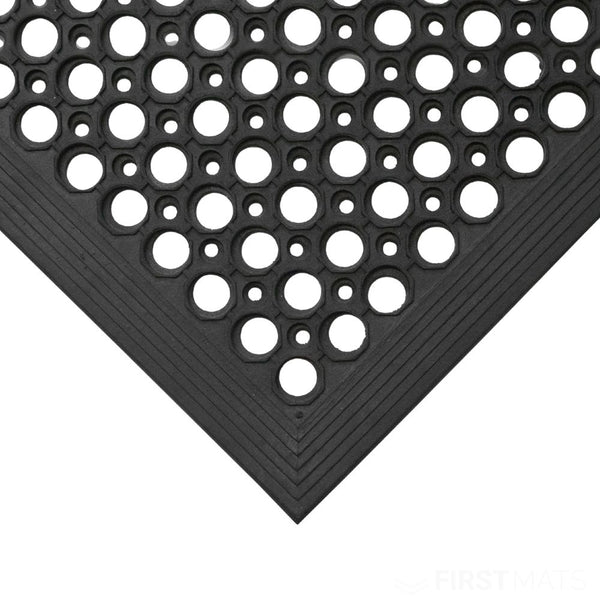
- Durable Natural Rubber: Long-lasting and wear-resistant material.
- Improved Drainage: Hole pattern removes water and debris efficiently.
- Slip Resistant: Meets EN 13552 Cat R10 standards for safety.
- Temperature Resistant: Performs in extreme conditions from -20°C to +130°C.
From £19.45 + VAT
Zone 2: Vestibule — The Hybrid Scrape & Wipe

Goal: Remove finer particles and begin moisture absorption.
This is where bi-level construction is critical. The upper surface wipes the shoe clean while the lower level traps and stores dirt so it cannot be re-tracked. At First Mats, we recommend looking for Heavy-Duty Polypropylene Entrance Mats designed for commercial entrances.
AquaProtect Super Absorbent Door Mat
First Mats recommendationThe AquaProtect Super Absorbent Door Mat is made for entrances that have to deal with wet weather, muddy shoes, and heavy daily footfall. Holding up to 6 litres of water…
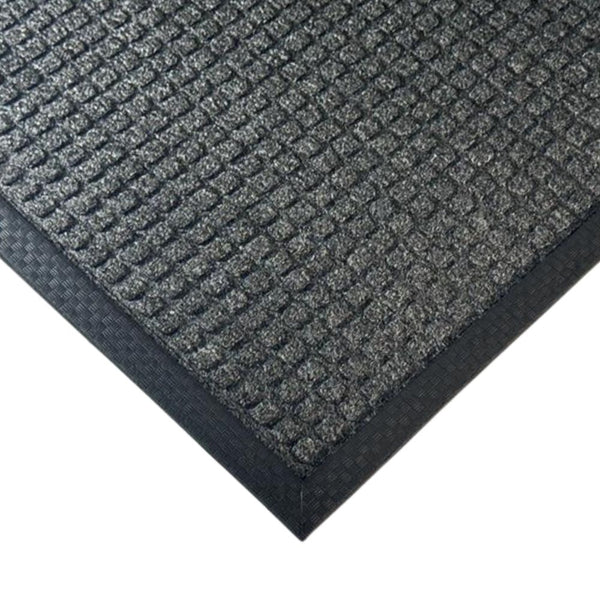
- Super Absorbent: Holds up to 6 litres of water per square metre.
- Highly Durable: 10.5mm thickness with Decalon fibres for long-lasting use.
- Non-Slip Design: Rubber backing prevents movement on smooth floors.
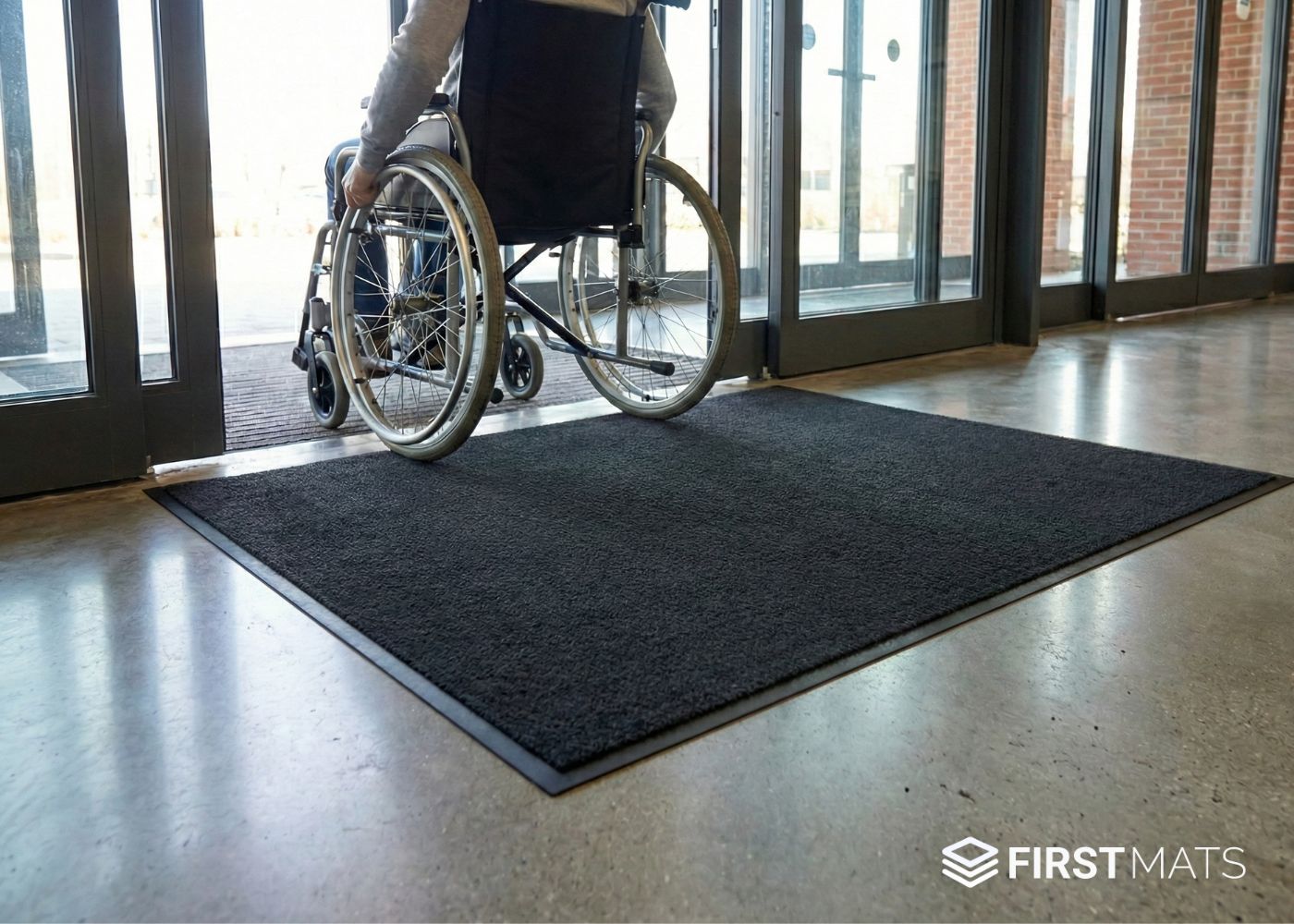
- Wheelchair Accessible: Reinforced border for added stability.
From £30.60 + VAT
Zone 3: Internal Reception — The Final Polish

Goal: Eliminate residual moisture to prevent slips on polished or tiled floors.
At this stage, scraping is secondary. The priority is high face weight, dense nylon or plush fibres that absorb moisture quickly and retain it until cleaning. As mentioned earlier, the bigger the mat, the better it will perform, so look for Large Commercial Entrance Mats as these will keep your floors looking cleaner for longer.
EntryPlus Large Entrance Mat
First Mats recommendationThe EntryPlus Large Entrance Mat is a smart, practical entrance mat designed to keep larger doorways cleaner, safer and more welcoming. Ideal for homes, offices, schools and commercial buildings with…
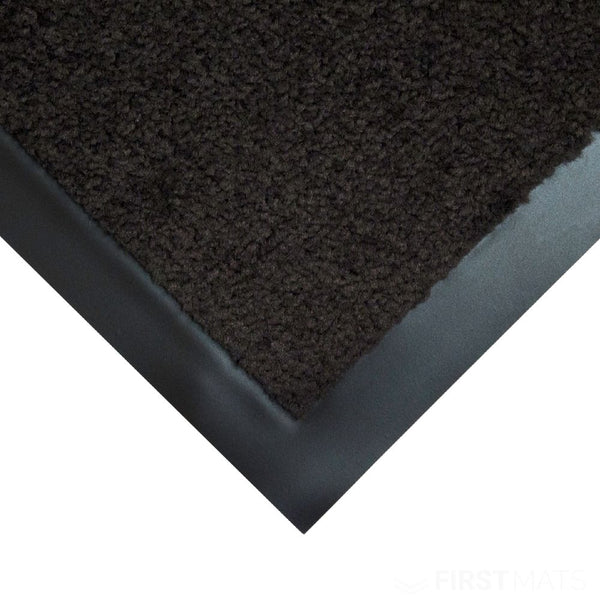
- Ideal for Medium Traffic: Perfect for schools, offices, and public buildings.
- Solid colours and large sizes: Choose from four colours and sizes ranging from 60x90cm to 120x240cm.
- Durable Construction: Polypropylene fibres with a dense vinyl base for added longevity.
- Improves Cleanliness: Effectively traps dirt and water.
From £32.98 + VAT
3. Safety & Compliance Beyond the Entrance
Ergonomics & Worker Welfare
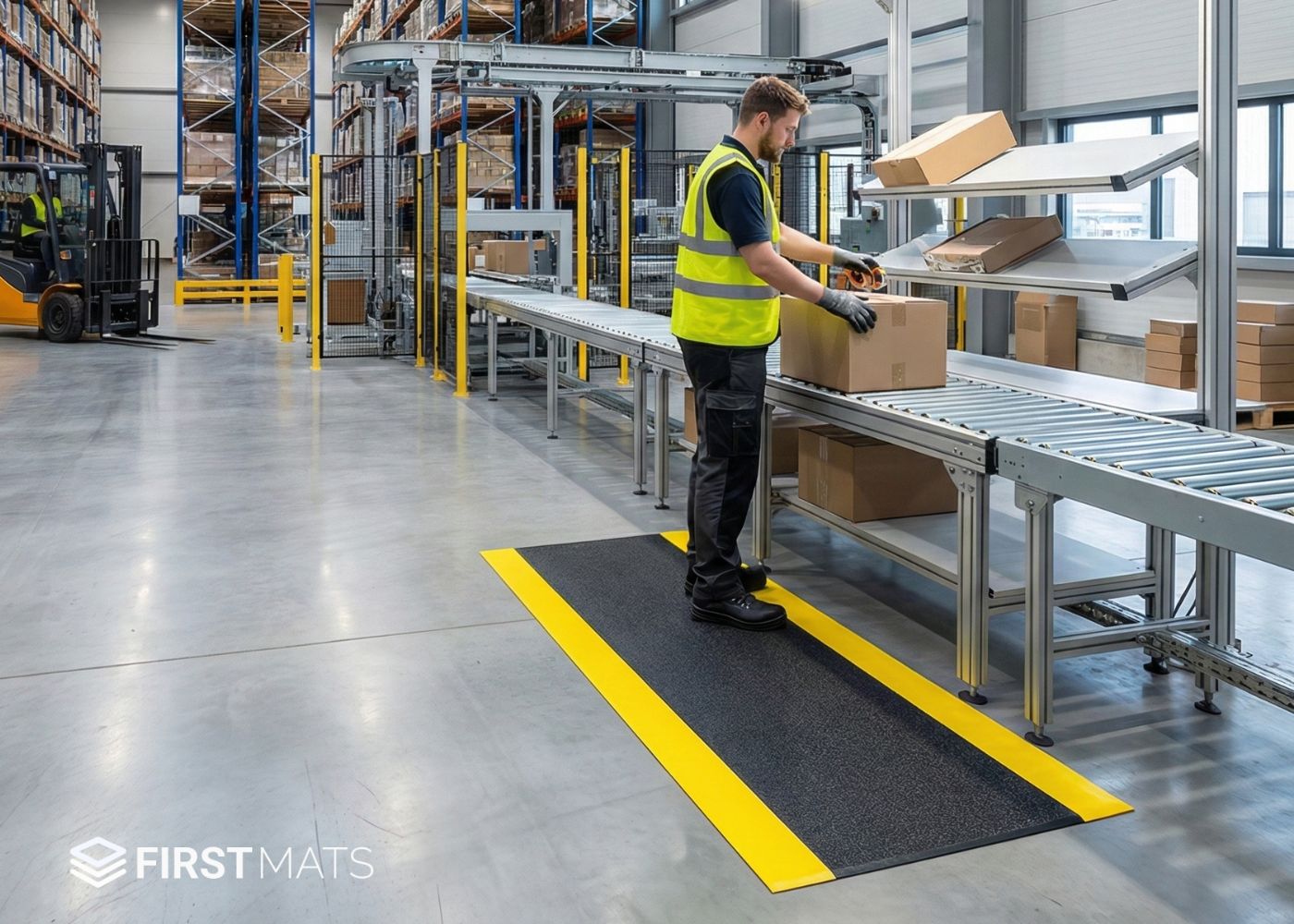
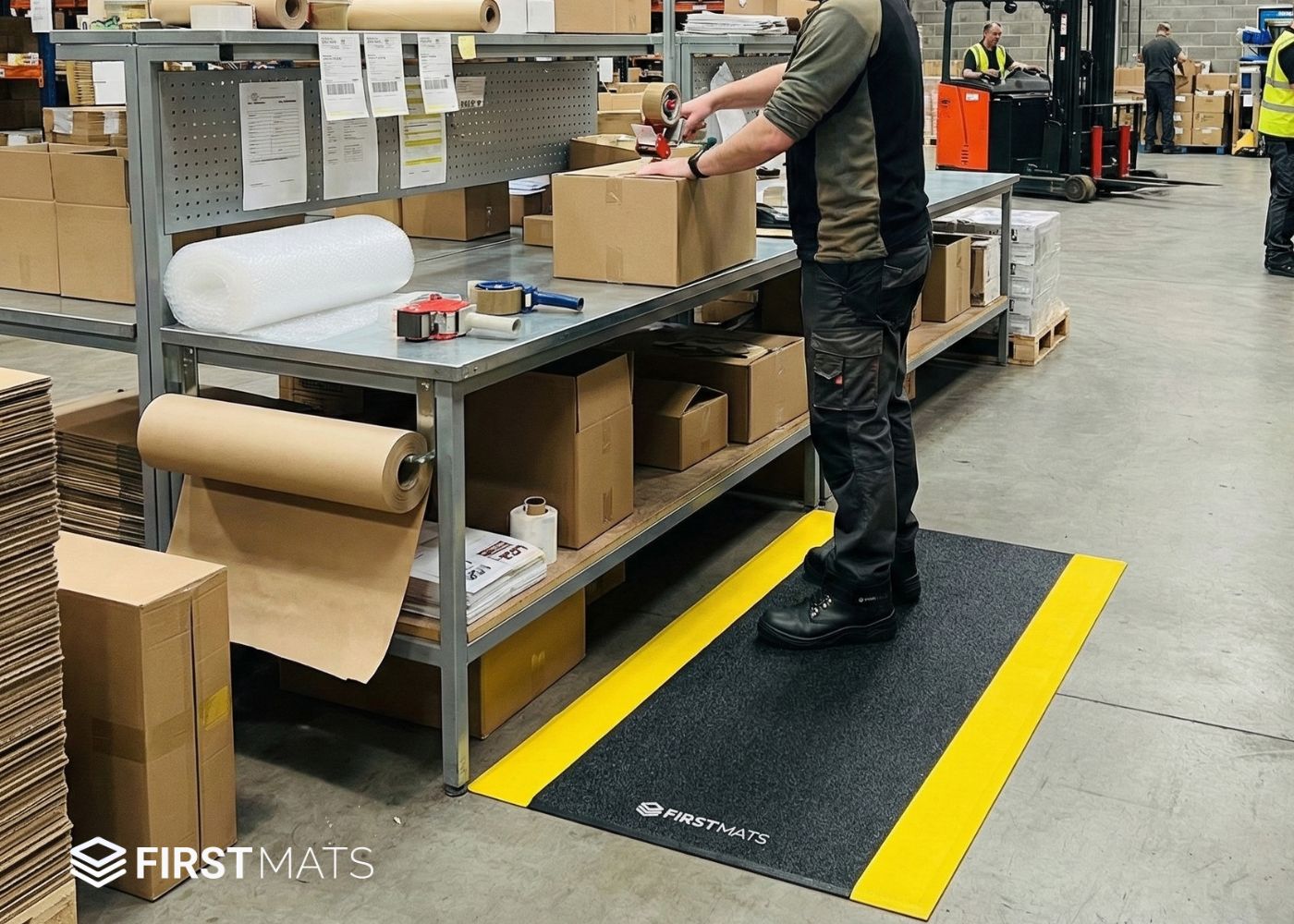
Prolonged standing on concrete restricts blood flow and contributes to fatigue and musculoskeletal disorders. Anti-fatigue mats create a micro-instability that encourages subtle leg movement, acting as a “pump” to promote circulation.

AtEase Standard Anti-Fatigue Mat
First Mats recommendationThe AtEase Standard Anti-Fatigue Mat offers a simple, effective way to improve comfort in light-use work areas. Whether youre packing boxes or assembling small items, this mat provides welcome relief…
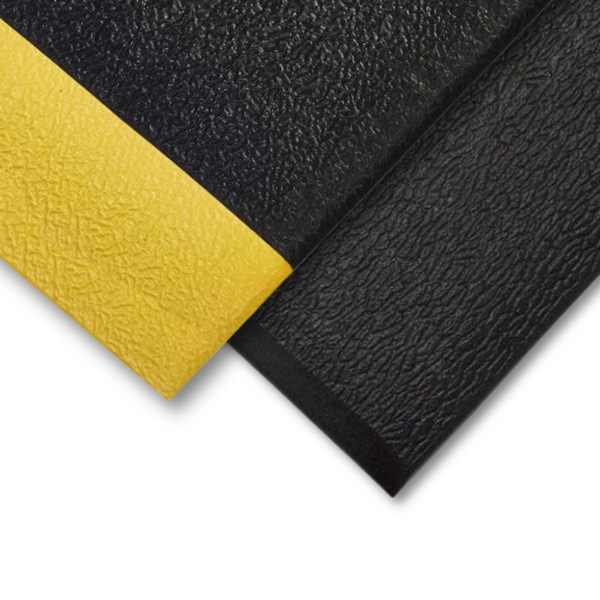
- Optimal Thickness: 9mm cushioning provides the perfect balance of comfort and support.
- Flexible Sizing Options: Choose from standard sizes or customize for the perfect fit.
- Safety First: High-visibility yellow safety border and beveled edges reduce trip risks.
- Versatile Use: Ideal for dry industrial and commercial spaces.
From £22.50 + VAT
High-Risk Areas: Kitchens & Wet Zones
Not all “grease-resistant” mats are suitable for kitchens. Only grease-proof (100% nitrile) matting withstands prolonged exposure to oils without cracking or breaking down.

Electrical Safety
In front of high-voltage switchboards, electrical insulating matting is not optional. These mats reduce grounding risk and must meet relevant BS/IEC ratings. First Mats suggest looking specifically for Switchboard Electrical Insulating Matting.
4. Buy Right: Custom vs. Standard Mats
One of the most common FM mistakes is buying mats that are simply too small. Undersized mats drift, curl, and create trip hazards, particularly in high-traffic entrances.
Wherever possible, specify wall-to-wall or recessed well-filling matting. This aligns with accessibility guidance under BS 8300-2:2018, which recommends that entrance matting be flush with surrounding floor surfaces.

Material science matters. Nitrile rubber backing is the industry gold standard. Unlike PVC/vinyl, nitrile resists oil, temperature change, and shrinkage, meaning it stays flat and secure for years.
Premier-Plush Made to Measure Door Mat
First Mats recommendationThe Premier-Plush Made to Measure Door Mat is the ideal choice for anyone who needs a mat tailored to their exact space. With widths from 50cm to 150cm and lengths…
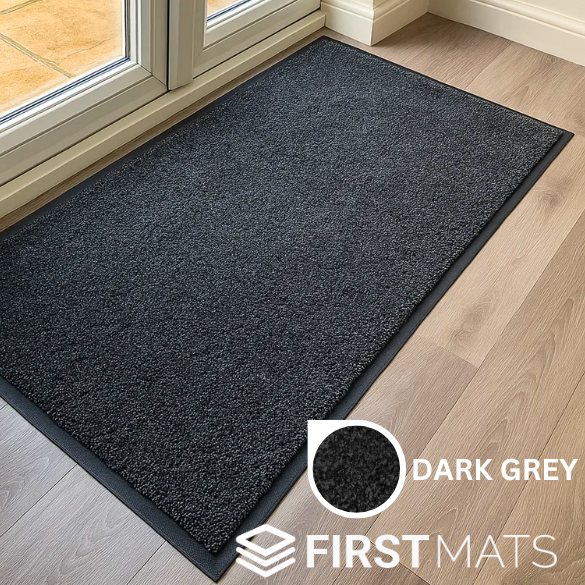
- Custom Size Options: Available in widths from 50cm to 150cm and lengths from 100cm to 550cm.
- Superior Absorption: Traps moisture and dirt to keep entrances clean.
- Durable & Long-Lasting: Heavy-duty construction withstands high foot traffic.
- Non-Slip Backing: Smooth for hard floors, claw for carpets.
From £0.83 + VAT
The Facility Manager’s Matting Audit (Copy-Paste)
At First Mats, we suggest using the checklist below to audit your current floor matting, so you can decide if you need to use mats or if existing mats need to be replaced.
Part 1: The Entrance — “First Impression” Test
- [ ] At least 4.5–6m of matting from curb to lobby
- [ ] Exterior scraper mat installed before internal flooring
- [ ] Doors clear mats without dragging
- [ ] Mats do not slide when edges are nudged
- [ ] No curled, rippled, or torn edges
Part 2: Employee Welfare — “Productivity” Test
- [ ] Standing staff provided with anti-fatigue matting
- [ ] Bevelled edges present where trolley traffic exists
Part 3: High-Risk Zones — “Compliance” Test
- [ ] Kitchens use grease-proof (not just grease-resistant) mats
- [ ] Electrical panels protected by rated insulating matting
- [ ] Wet areas use flow-through drainage designs
Part 4: Maintenance Protocol
- [ ] Entrance mats vacuumed daily
- [ ] Periodic deep cleaning scheduled
Compliance References
- Health and Safety at Work Act 1974
- Equality Act 2010
- BS 7953:1999 — Entrance Flooring Systems
- BS 8300-2:2018 — Accessible and Inclusive Built Environment
- HSE: Slips and Trips Statistics