Buying Guides
Which Anti-Fatigue Mat Is Best for Standing All Day?
There is no single best anti-fatigue mat for standing all day. The right choice depends on where you stand, how static the job is, what gets onto the floor, and how much wear the mat needs to handle. This guide compares foam, reinforced or layered designs, polyurethane and rubber in practical terms. It will help you choose a mat that feels supportive without ignoring durability, cleaning, edge stability or site conditions.

Only 10 unique studies were included in a 2018 systematic review on cushioning materials for prolonged standing at work. That is useful evidence, but it is also a reminder not to expect one universal answer for every workplace.
If you are choosing an anti-fatigue mat for standing all day, start with the setting rather than the word comfort. A standing desk, a packing bench and an industrial workstation place very different demands on a mat. The best option is the one that gives enough underfoot support while still matching the floor conditions, cleaning routine and wear level.
Research more consistently measures comfort and fatigue than long-term injury prevention. So it makes sense to treat anti-fatigue matting as one part of a sensible setup, not a cure-all. The HSE guidance on lower limb disorders also recognises anti-fatigue matting as one measure to consider where prolonged standing is part of the job.
What counts as standing all day?
In practice, it means repeated or prolonged standing across a working day rather than sitting down regularly or moving between many different tasks. It does not need a fixed number of hours to feel demanding, and there is no reliable universal cut-off that tells you exactly when one material stops being suitable and another becomes essential.
This is why buying by rough time claims alone can go wrong. A person at a standing desk may stand in short spells but stay in one spot. A machinist or packer may stand for longer and put more wear into the same area of the mat. Footwear, floor hardness and how often the user steps away all change what feels supportive.
How the main anti-fatigue mat types compare
Standard foam
Standard foam mats are often the first option people consider because they feel softer underfoot and are usually aimed at lighter-duty use. They can make sense in office-style settings, reception points or other dry areas where the standing pattern is fairly gentle and cleaning is straightforward.

The trade-off is resilience. A softer mat may feel pleasant at first but can be less suitable where the user stands in the same spot for long periods, where trolley traffic or heavier wear is expected, or where the mat needs to hold its shape well over time. This is why softness on its own is not a good buying shortcut.
Reinforced foam or layered constructions
Reinforced or layered anti-fatigue designs sit between basic foam and heavier-duty specialist mats. They are usually chosen when you want more support and better wear resistance than a simple foam mat, without moving straight to the firmest industrial style.
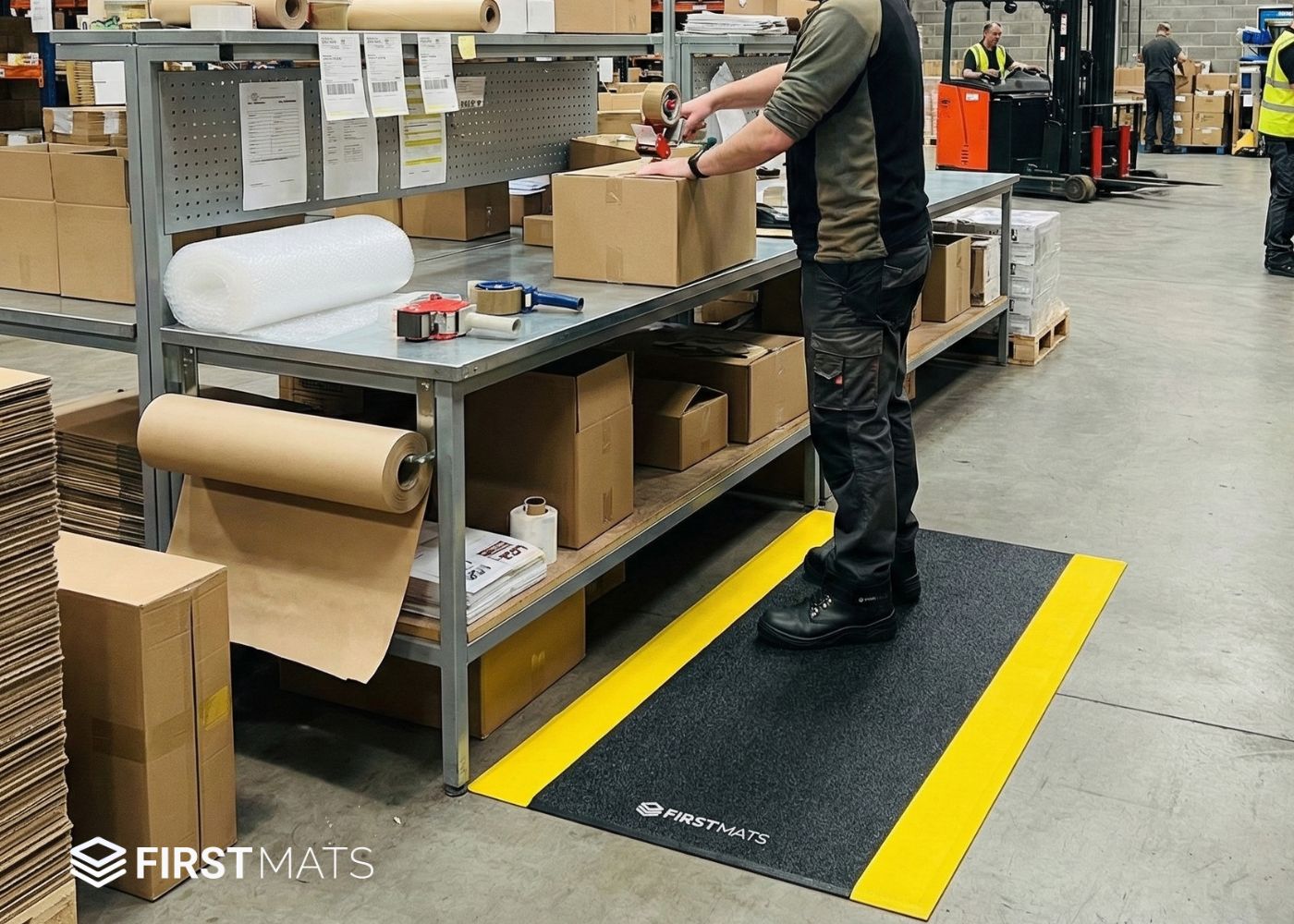
This type is often a sensible middle ground for industrial anti-fatigue mats in warehouses, packing areas and benches where people stand for long stretches but still need a mat that feels forgiving underfoot. Construction details matter here, so product-specific advice is worth checking if the area is especially busy or exposed to dirt, moisture or rolling loads.

Polyurethane
Polyurethane-based constructions may suit heavier-duty applications where resilience and wear resistance matter, but product design still matters. The research pack includes indirect engineering evidence that supports polyurethane as a material with strong mechanical performance under repeated loading, which is one reason it is often considered for tougher use.
That does not mean every polyurethane mat is automatically best for every shift pattern. It does mean this material is worth considering when you need a mat that balances underfoot support with better long-term shape retention than very soft, light-duty foam options.
Rubber
Rubber mats are usually considered where grip, robustness and site conditions matter as much as comfort. They are often a practical fit for workshops, trade counters and some industrial areas, especially where dust, debris or more demanding cleaning routines would quickly show up the limits of a softer office-style mat.

The trade-off is feel. Rubber can be firmer underfoot than softer foam-based options, so the best choice depends on whether your priority is a cushioned standing feel or a tougher surface that better suits the environment.
Standing desk, commercial bench or industrial workstation?
Best fit for a standing desk
For home and office standing desks, a softer anti-fatigue mat often makes sense because the area is usually dry, the user is indoors, and the main aim is underfoot comfort during static standing. You still need enough stability to step on and off the mat confidently, and bevelled edges help reduce the chance of catching a foot.
The Standing Desk Mat is the most relevant type for this setting because it is aimed at desk-based use rather than workshop wear.
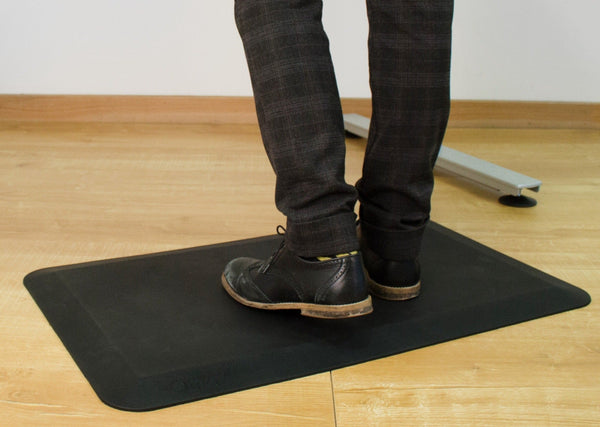
OfficePro Standing Desk Mat - 50cm x 80cm
OfficePro Standing Desk Mat: Unmatched Comfort and Durability High-Density Foam for Superior Comfort: The OfficePro Standing Desk Mat is crafted from high-density foam, providing the perfect balance of comfort and…
- Enhanced Comfort: Reduces fatigue with high-density foam support.
- Durable Build: Polyurethane shell ensures long-lasting use.
- Safety Features: Bevelled edges prevent trips and slips.
- Spacious Design: 50cm x 80cm fits most office setups.
From £57.77 + VAT
If you want a simple office-style option for lighter-duty standing, the Atese Standard Anti-Fatigue Mat is the kind of product to compare against more durable constructions. Look closely at whether the standing pattern is occasional desk use or something closer to all-day static work.
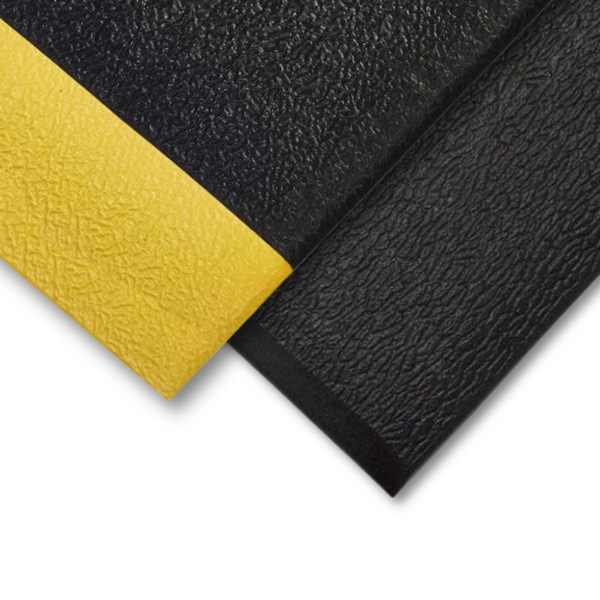
AtEase Standard Anti-Fatigue Mat
The AtEase Standard Anti-Fatigue Mat offers a simple, effective way to improve comfort in light-use work areas. Whether youre packing boxes or assembling small items, this mat provides welcome relief…
- Optimal Thickness: 9mm cushioning provides the perfect balance of comfort and support.
- Flexible Sizing Options: Choose from standard sizes or customize for the perfect fit.
- Safety First: High-visibility yellow safety border and beveled edges reduce trip risks.
- Versatile Use: Ideal for dry industrial and commercial spaces.
From £22.50 + VAT
Best fit for commercial work areas
Commercial settings such as packing benches, counters and back-of-house workstations often need more than a soft top layer. Mats in these areas need to cope with repeated foot traffic, regular cleaning and longer periods of standing without quickly looking tired or feeling unstable.
The Elite Vinyl Top Anti-Fatigue Mat is the kind of option worth considering here because it points to a more durable top-surface construction than a basic foam-only office mat.
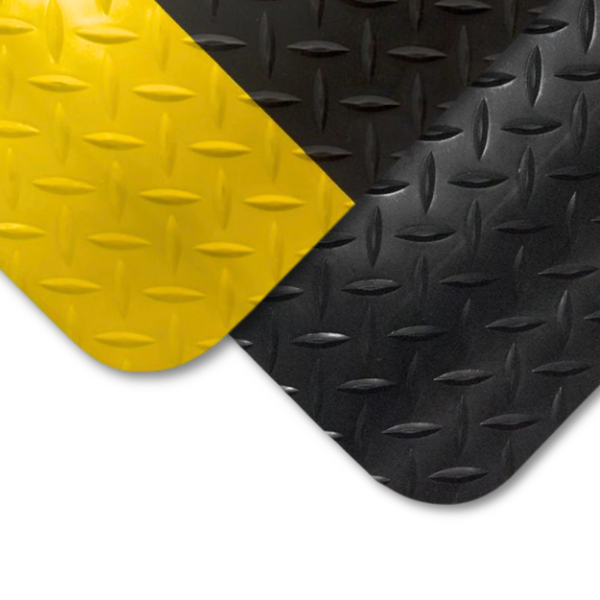
Elite Vinyl-Top Anti-Fatigue Mat
The Elite Vinyl-Top Anti-Fatigue Mat features a tough, wear-resistant vinyl surface that stands up to demanding industrial use. It’s built to handle boots, trolley wheels, and heavy foot traffic without…
- Exceptional Cushioning: 14mm thick foam backing for maximum comfort.
- Durable Vinyl Surface: Resists wear and tear in heavy-duty environments.
- Enhanced Grip: Diamond pattern reduces slips and improves safety.
- Custom Sizes: Options available up to 18.3m in length.
From £51.87 + VAT
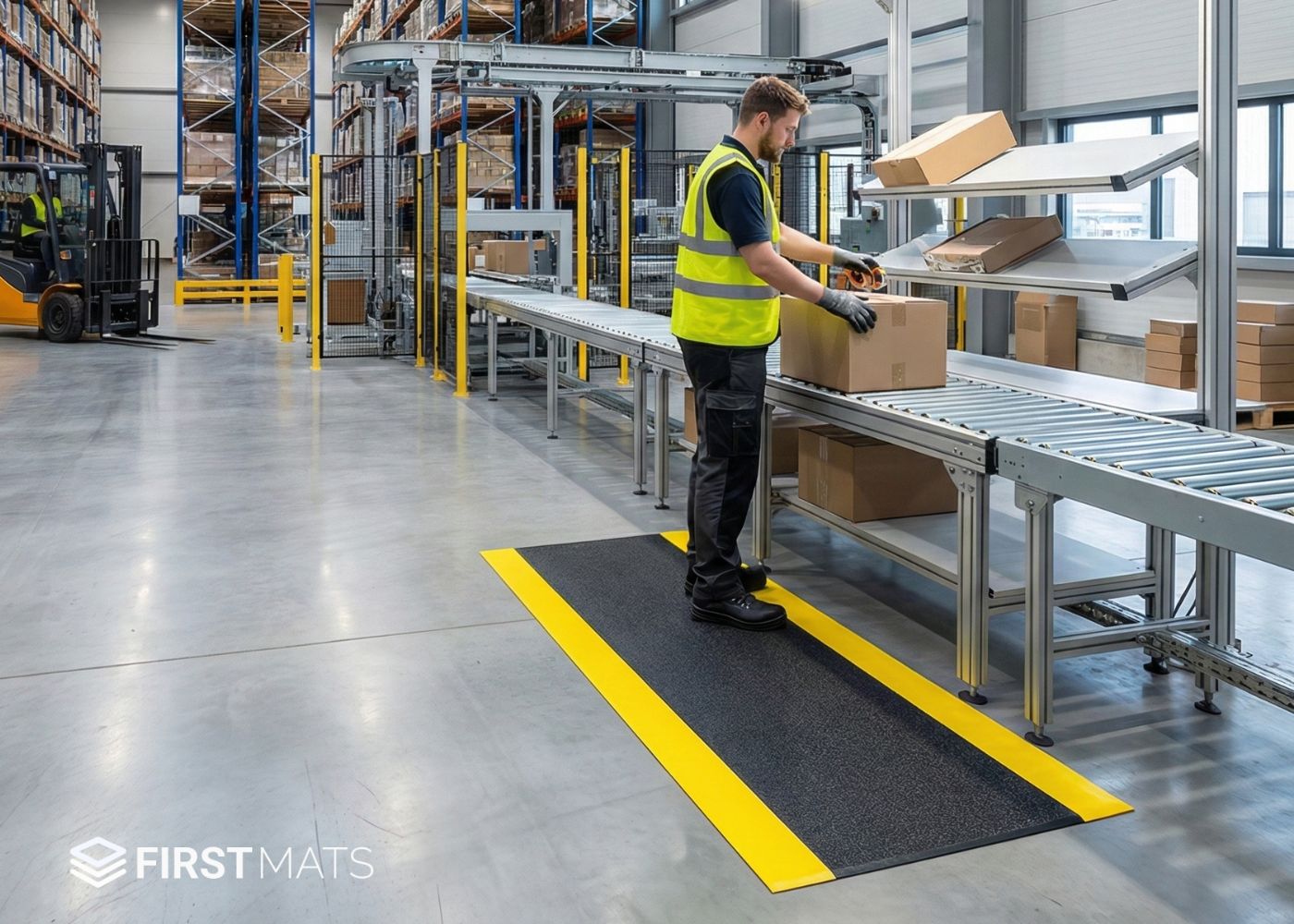
A real-world example may also help if you are buying for a busy workplace rather than a single desk. This case study shows how Elite Vinyl Top Anti-Fatigue Mats were used in a warehouse setting.
Best fit for workshops and industrial areas
Workshops and industrial workstations usually shift the decision away from softness alone. Hard floors, dirt, dust and tougher wear can make a basic office-style mat a poor fit. In some workplaces, floor conditions also mean you need to think carefully about keeping the standing area suitable for the process. OSHA notes that where wet processes are used, dry standing places such as mats should be provided, which is a useful reminder that the floor condition matters as much as the mat itself.
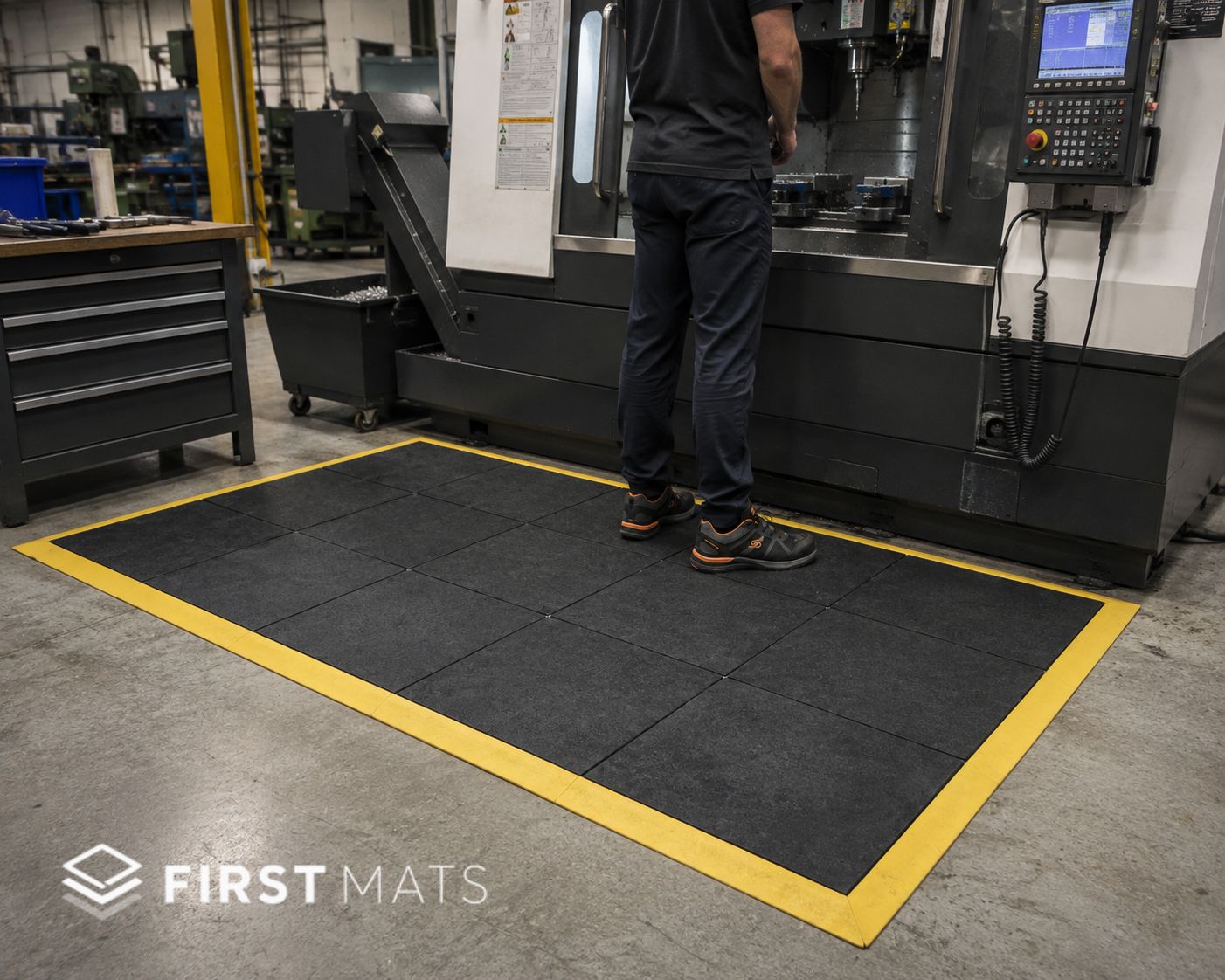
For these settings, the Atese Premium Anti-Fatigue Mat is the kind of heavier-duty anti-fatigue option to compare when you need more resilience than standard foam.
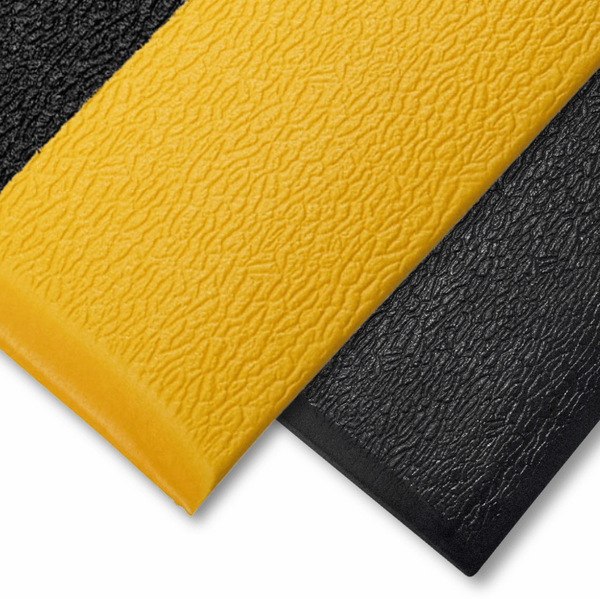
AtEase Premium Anti-Fatigue Mat
The AtEase Premium Anti-Fatigue Mat is designed for demanding workplaces where staff spend long hours on their feet. It provides lasting support and comfort, making it ideal for production lines,…
- Fatigue-Relief Comfort: Open-cell PVC foam construction provides excellent cushioning.
- Durable Design: Textured pebble surface resists wear from heavy use.
- Fire Certified: Compliant with BS EN 13501-1 Class Dfl - s1.
- Custom Lengths: Available up to 18.3m to fit any workspace.
From £32.65 + VAT
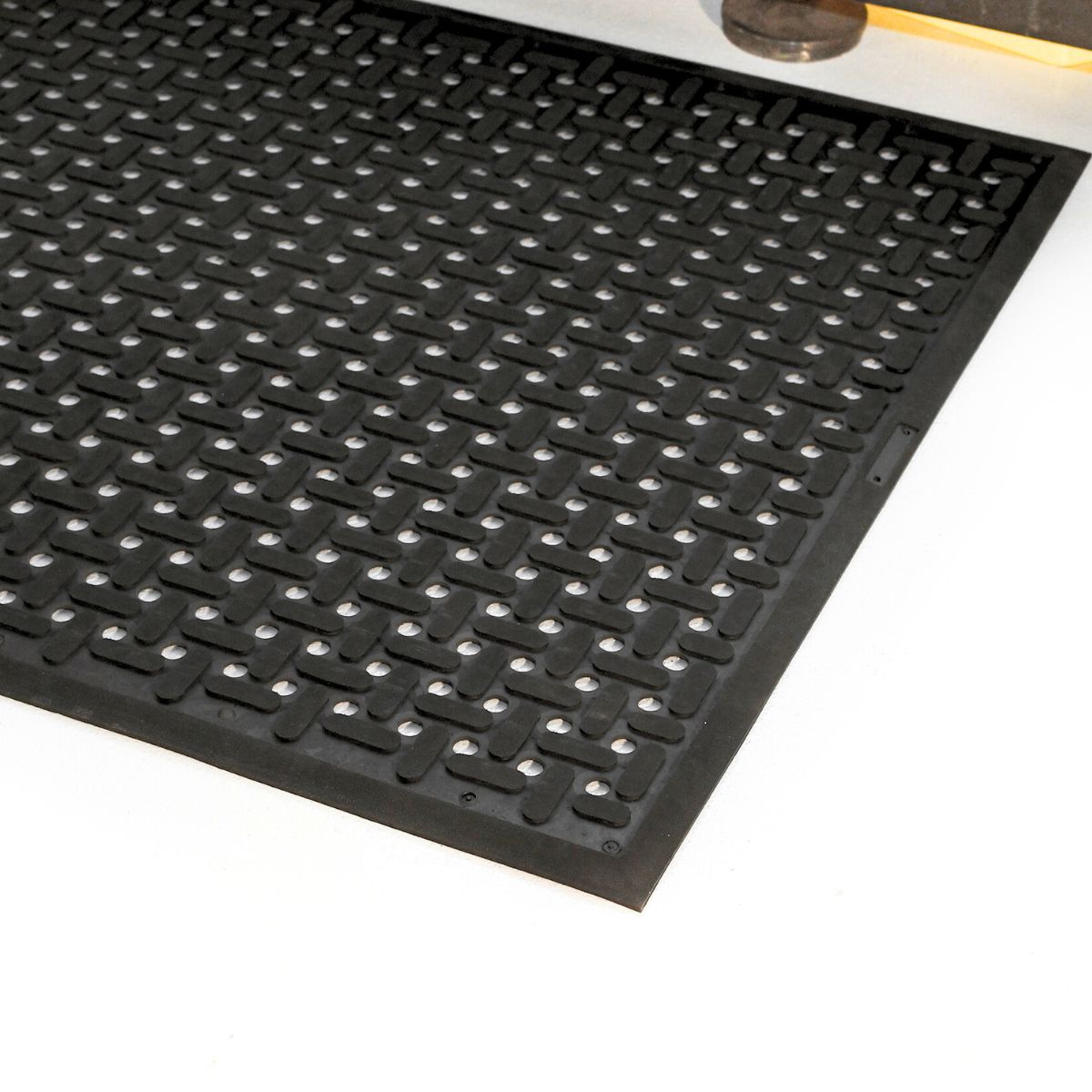
If grip and robustness are high priorities, a rubber-based design may be the better fit. The Non-Slip Rubber Anti-Fatigue Mat is the sort of option to check where site conditions are tougher and a firmer, more hard-wearing mat may suit the job better.
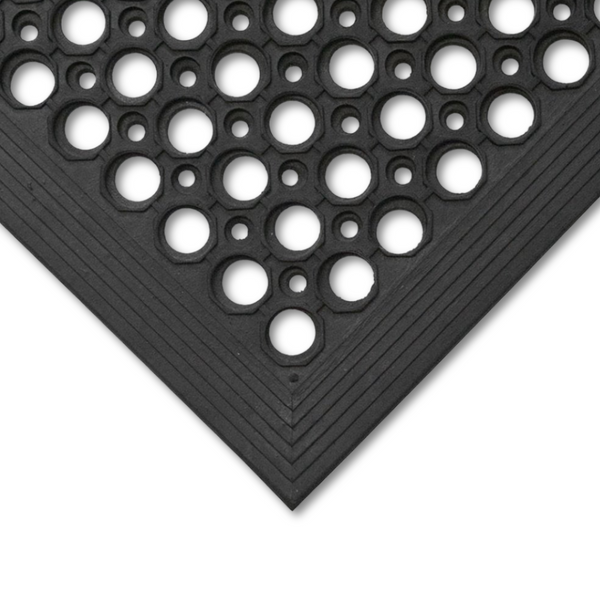
Non-Slip Rubber Anti-Fatigue Mat
The Non-Slip Rubber Anti-Fatigue Mat is a practical choice for busy workshops, factories, and wet work areas. Designed to provide reliable comfort and grip, it supports staff through daily standing…
- Swarf Management: Holes trap swarf and isolate debris for easy cleaning.
- Slip Resistant: Rated 4/5 for secure footing in wet and dry conditions.
- Anti-Fatigue Comfort: Reduces discomfort with a 4/5 fatigue rating.
- Durable Construction: Made from natural rubber for long-term reliability.
From £24.90 + VAT
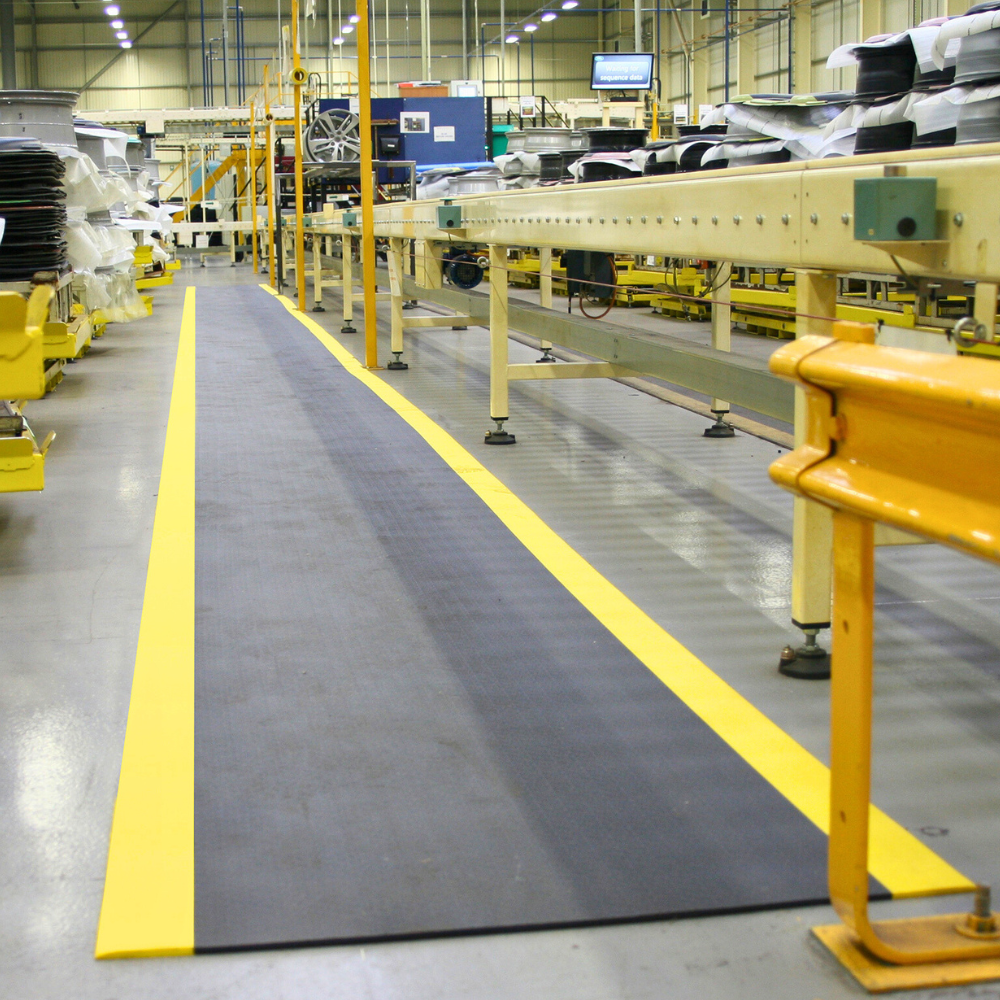
For another workplace example, this case study may be useful if you are comparing anti-fatigue matting for a public-facing or operational environment with regular standing tasks.
How to choose without overbuying or underbuying
-
Start with the environment. Dry office floors allow a wider choice of softer mats. Dusty, dirty or spill-prone areas usually push you towards tougher surfaces and easier cleaning.
-
Look at standing pattern, not just shift length. Static standing in one spot often needs different support from a role with regular movement.
-
Separate comfort from durability. A mat can feel soft on day one and still be the wrong choice for heavy daily use.
-
Check edge design. Bevelled edges help mats sit more safely in walk-on and walk-off areas.
-
Think about cleaning early. If the mat will pick up dust, swarf, spills or tracked-in dirt, surface finish and maintenance matter.
-
Consider footwear. The same mat can feel different depending on whether the user wears office shoes, trainers or safety footwear.
-
Use product-specific advice for unusual conditions. If the area is wet, oily, high-traffic or exposed to demanding industrial use, check the exact product details rather than relying on a broad material label.
If you want a closer look at how top surfaces affect feel and cleaning, this guide to anti-fatigue mat surface textures is a useful next step. If your question is more about legal duties than product choice, see whether anti-fatigue mats are required by law.
So which anti-fatigue mat is best for standing all day?
For a standing desk, a softer office-style mat is often the best fit. For a commercial bench or packing area, a reinforced or tougher-surfaced anti-fatigue mat is usually a safer choice. For workshops and industrial areas, polyurethane-based or rubber options are often more suitable when resilience, grip and wear matter more.
The best anti-fatigue mat for standing all day is the one that matches your actual workplace conditions, so choose by environment first and comfort second.