Buying Guides
Which Anti-Fatigue Mat Types Are Easiest to Clean?

HSE says slips and trips account for about 40% of reported major injuries at work, which is a useful reminder that cleaning-friendly flooring choices matter. If you are buying anti-fatigue mats for an area with spills, dust, tracked-in moisture or regular wipe-downs, the easiest option is usually the one that keeps contamination on the surface instead of letting it sink into texture or foam.
This guide looks at anti-fatigue mat types through one lens: how easy they are to clean and maintain. The main pattern is simple. Sealed, smooth-surface mats are often quicker to wipe, sweep or mop. More open, absorbent or heavily textured designs can suit the right environment, but they usually ask more from your cleaning routine.
What makes an anti-fatigue mat easy to clean?
Cleanability usually comes down to four things: surface finish, whether the mat absorbs liquid, how much texture it has, and whether dirt can collect in holes, edges or recesses.
A sealed top surface is often the easiest starting point. Research in the pack shows that closed-cell PVC and nitrile foam constructions may be easier to clean because they do not absorb liquids and can usually be wiped down more quickly. Smooth nitrile top surfaces are also often easier to sweep or mop clean than more open or deeply textured designs.
That does not mean every smooth mat is right for every site. A reception area, a standing desk and a food prep zone can all need very different cleaning routines. HSE guidance on flooring makes the wider point well: the surface has to suit the activity and the level of contamination. This is why the best mat for easy upkeep depends on what lands on it, how often it is cleaned, and how quickly the area needs to be back in use.
How the main anti-fatigue mat types compare
Sealed PU-style surfaces
Sealed PU-style anti-fatigue mats can be a practical choice where buyers want a neat appearance and simple surface wiping. The key detail is the construction, not the label alone. If the top layer is sealed and non-absorbent, light spills and dust are usually easier to remove than they are from open or fabric-like surfaces. If the mat is foam-heavy or has a softer exposed finish, cleanability may be less straightforward. So it is safer to treat sealed PU-style surfaces as potentially easy to clean, rather than assuming every PU mat behaves the same way.

PVC and vinyl-top surfaces
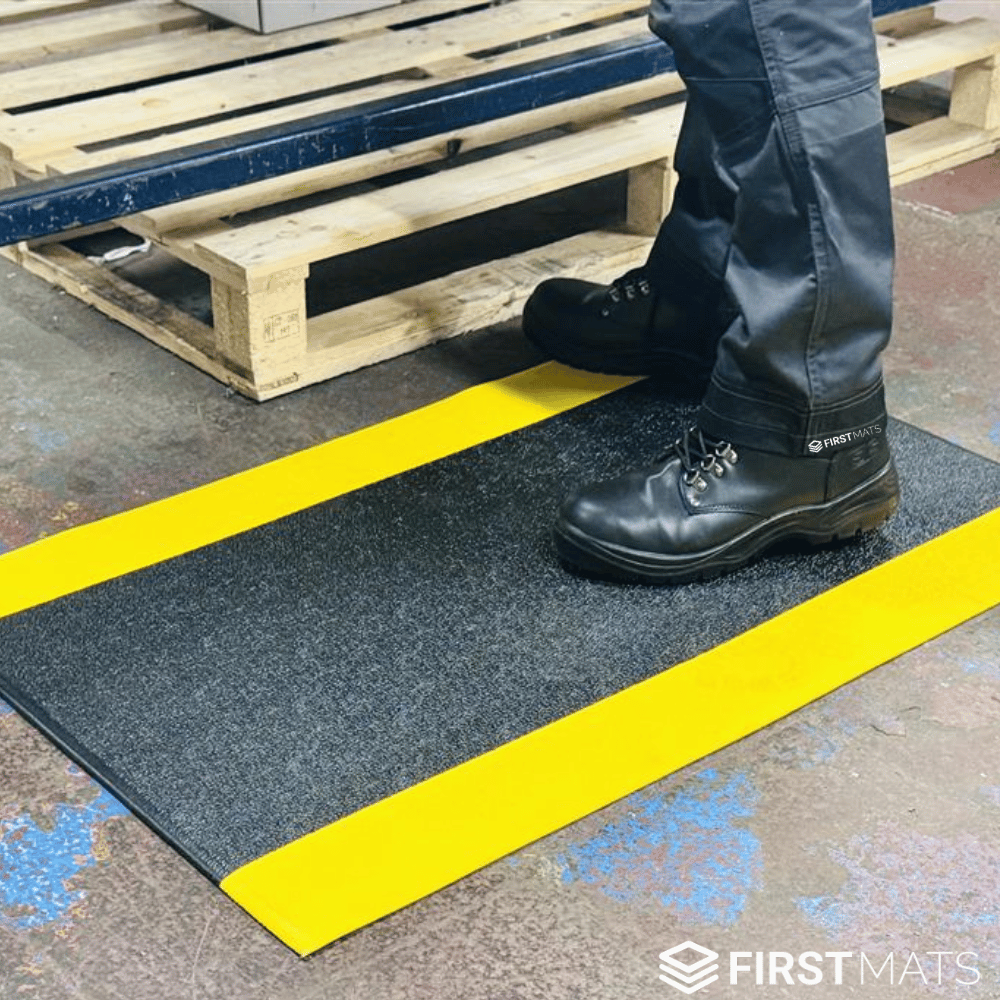
PVC and vinyl-top anti-fatigue mats are often among the easier options for general workplace cleaning. A sealed top helps keep dust, crumbs and minor spills at surface level, so a damp cloth, sweep or mop may be enough for routine care. These mats often make sense in offices, service counters and light commercial spaces where the goal is fast, regular cleaning rather than wash-down procedures.
The Elite Vinyl Top Anti-Fatigue Mat is a useful example of the kind of sealed-top format buyers often look at when wipe-clean maintenance matters.

Always check the manufacturer’s care guidance before using detergents, disinfectants, soaking, pressure washing, or machine washing.
Rubber and nitrile surfaces
Rubber and nitrile anti-fatigue mats can work well where regular sweeping and mopping are part of the normal routine. The research pack supports the point that smooth nitrile top surfaces are often easier to sweep or mop than more open or deeply textured designs. That makes them a strong fit for many industrial and back-of-house settings where dry debris, light contamination or frequent surface cleaning are expected.
Buyers should still watch for texture and construction. A solid, smooth top is not the same as a perforated or drainage design. Two mats may both be described as rubber-based, but one may wipe down quickly while the other needs debris picked out from openings and edges.

Open-cell PVC foam
Open-cell or more porous foam constructions are usually less attractive where low-maintenance cleaning is the priority. If liquid or dirt can work its way into the surface or structure, wiping the top may not be enough. These mats may still offer comfort in the right place, but they tend to need more careful upkeep than sealed closed-cell alternatives.

Drainage-hole and open-construction mats
Drainage-hole mats are often chosen for wet or debris-prone areas, but they usually need more attention around the openings and edges. They help water and waste move away from the standing surface, which is useful in kitchens, bars and some production areas. But they are not usually the simplest option for a quick wipe-clean routine because food debris, grit or grease can collect in the cut-outs.
The Oil Resistant Non-Slip Kitchen Drainage Mat is the sort of open design buyers often consider for wet hospitality areas where drainage matters more than fast surface wiping.
If you are comparing similar options for bar and hospitality spaces, it can also help to look at the wider bar floor mat range and decide whether your site needs drainage first or easier top-surface cleaning first.
Fabric-faced mats
Fabric-faced mats are generally less suited to fast wipe-clean routines than sealed surfaces, but the research pack also notes that authoritative evidence here is limited. So it is best not to make broad claims. In practice, if the top layer is textile-like, buyers should expect more effort to remove dust, stains or moisture than they would with a sealed non-absorbent top. Check the care guide for the exact product before assuming it can be washed or scrubbed in the same way as a rubber or vinyl-topped mat.

Best choice by environment
Offices, receptions and standing desks
In offices, the usual cleaning problems are dust, foot traffic and the occasional drink spill. A sealed smooth-surface mat is often the easiest fit here because it supports quick wipe-downs without bringing in a more industrial look than the space needs. Buyers choosing for desks or counters often want a mat that can be cleaned during normal housekeeping without special steps.
The Standing Desk Mat is relevant here if you are comparing office-friendly anti-fatigue options with straightforward surface cleaning.
OfficePro Standing Desk Mat - 50cm x 80cm
First Mats recommendationOfficePro Standing Desk Mat: Unmatched Comfort and Durability High-Density Foam for Superior Comfort: The OfficePro Standing Desk Mat is crafted from high-density foam, providing the perfect balance of comfort and…
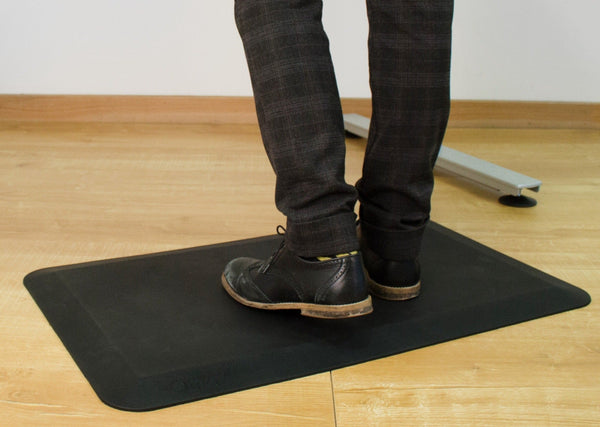
- Enhanced Comfort: Reduces fatigue with high-density foam support.
- Durable Build: Polyurethane shell ensures long-lasting use.
- Safety Features: Bevelled edges prevent trips and slips.
- Spacious Design: 50cm x 80cm fits most office setups.
From £57.77 + VAT
For more general comparison across workplace settings, you can also browse the full anti-fatigue mat range and filter by where the mat will actually be used, not just by material name.
Bars, restaurants and hospitality
Hospitality areas tend to involve splashes, frequent wipe-downs and faster turnaround between cleans. Sealed surfaces are often easier where staff need to remove light spills quickly. Open drainage mats can still be the better pick in genuinely wet spots, especially where liquids regularly build up on the floor. The trade-off is that drainage designs usually ask for more thorough cleaning around the openings.
So the key question is not just, “What is easiest to clean?” It is, “What kind of mess does this area create most often?” For splashy but mainly surface-level spills, sealed mats often make life easier. For repeated wet contamination, drainage may be worth the extra cleaning effort.
Oil-Resistant Non-Slip Drainage Mat
First Mats recommendationThe Oil-Resistant Non-Slip Drainage Mat is designed for the busiest, most spill-prone areas in commercial kitchens. Made from high-quality nitrile rubber, it's fully resistant to cooking oils, grease, and kitchen…
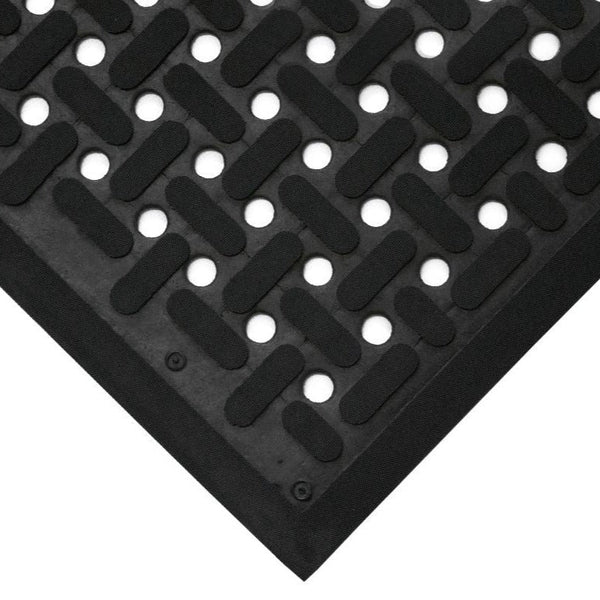
- Oil Resistant: Nitrile rubber construction withstands grease and cooking oils.
- Enhanced Safety: Raised 'Kross' pattern for superior slip resistance.
- Efficient Drainage: 12.5mm holes channel away liquids, keeping surfaces dry.
- Trolley Friendly: Robust enough to accommodate wheels without damage.
From £58.40 + VAT
Industrial and production areas
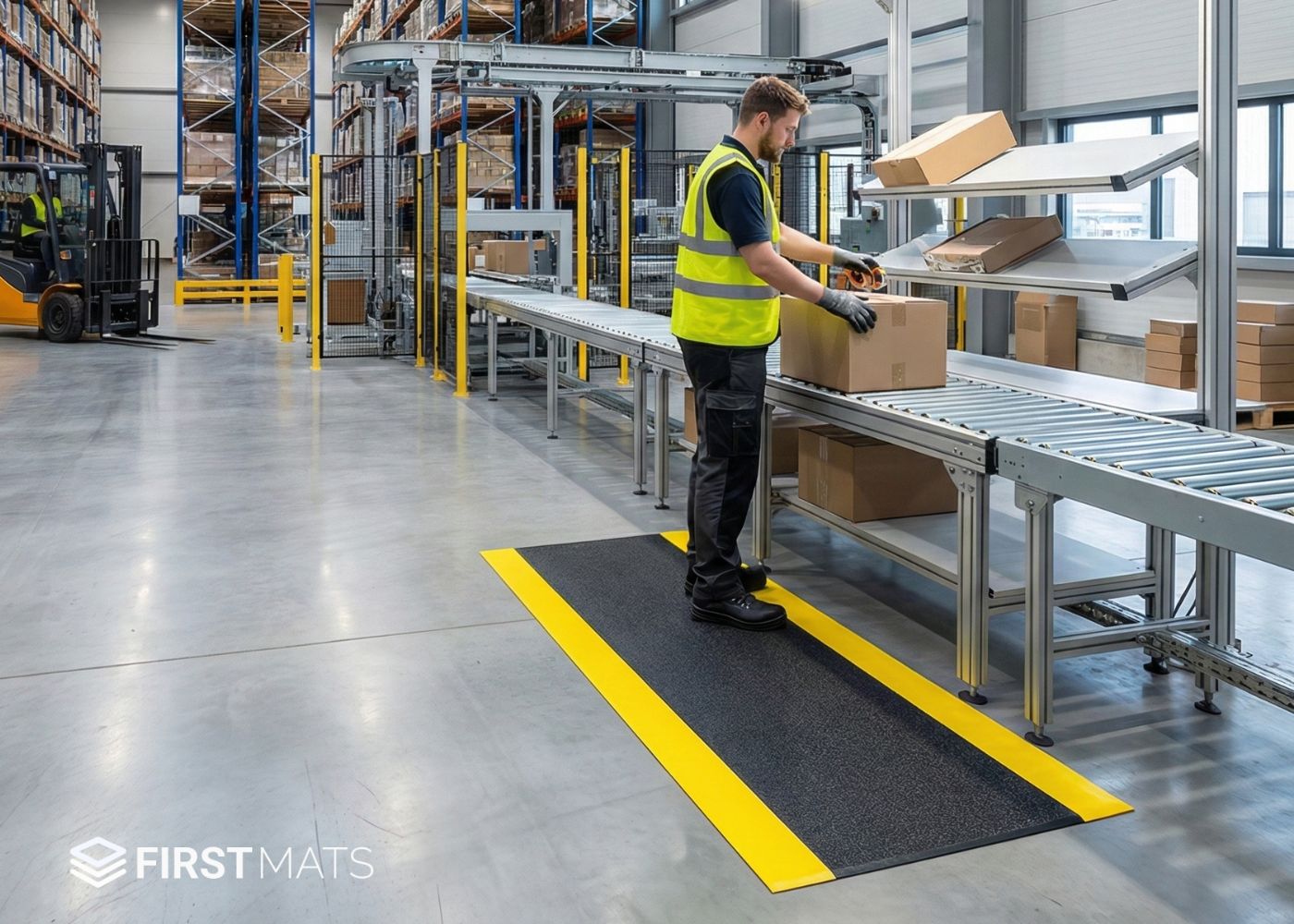
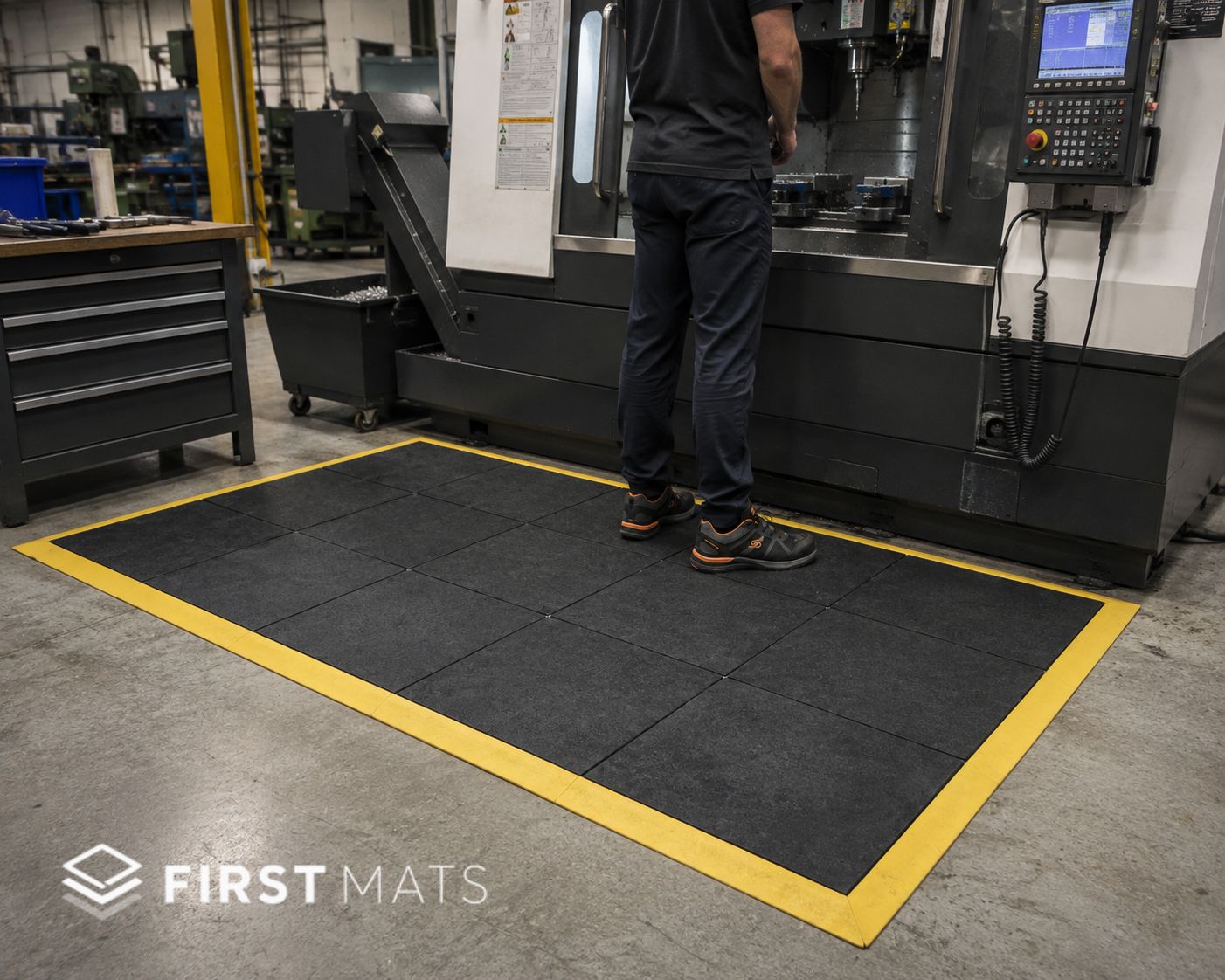
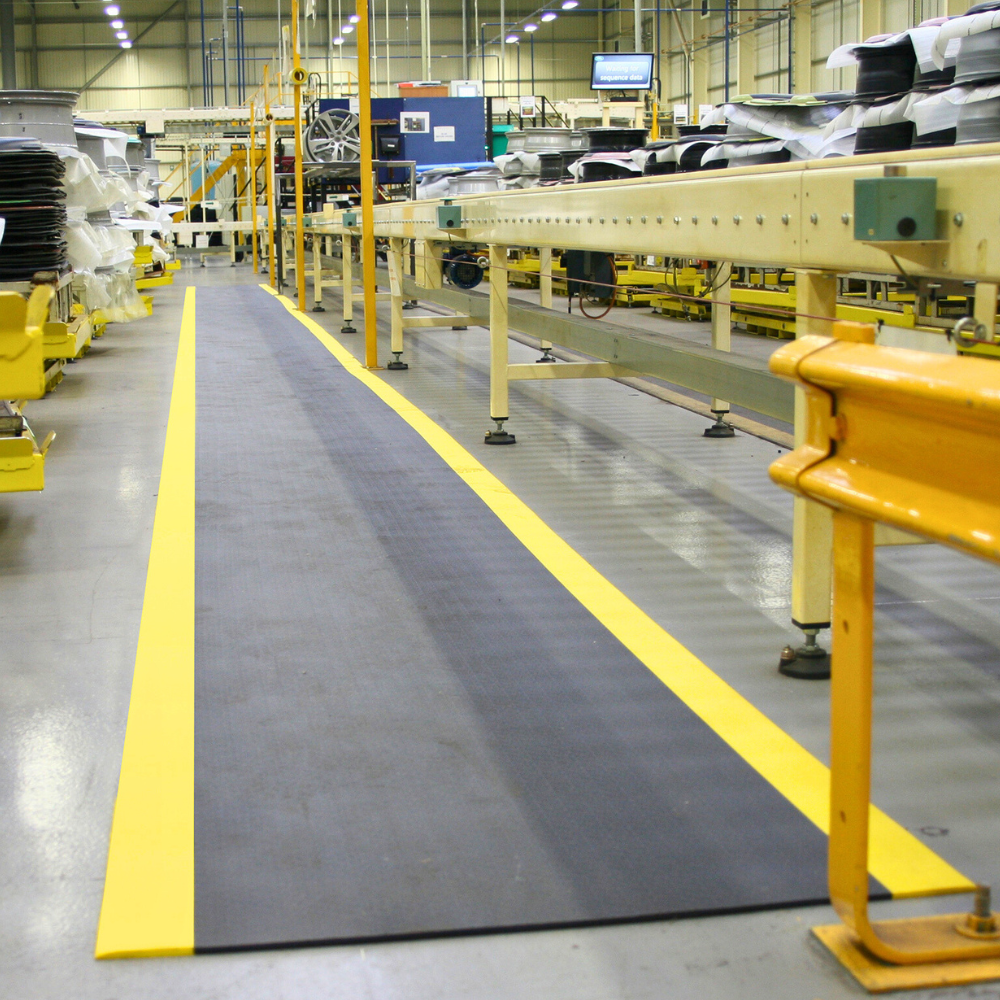
Industrial settings often bring dry debris, oils, heavier contamination and stronger cleaning routines. Smooth nitrile or other sealed industrial tops are often easier to sweep or mop than deeply patterned or perforated designs. But this is also the area where buyers need to be most careful with assumptions about detergents, degreasers and wash-down methods. Care guidance matters because cleaning products and methods that suit one industrial mat may not suit another.
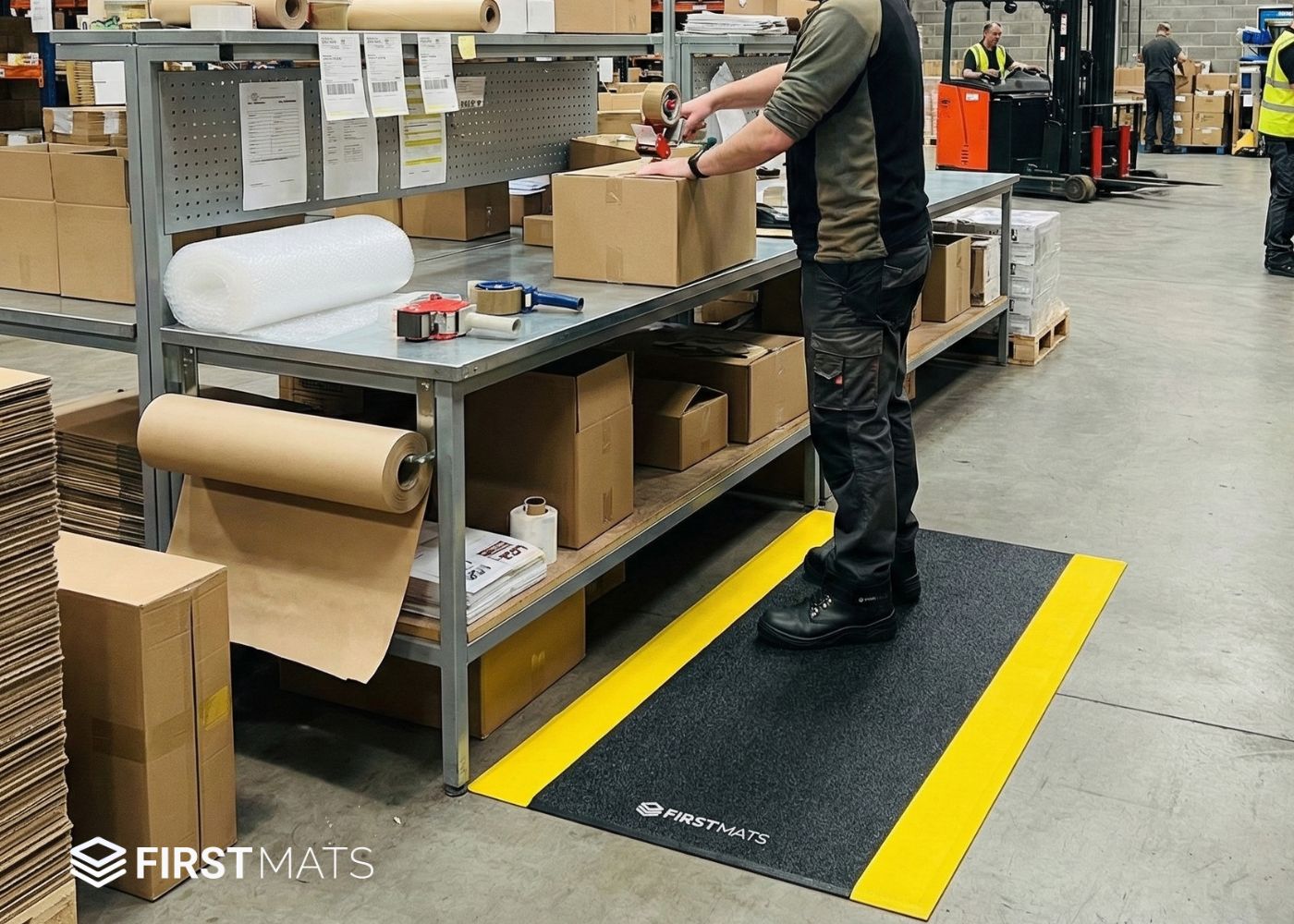
A Vinyl-Topped mat provides the best combination of comfort, durability, and with an easy-to-clean vinyl surface.
Elite Vinyl-Top Anti-Fatigue Mat
First Mats recommendationThe Elite Vinyl-Top Anti-Fatigue Mat features a tough, wear-resistant vinyl surface that stands up to demanding industrial use. It’s built to handle boots, trolley wheels, and heavy foot traffic without…
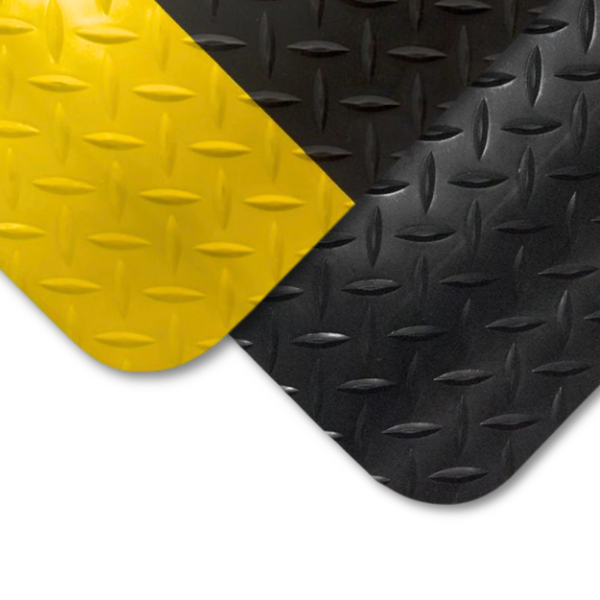
- Exceptional Cushioning: 14mm thick foam backing for maximum comfort.
- Durable Vinyl Surface: Resists wear and tear in heavy-duty environments.
- Enhanced Grip: Diamond pattern reduces slips and improves safety.
- Custom Sizes: Options available up to 18.3m in length.
From £51.87 + VAT
Cleaning methods buyers should treat with caution
A damp cloth or routine sweep and mop is often appropriate for sealed surfaces, but that does not give a free pass for stronger methods. Always check the manufacturer’s care guidance before using detergents, disinfectants, soaking, pressure washing, or machine washing.
This matters for two reasons. First, cleaning chemicals and methods can affect the mat surface, backing or edges. Second, the cleaning process itself can create hazards. HSE guidance on cleaning points out that cleaning can reduce slip risk, but it can also create wet, slippery floors. A mat that is easy to wipe and dry quickly may be more practical than one that needs soaking or prolonged drying in a busy area.
- Use sealed smooth-surface mats where quick wipe-downs are the priority.
- Choose drainage or open designs where water needs to move away from the standing surface.
- Be cautious with fabric-faced or more absorbent constructions if you need low-maintenance cleaning.
- Check product care instructions before using chemicals, hose-down cleaning or washing methods.
- Match the mat to the contamination you expect most often, not the one you deal with only occasionally.
The practical shortlist
If easy cleaning is your main buying factor, start with sealed smooth-surface mats. In most workplaces, sealed PVC or vinyl-top surfaces, sealed PU-style surfaces, and smooth rubber or nitrile tops are the easiest categories to shortlist. Open drainage mats come next when the area is regularly wet, even though they usually need more attention to clean thoroughly. Fabric-faced or more absorbent foam-based options are usually the least suited to quick wipe-clean maintenance.
That shortlist should still be tested against the real environment. A mat that is easiest to clean in an office may not be the easiest to manage in a kitchen, and a mat that handles wet contamination well may take longer to clean than a sealed desk mat. Start with your cleaning routine, then choose the mat that your site can maintain properly.