Buying Guides
Choosing Anti-Fatigue Mats for Warehouses

Will wheels cross the mat, or is it only for standing work? In warehouses, that single question usually matters more than any brand or headline feature.
HSE guidance on lower limb disorders includes anti-fatigue matting as one control employers can use where people stand for long periods. At the same time, HSE guidance on slips and trips makes it clear that comfort is not the only issue. A warehouse mat also needs to work with your floor conditions, cleaning routine and traffic patterns, without creating a new edge or trip problem.
So the best warehouse anti-fatigue mat is not one universal product. It depends on where you want to use it, what passes over it, and whether dust, dirt, swarf or moisture are part of the job.
Start with the zone, not the mat type
A good buying decision starts by splitting the warehouse into use areas. In most sites, anti-fatigue matting is not needed everywhere. It is usually most useful at fixed standing points such as packing benches, assembly stations, inspection points and pick faces where workers stay in one place for long spells.
That zone-first approach helps avoid two common mistakes: choosing a soft mat for an area that needs a tougher surface, or placing a heavier-duty mat where a simpler option would do the job at lower cost and with less cleaning effort.
Standing-only, clean and dry areas: comfort is usually the main priority.
Standing areas with higher foot traffic or surface wear: comfort still matters, but surface toughness becomes more important.
Debris-prone or occasionally wet areas: the mat needs to cope with what lands on it and what collects underneath.
Trolley-crossing or cart-prone zones: movement under load, edge profile and wheeled traffic become key checks.
Which mat construction suits each warehouse area?
Foam-based mats for lighter standing stations
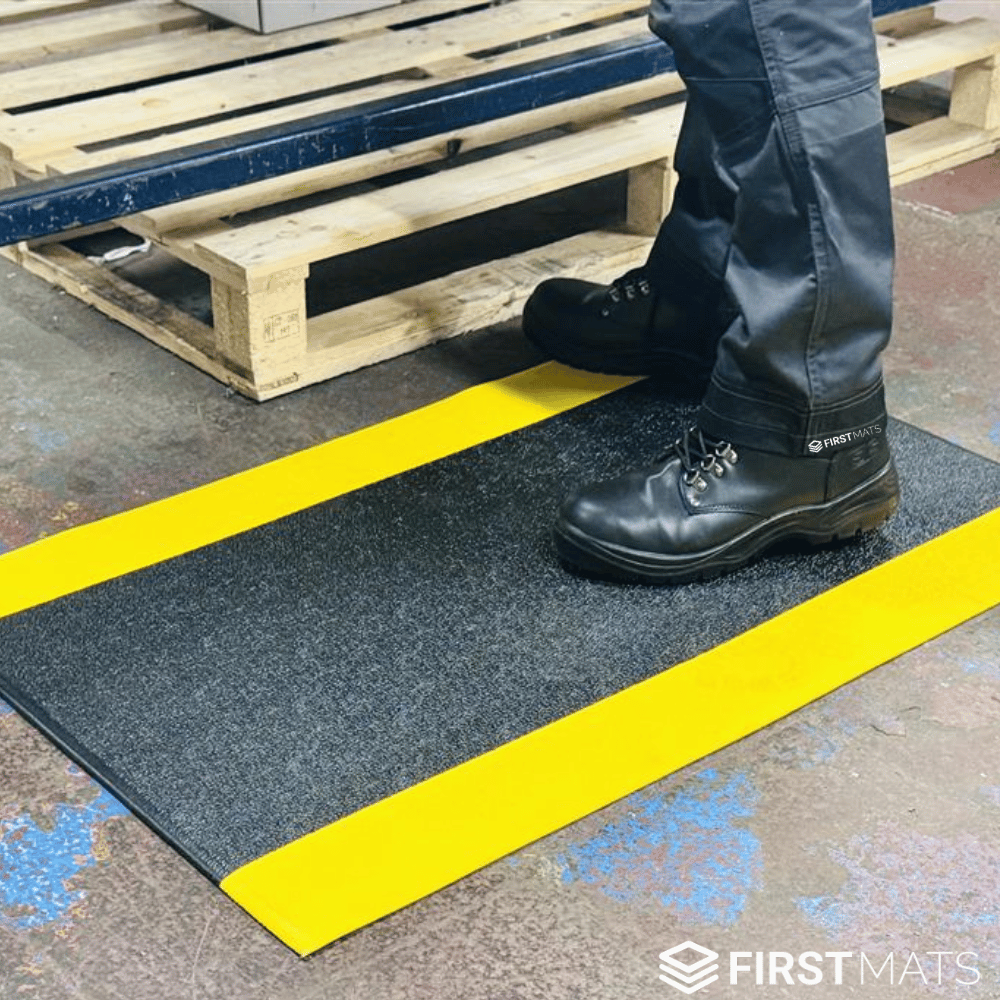
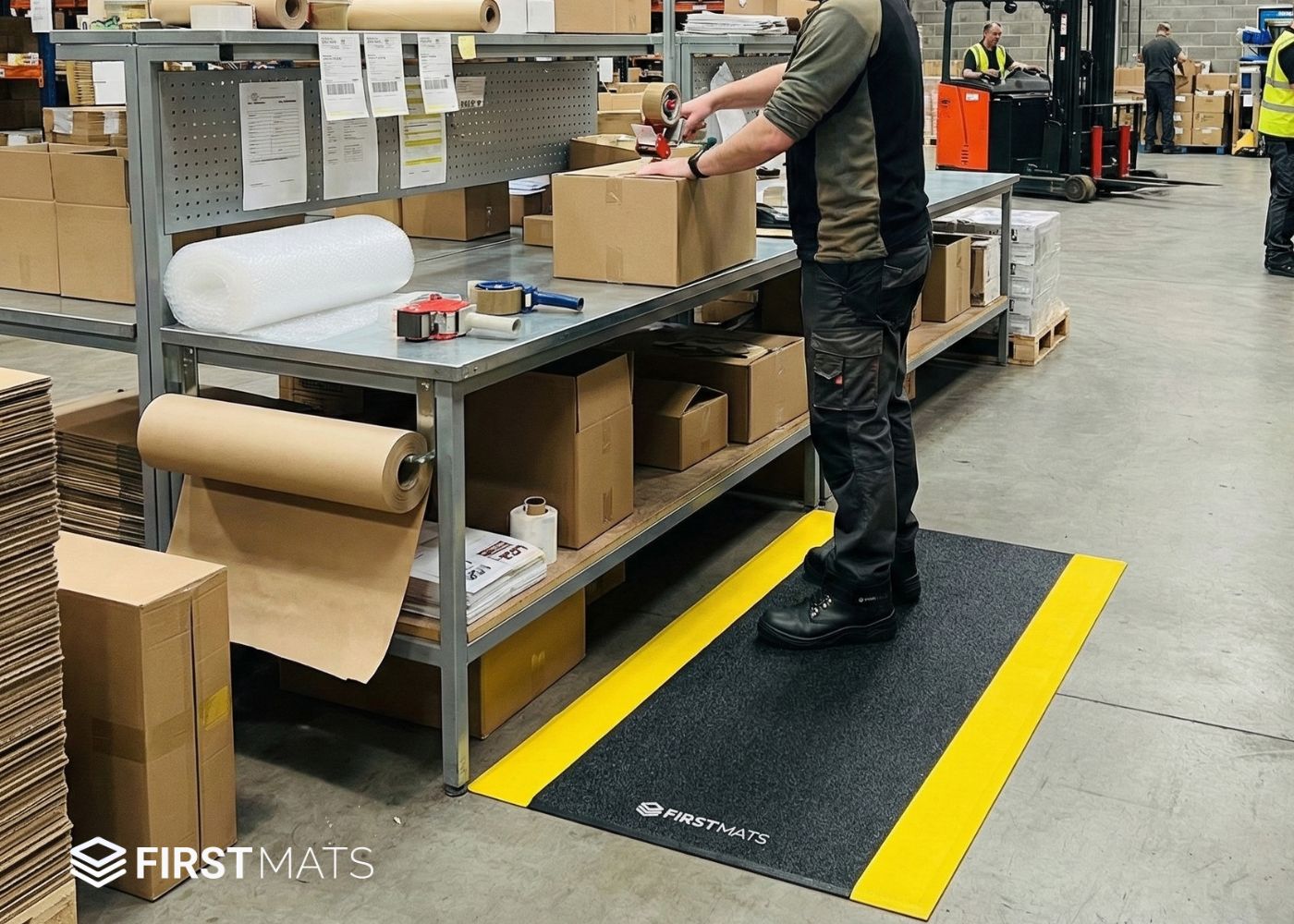
If the area is mainly dry, relatively clean and used for fixed standing work rather than wheeled traffic, a foam-based anti-fatigue mat may be enough. This type is usually the simplest route when the aim is to add cushioning at a single bench or workstation without over-specifying the area.
The AtEase Standard Anti-Fatigue Mat is the kind of product to look at for packing benches or fixed work points where staff stand in one position and the mat is unlikely to be crossed by trolleys.
AtEase Standard Anti-Fatigue Mat
First Mats recommendationThe AtEase Standard Anti-Fatigue Mat offers a simple, effective way to improve comfort in light-use work areas. Whether youre packing boxes or assembling small items, this mat provides welcome relief…
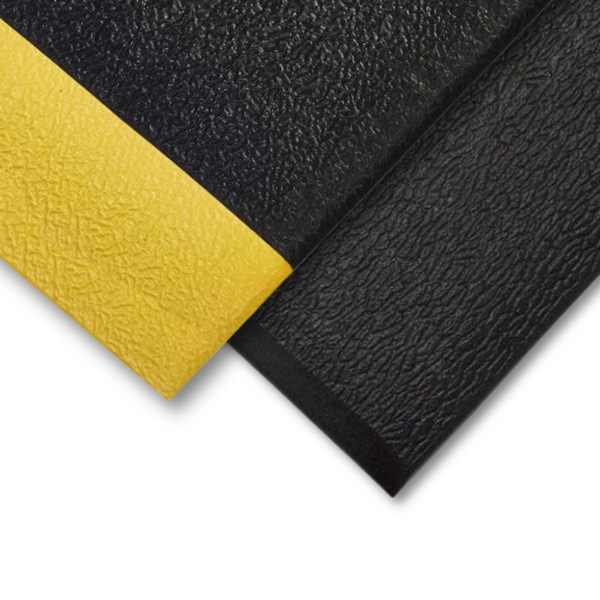
- Optimal Thickness: 9mm cushioning provides the perfect balance of comfort and support.
- Flexible Sizing Options: Choose from standard sizes or customize for the perfect fit.
- Safety First: High-visibility yellow safety border and beveled edges reduce trip risks.
- Versatile Use: Ideal for dry industrial and commercial spaces.
From £22.50 + VAT
Keep the decision practical. Foam mats may suit low-traffic standing zones, but they are usually less appealing where edges take repeated knocks, where wheels need to roll over the surface, or where dirt and moisture will increase cleaning demands.
Vinyl-topped mats where surface wear matters more
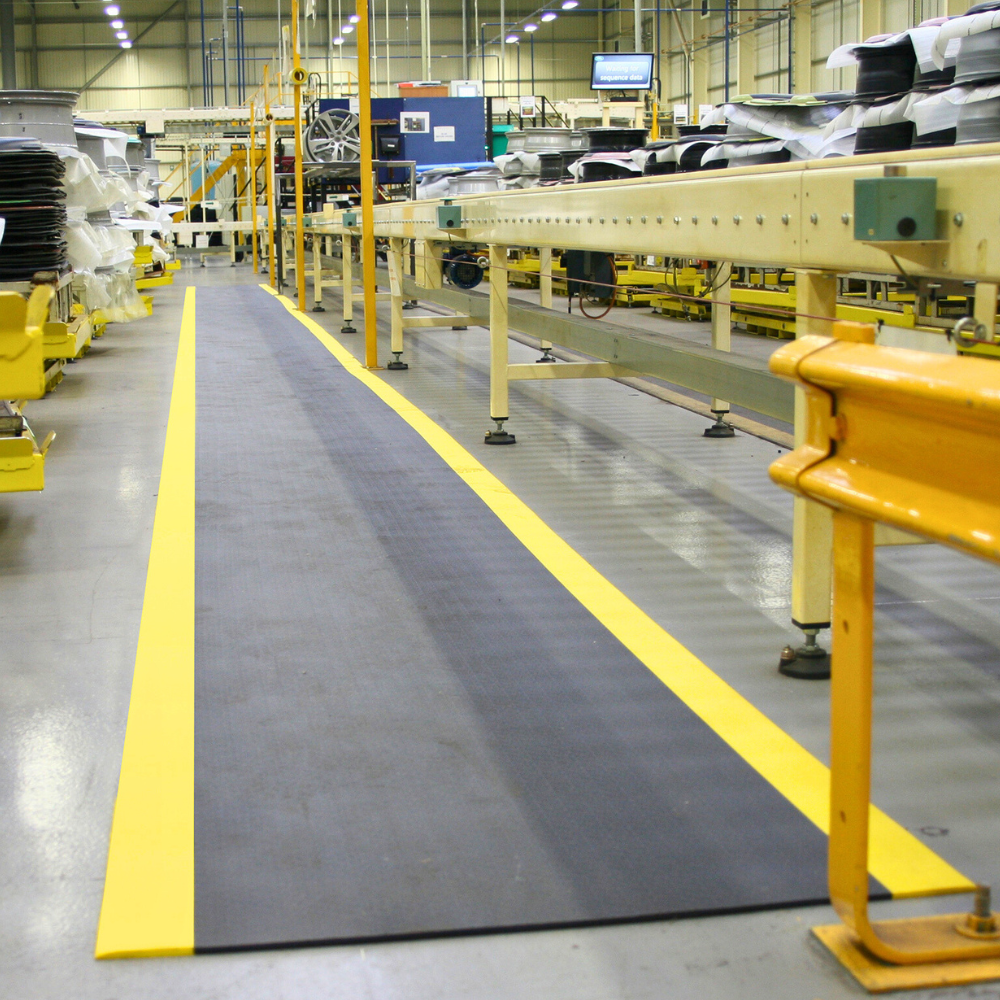
Some warehouse stations are still mainly for standing, but they are busier, rougher underfoot or harder to keep looking tidy. In those areas, a vinyl-topped anti-fatigue mat may be worth checking because the top surface is intended to be tougher than a basic foam-only format.
The Elite Vinyl-Top Anti-Fatigue Mat is a sensible comparison point for bench lines, packing areas and work cells where people stand for long periods but the surface may need to cope with more wear than a basic foam mat.
Elite Vinyl-Top Anti-Fatigue Mat
First Mats recommendationThe Elite Vinyl-Top Anti-Fatigue Mat features a tough, wear-resistant vinyl surface that stands up to demanding industrial use. It’s built to handle boots, trolley wheels, and heavy foot traffic without…
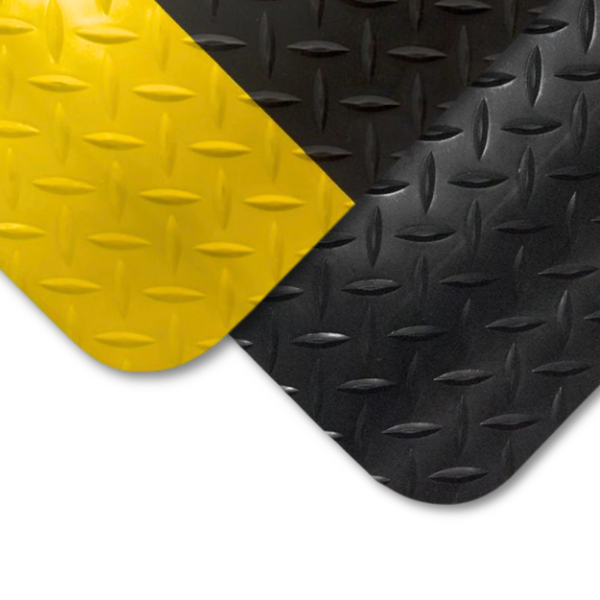
- Exceptional Cushioning: 14mm thick foam backing for maximum comfort.
- Durable Vinyl Surface: Resists wear and tear in heavy-duty environments.
- Enhanced Grip: Diamond pattern reduces slips and improves safety.
- Custom Sizes: Options available up to 18.3m in length.
From £51.87 + VAT
Be careful with assumptions around wheels. A tougher top surface does not automatically mean every trolley type is suitable. If sack trucks, pallet trucks or other wheeled equipment will cross the area, check the exact traffic before you buy rather than assuming a standing mat will cope.
Perforated rubber mats for dirt, swarf or moisture-prone areas
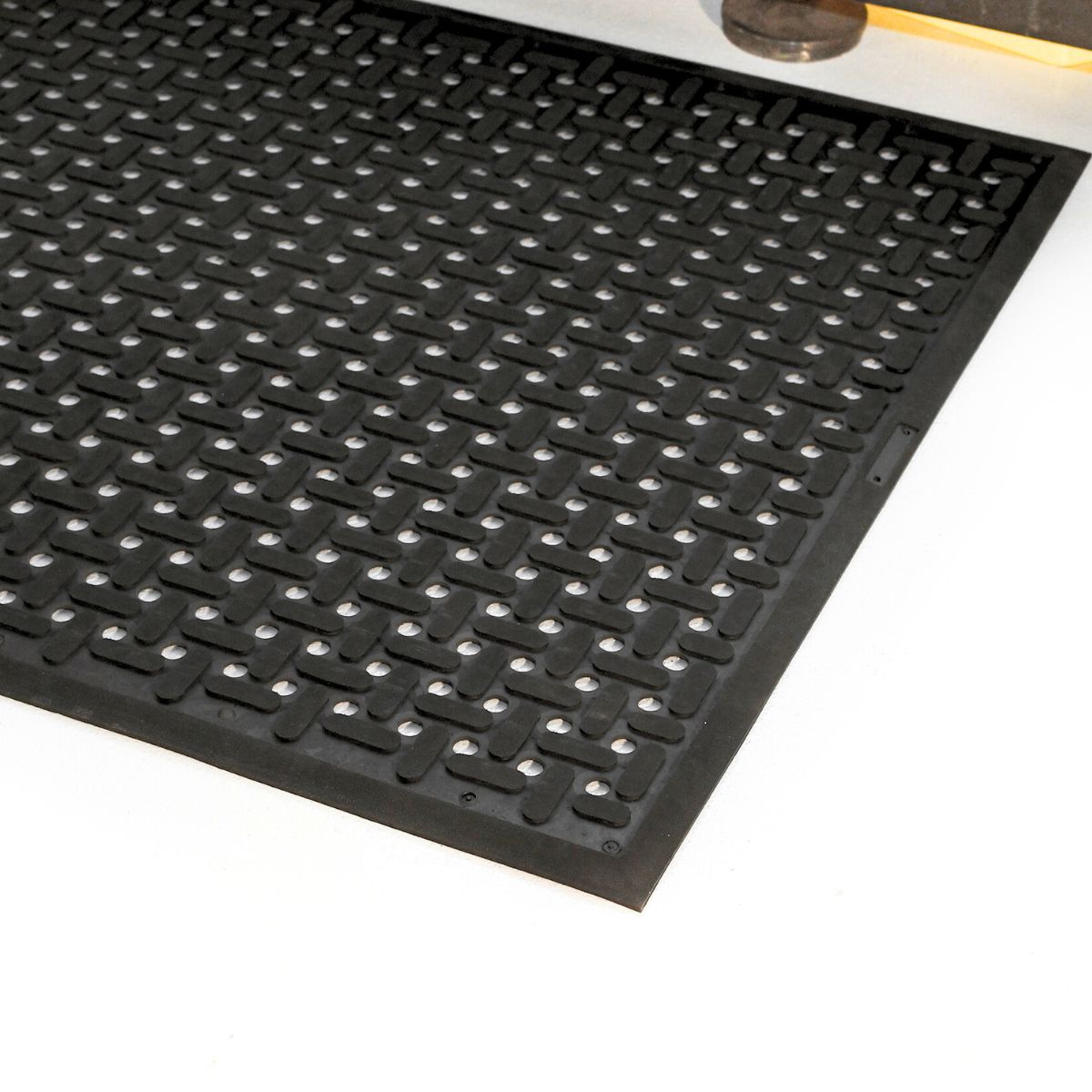
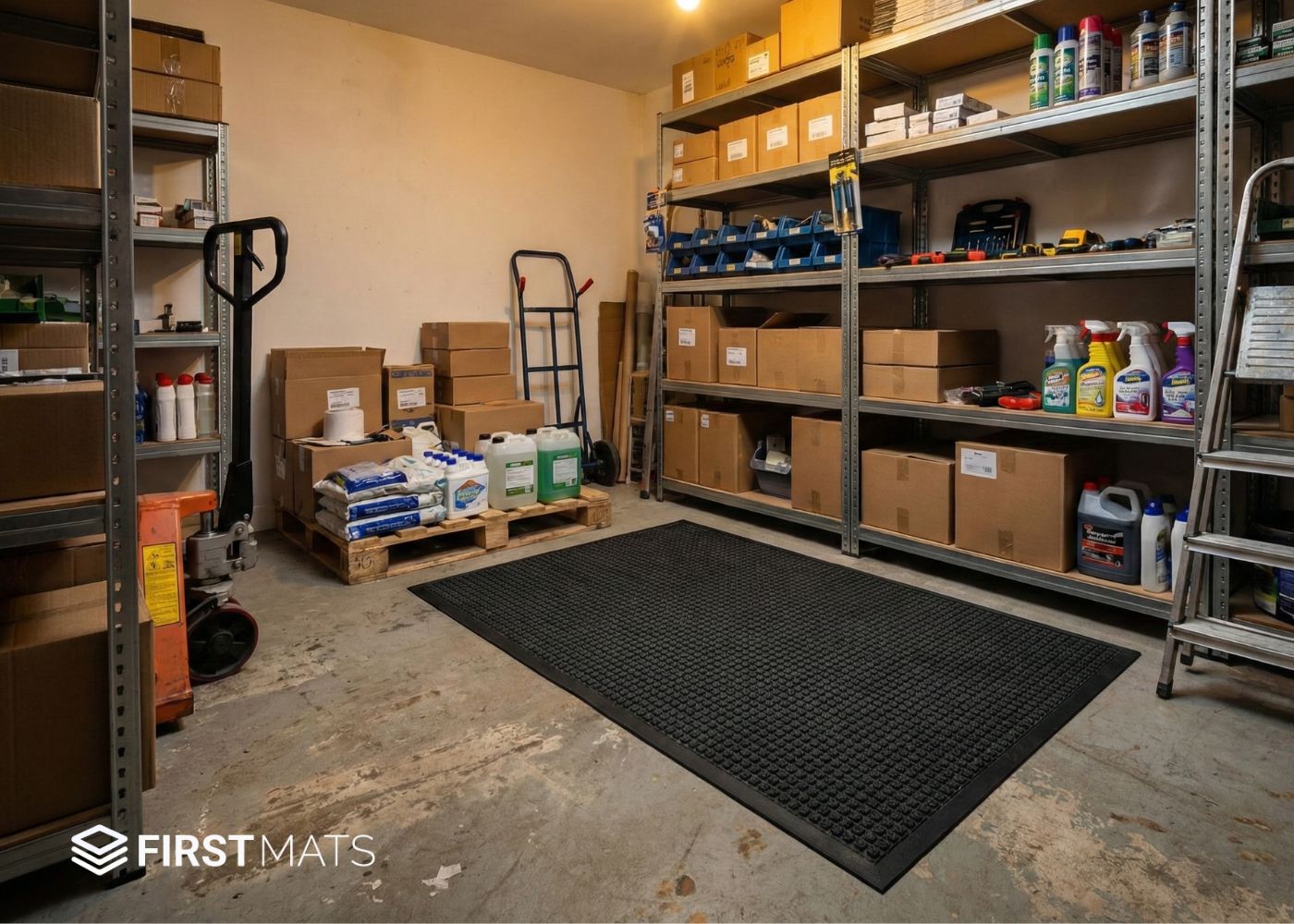
Where the floor picks up debris, dust, swarf or occasional moisture, a perforated rubber mat may be a better fit than a closed-surface design. The practical reason is simple: material can pass through the holes rather than sitting directly on the standing surface.
The Non-Slip Rubber Anti-Fatigue Mat is the sort of option to assess for tougher warehouse work points where debris or wet patches are part of the environment and a rubber format may make more sense than foam.
Non-Slip Rubber Anti-Fatigue Mat
First Mats recommendationThe Non-Slip Rubber Anti-Fatigue Mat is a practical choice for busy workshops, factories, and wet work areas. Designed to provide reliable comfort and grip, it supports staff through daily standing…
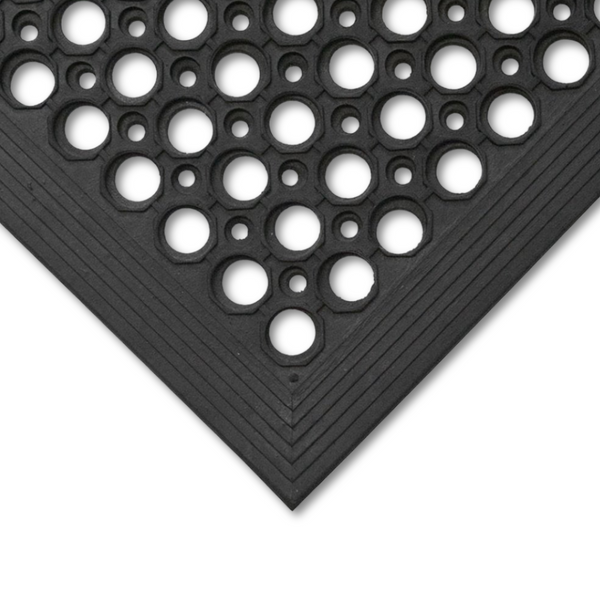
- Swarf Management: Holes trap swarf and isolate debris for easy cleaning.
- Slip Resistant: Rated 4/5 for secure footing in wet and dry conditions.
- Anti-Fatigue Comfort: Reduces discomfort with a 4/5 fatigue rating.
- Durable Construction: Made from natural rubber for long-term reliability.
From £24.90 + VAT
This choice comes with trade-offs. Perforations can help in some messy areas, but you still need a cleaning plan for what gathers under the mat. You should also check whether the exact area is mostly wet, mostly dry or mixed, because independent evidence comparing these constructions in warehouse conditions is limited.
Interlocking rubber tiles for larger or more demanding zones
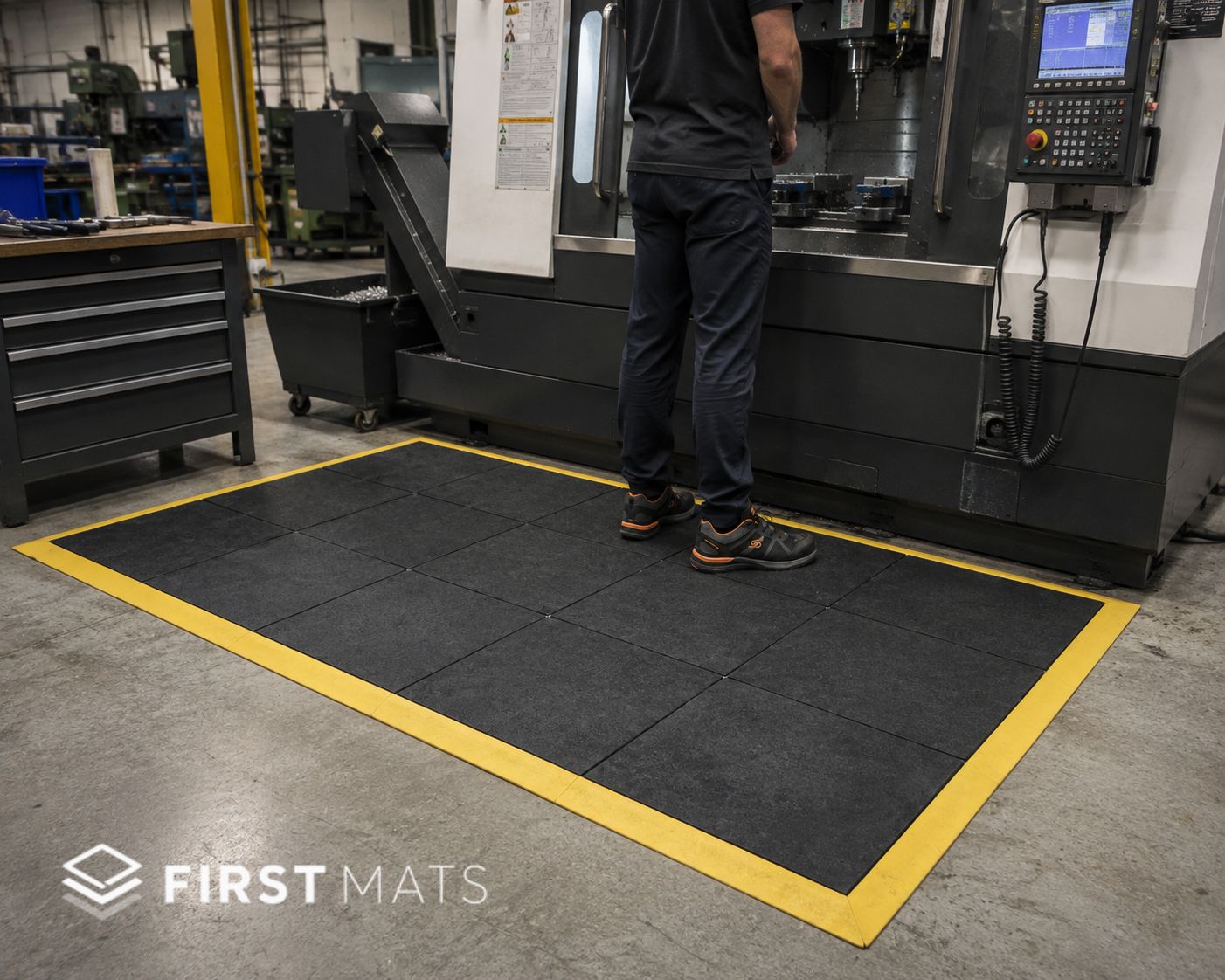
If you need broader coverage, a more fixed layout or a stronger rubber construction for trolley-prone areas, interlocking tiles may be the better route. They can be useful where stability across a larger footprint matters more than placing a loose single mat at one spot.
Heavy-Duty Interlocking Anti-Fatigue Mat Tiles are worth reviewing where warehouse layouts include wider standing zones, repeated crossings or sections that may need to be replaced individually over time.
Heavy-Duty Interlocking Anti-Fatigue Mat Tiles
First Mats recommendationThe Heavy-Duty Interlocking Anti-Fatigue Mat Tiles are designed to provide cushioned comfort in the most demanding industrial settings. Whether you're working in wet or dry areas, these mats help reduce…
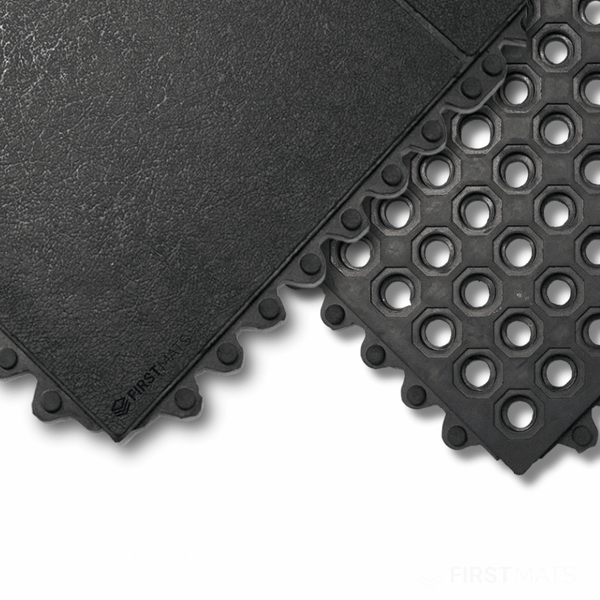
- Durable and Resilient: Built for industrial use and high-traffic areas.
- Interlocking Design: Connect tiles for a modular, seamless surface.
- Temperature Resistant: Withstands up to 130°C, suitable for hot materials.
- Slip Resistance: Rated DIN 51130, R10 for superior safety.
From £14.89 + VAT
Still, keep the traffic claim narrow. Interlocking tiles may suit heavier-duty areas, but load and wheeled-traffic limits need to be confirmed against the exact truck or trolley in use. Do not assume that a tile suitable for light wheeled traffic will also suit pallet trucks or forklifts.
Key checks before you buy
Once you have narrowed the construction type, look at the details that affect day-to-day use. These small points usually decide whether the mat works well in practice.
Edge profile: a poor edge can become a trip point or catch wheels.
Movement under load: if the mat shifts, creeps or lifts during use, it can quickly become a problem.
Cleanability: choose a format your team can actually maintain with the time available.
Debris handling: decide whether you need a closed top surface or an open design that lets material fall through.
Coverage: a single mat can work for one station, while modular tiles may suit wider areas.
Traffic mix: separate foot traffic, light trolleys and heavier wheeled equipment before making a final choice.
If you are still comparing formats, it can help to review the wider anti-fatigue mats collection by use area rather than by product name alone.
What the evidence can and cannot tell you
The case for anti-fatigue matting is reasonable, but it should be described carefully. A systematic review published in Applied Ergonomics found that cushioned flooring may help reduce discomfort and fatigue for some standing workers, although results varied. The review identified 10 unique studies, so the evidence base exists but is not large.
A smaller interventional study indexed in PubMed also found changes in low-back muscle activity and subjective low-back pain during standing tasks with anti-fatigue mats, but it involved only 16 participants in a simulated setting. That is useful context, not proof that one mat type will work the same way in every warehouse.
This is why product selection in warehouses should stay grounded in practical fit: standing pattern, floor condition, cleaning routine, and whether wheels will cross the surface. There is no strong independent evidence that one construction is universally best for every warehouse area.
A simple way to choose the right warehouse mat
Mark out the fixed standing points where workers stay in place longest.
Separate standing-only zones from areas where wheels will cross.
List any dirt, swarf, dust or wet patches that change the matting requirement.
Decide whether you need a loose single mat or a larger modular layout.
Check edges, cleaning effort and traffic limits before ordering.
If you treat warehouse anti-fatigue matting as a zone-by-zone choice rather than a one-size-fits-all purchase, you are far more likely to end up with mats that work well and stay out of the way.
Map your warehouse by standing points, wheeled crossings and messy areas first, then match each zone to the mat construction that fits it best.