Buying Guides
How to Choose Anti-Fatigue Mats for Assembly and Production Lines
HSE says slips and trips cause on average 40% of all reported major injuries. That is a useful reminder that choosing anti-fatigue mats for production areas is not just about comfort. Edges, joins, cleaning, layout and traffic all need the same attention. This guide helps you shortlist anti-fatigue mats for assembly lines and standing workstations by looking at format, material, edge design and day-to-day use. The aim is to help you match the mat to the task, not chase vague claims about the "best" option.

HSE says slips and trips cause on average 40% of all reported major injuries. For assembly and production lines, that is a good reason to treat anti-fatigue mat selection as a layout and maintenance decision as much as a comfort decision.
Anti-fatigue matting can be one part of a broader control strategy for prolonged standing tasks. But mats are not a fix on their own. The right choice depends on line length, how operators move, whether wheels cross the area, what gets dropped, and how the space is cleaned and inspected.
If you need wider context on how floor matting fits into workplace risk control, see our guide on how floor mats support workplace health and safety.
Start with the line layout
The first decision is usually format. A mat that works well at one fixed station may become awkward across a long production run.
When individual mats make more sense
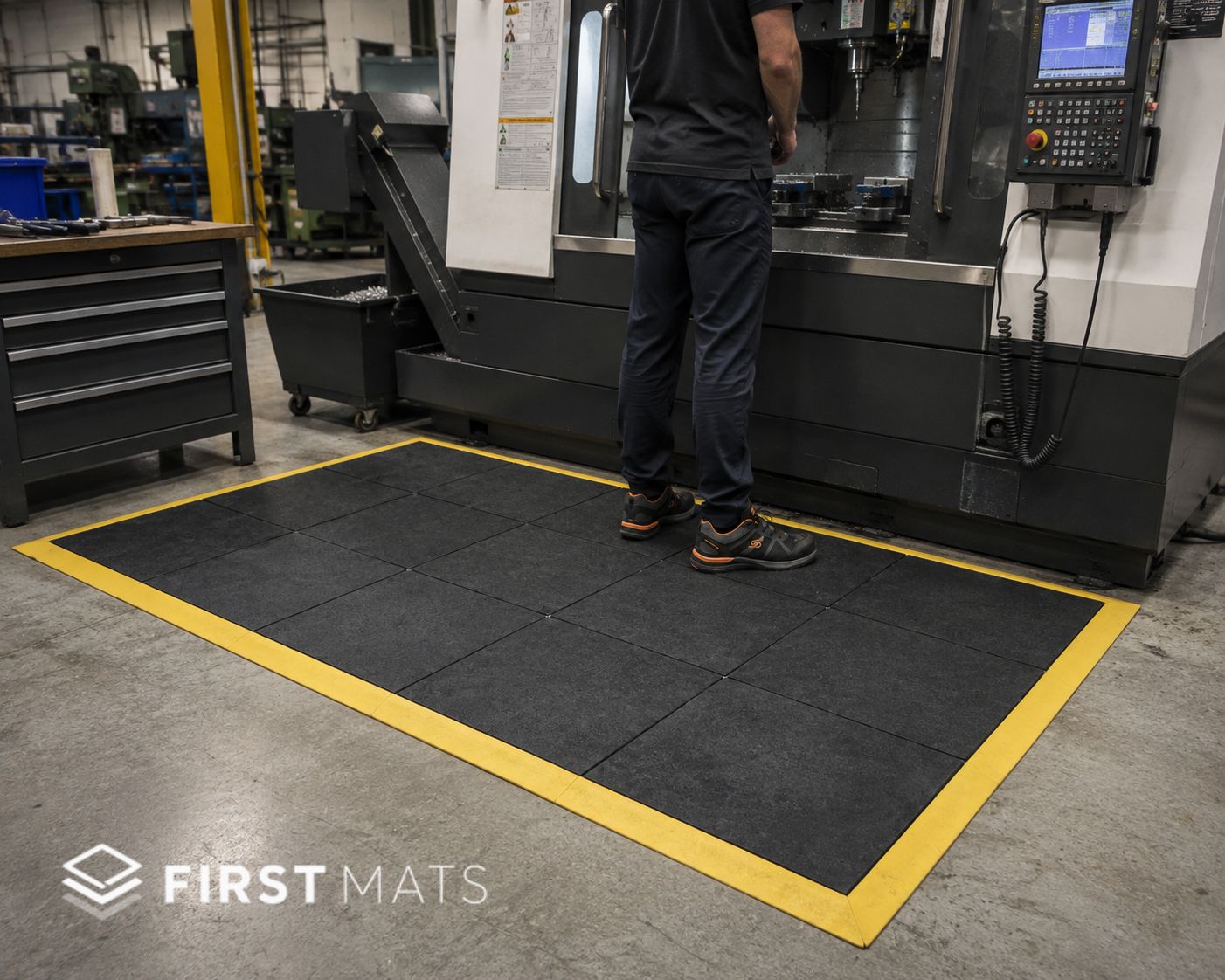
Single mats usually suit fixed workstations where one operator stands in a defined area. They are often easier to place accurately, easier to lift for cleaning, and easier to replace one at a time if a station wears faster than the rest of the line.
This format can also help where stations differ. One bench may need a more robust top surface because of dropped tools, while another may only need basic cushioning for shorter standing periods.
When rolls may suit longer operator zones
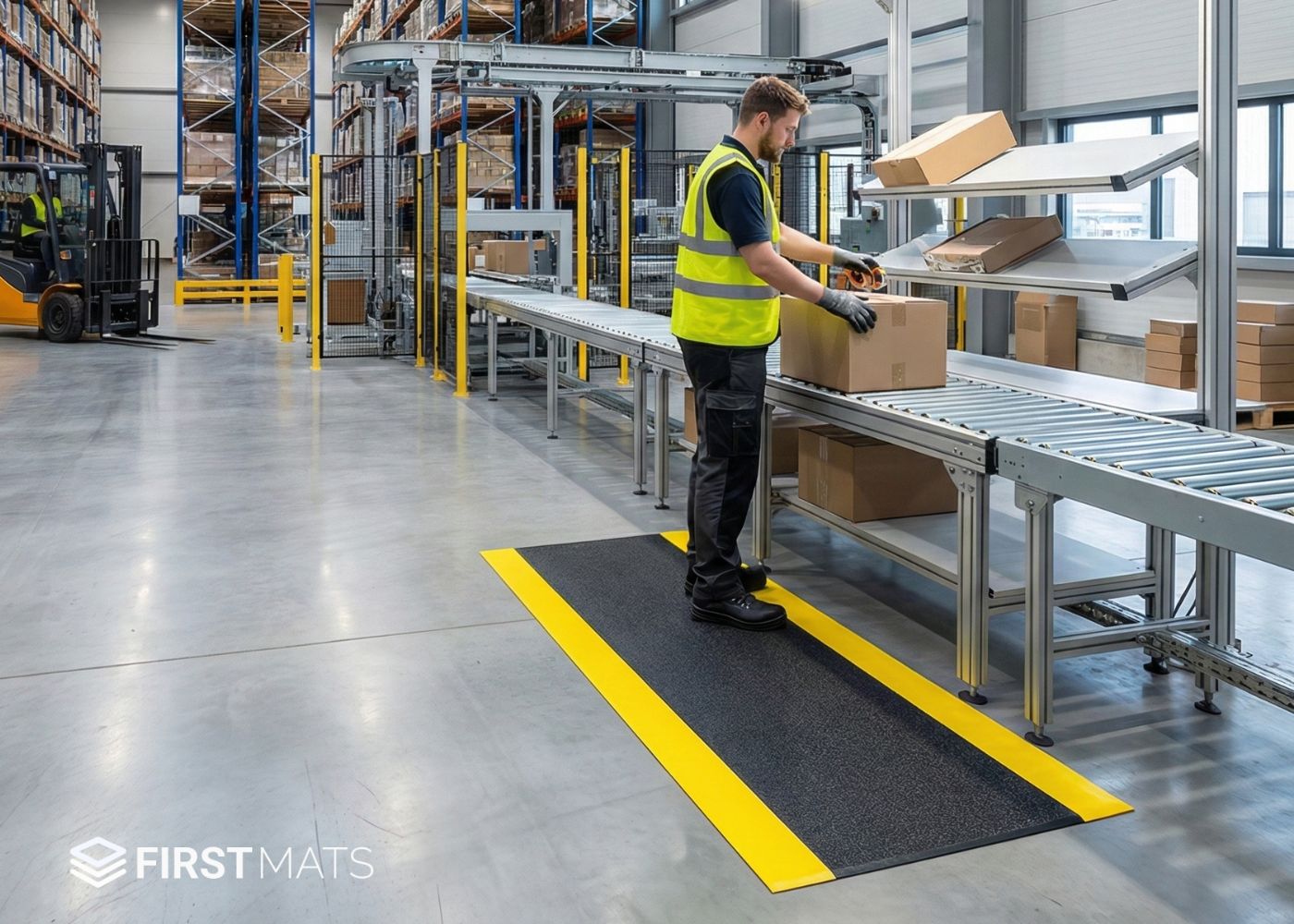
For longer continuous standing areas, rolls can be worth considering if the product is verified for that use. They can help create a more consistent standing surface along the operator side of a line, especially where people work across several positions rather than staying in one spot.
Use caution here. Longer runs need careful planning around access points, turns, cleaning routes and any points where trolleys or carts cross. If a long run creates awkward edges or difficult joins, separate mats may still be the better option. If you are comparing this format, it may help to review the anti-fatigue mat rolls collection alongside your layout drawing.

Balance comfort with trip risk
HSE guidance on trips makes the main point clearly: obstructions in walkways and uneven surfaces are common causes. So anti-fatigue mats need to support the task without creating obvious edge or placement issues.
Why edge design matters
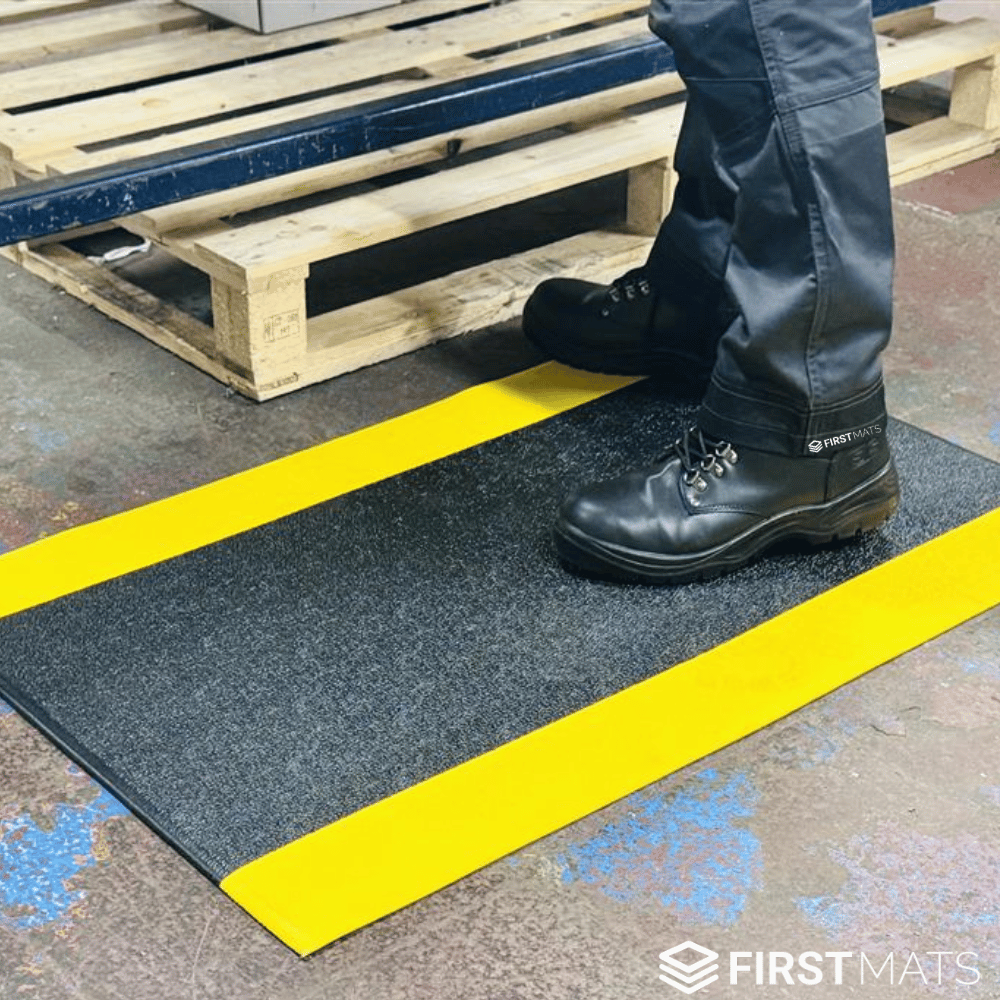
Bevelled edges can help reduce trip risk by making the edge easier to approach than a blunt raised side. That does not remove the need for good placement, but it is still a useful feature to check when mats sit close to walkways or where operators step on and off the mat repeatedly.
When high-visibility borders may help
High-visibility borders can help define the mat boundary in some layouts, especially where the floor and mat colour are similar or where the operator path changes quickly around benches and equipment. They are most useful when visibility is part of the site risk assessment rather than a cosmetic preference.
The key point is not to assume that any border or bevel will solve trip issues on its own. Poor placement, curling edges, bad joins and weak housekeeping can still undermine a sensible mat choice.

Choose the material for the real conditions
Research suggests cushioned mats may help reduce discomfort during prolonged standing, although results vary by task and mat design. That is why material choice should follow site conditions, not broad claims.
Foam and softer constructions
Softer anti-fatigue constructions may suit areas where workers stand mainly in one place and wheeled traffic is limited. They can be worth looking at when the main aim is standing comfort over part or all of a shift, with less demand from carts, stools or repeated compression.
AtEase Standard Anti-Fatigue Mat is the kind of option to review for straightforward fixed standing positions where you want a simple anti-fatigue format without over-specifying the area.
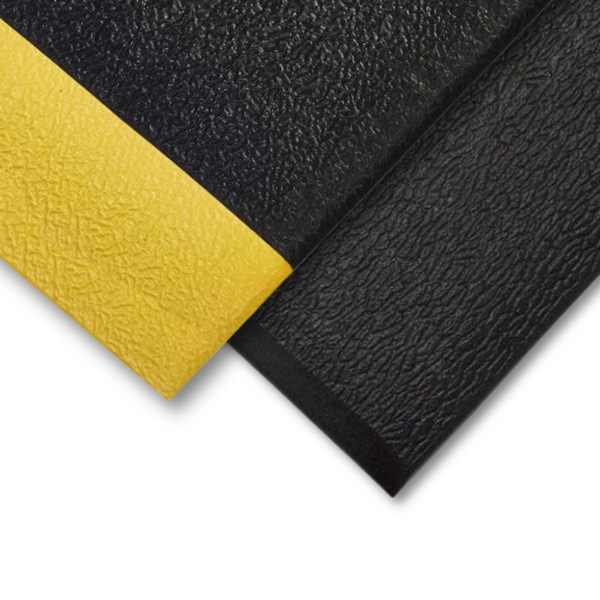
AtEase Standard Anti-Fatigue Mat
The AtEase Standard Anti-Fatigue Mat offers a simple, effective way to improve comfort in light-use work areas. Whether youre packing boxes or assembling small items, this mat provides welcome relief…
- Optimal Thickness: 9mm cushioning provides the perfect balance of comfort and support.
- Flexible Sizing Options: Choose from standard sizes or customize for the perfect fit.
- Safety First: High-visibility yellow safety border and beveled edges reduce trip risks.
- Versatile Use: Ideal for dry industrial and commercial spaces.
From £22.50 + VAT
Check product data carefully before using softer mats in areas with frequent wheels or seating. Some foam mats may be less suitable there, but that should be confirmed by the product specification rather than assumed.
Rubber and tougher constructions
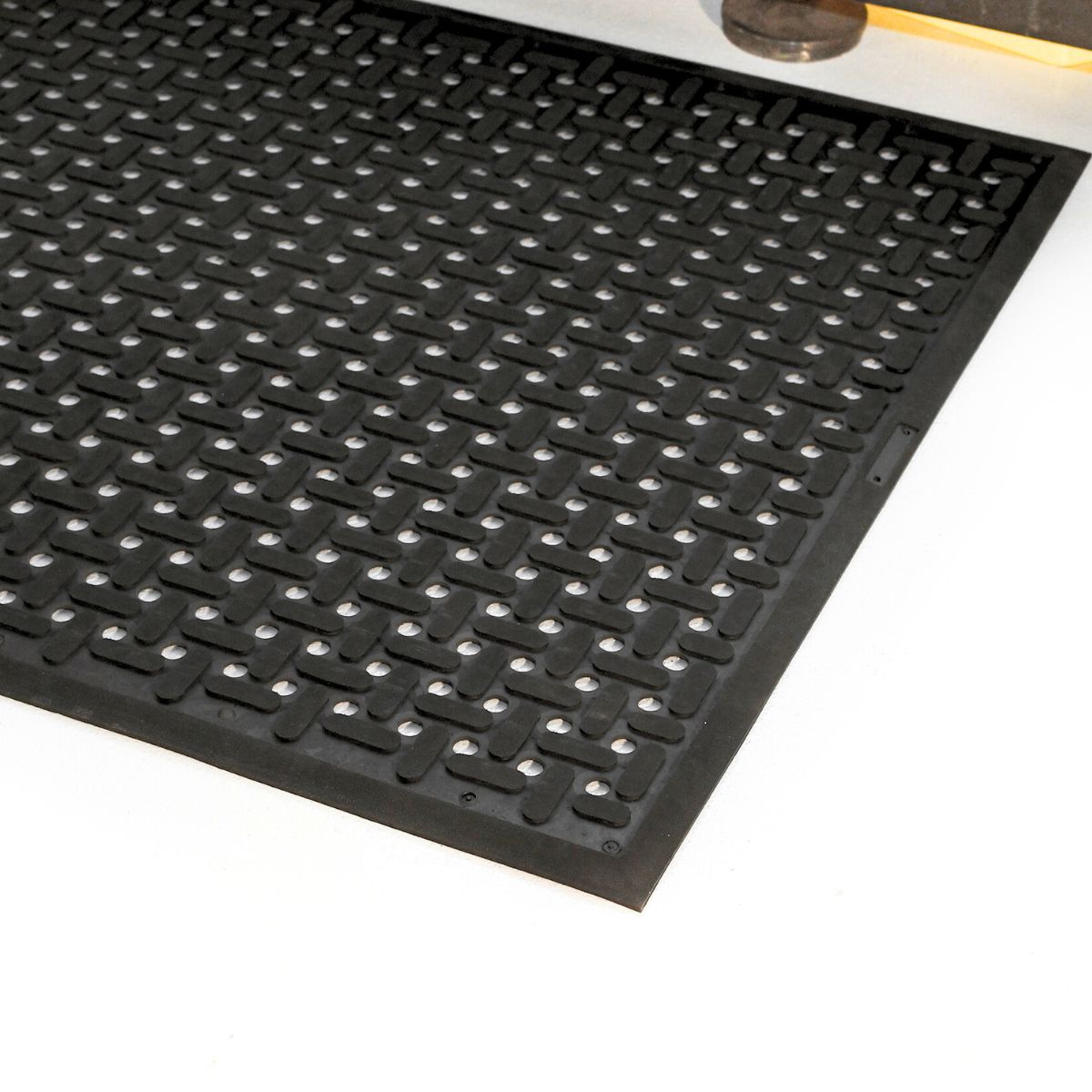
Rubber mats may suit some heavier-duty production areas, particularly where the environment is rougher or where the mat needs to cope with more demanding day-to-day use. That does not make rubber the right choice everywhere, but it can be a sensible direction where durability matters as much as cushioning.
Non-Slip Rubber Anti-Fatigue Mat is one to compare for tougher standing work areas where a more robust rubber construction may fit the conditions better.
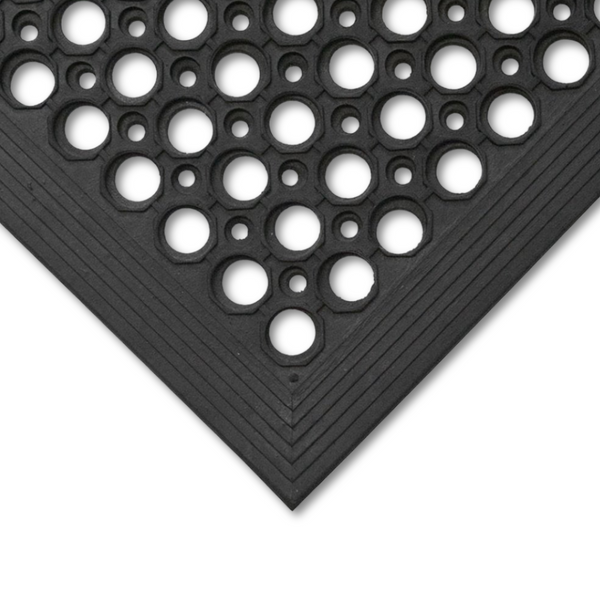
Non-Slip Rubber Anti-Fatigue Mat
The Non-Slip Rubber Anti-Fatigue Mat is a practical choice for busy workshops, factories, and wet work areas. Designed to provide reliable comfort and grip, it supports staff through daily standing…
- Swarf Management: Holes trap swarf and isolate debris for easy cleaning.
- Slip Resistant: Rated 4/5 for secure footing in wet and dry conditions.
- Anti-Fatigue Comfort: Reduces discomfort with a 4/5 fatigue rating.
- Durable Construction: Made from natural rubber for long-term reliability.
From £24.90 + VAT
Look at how the area is actually used before deciding. If operators pivot in place, drag components, use stools, or move parts across the surface, that use pattern may matter more than the material label alone.
Dropped tools, parts and surface wear
Where hand tools or components are dropped regularly, the top surface deserves extra attention. A reinforced or more durable top layer may be preferable in these zones if the product data supports that use. This is less about comfort and more about keeping the mat serviceable and easier to maintain over time.
Elite Vinyl Top Anti-Fatigue Mat is worth checking where you want an anti-fatigue mat with a more durable top surface for busier production settings.
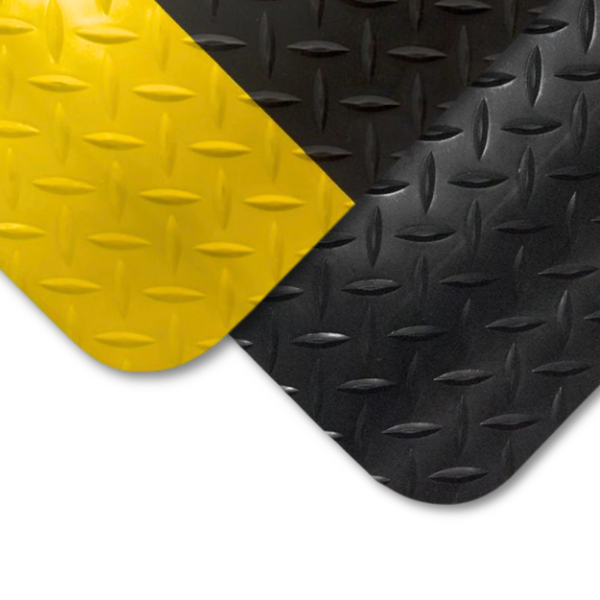
Elite Vinyl-Top Anti-Fatigue Mat
The Elite Vinyl-Top Anti-Fatigue Mat features a tough, wear-resistant vinyl surface that stands up to demanding industrial use. It’s built to handle boots, trolley wheels, and heavy foot traffic without…
- Exceptional Cushioning: 14mm thick foam backing for maximum comfort.
- Durable Vinyl Surface: Resists wear and tear in heavy-duty environments.
- Enhanced Grip: Diamond pattern reduces slips and improves safety.
- Custom Sizes: Options available up to 18.3m in length.
From £51.87 + VAT
Do not treat this as a universal rule. Some assembly tasks are light and clean, while others involve repeated impact, swarf, oils or sharp-edged parts. Match the surface to the exposure.
Check stools, trolley wheels and crossing traffic
This is often where an otherwise sensible shortlist starts to narrow. If workers use sit-stand stools, or if trolley wheels and carts cross the mat regularly, you need to check how the mat behaves under rolling and point loading.
A mat that feels comfortable underfoot can become awkward if wheels catch at the edge or if constant rolling causes early wear. Equally, a very tough mat may be less appropriate if the area is mostly static standing and comfort is the main issue.
Ask these questions before you specify:
- Do wheels cross the mat occasionally, or is the route used constantly?
- Do operators use stools that concentrate load in small contact points?
- Will carts stop on the mat, turn on it, or only pass across it?
- Is the mat inside the working zone, or does it sit on a shared access route?
If the area has mixed use, trial logic is often better than blanket assumptions. Check verified product guidance for wheeled use, then compare that against how the station is really operated.
Plan for cleaning, fitting and replacement
A mat that is hard to clean or awkward to replace can become a poor fit even if the material is otherwise right. This matters on production lines where downtime, hygiene routines or daily washdown procedures influence what is practical.
Cleaning and housekeeping
Mat selection should be based on the whole workstation, including flooring, cleaning and how the area is used. If debris collects at edges or underneath the mat, inspection and cleaning need to stay simple enough for the site team to keep on top of them.
Loose lay or another fitting approach
Where fitting options exist, check what is actually recommended for the product and floor type. Loose-laid mats may be easier to replace and rotate between stations, while other setups may need a more fixed approach. Only include that in your specification if the product guidance supports it.
Whole-line replacement or section-by-section
For long operator zones, think about replacement before you buy. If one section wears quickly near a loading point, replacing one mat may be easier than replacing a full continuous run. This is often where separate mats outperform a longer format in practical ownership terms.
A simple shortlist method
Before you raise a purchase request, sort each area using this order:
- Map the standing zone: fixed station, moving line-side task, or long continuous operator run.
- Check task duration: shorter standing periods or prolonged standing across much of a shift.
- Review traffic: pedestrians only, occasional wheels, or frequent carts and stools.
- Assess exposure: dropped tools, component impact, dirt, liquids and cleaning routine.
- Check edge and visibility needs: bevelled edges, borders, joins and walkway proximity.
- Decide whether simple replacement by station is better than one longer run.
- Verify any product-specific claims against current technical data before sign-off.
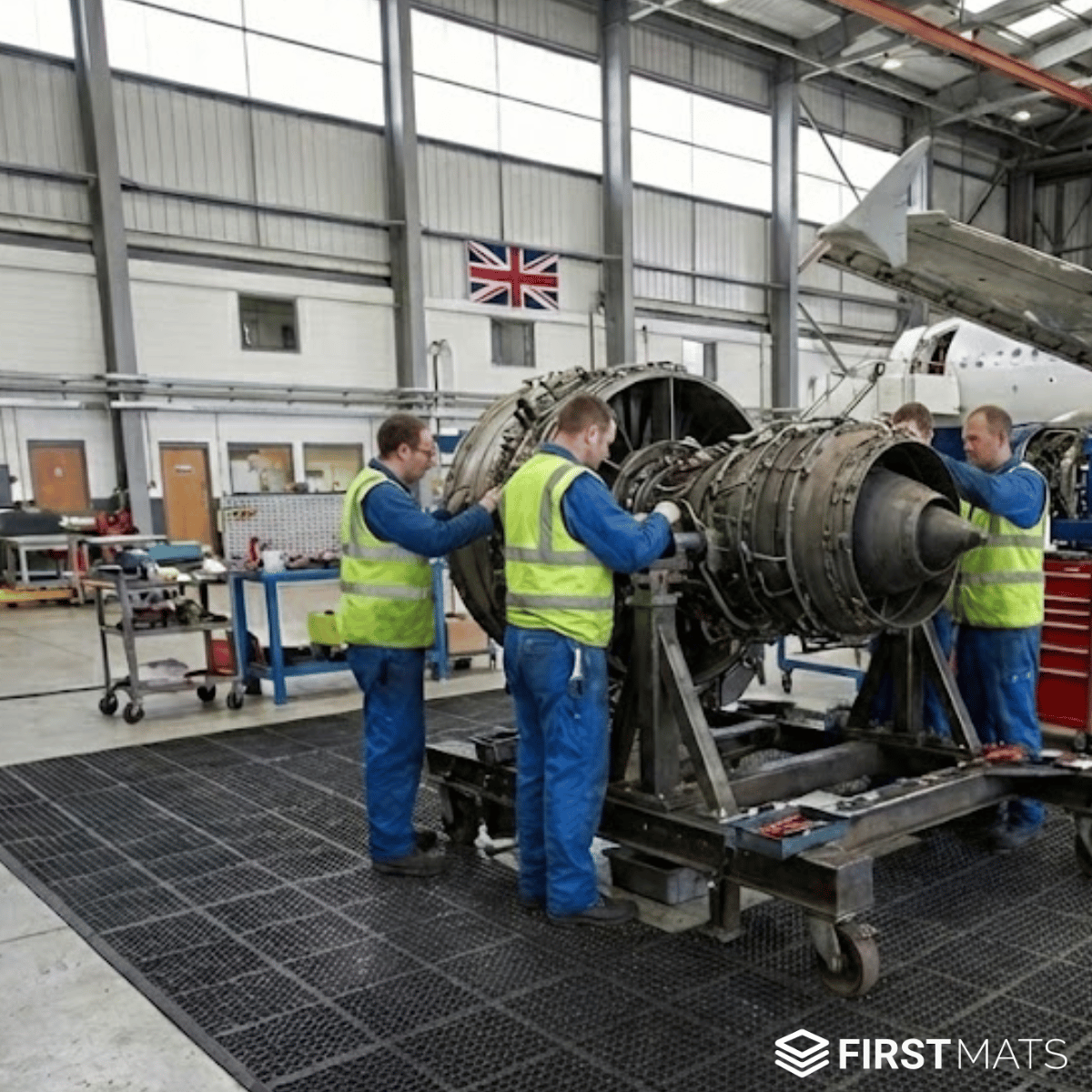
If you want to see how anti-fatigue matting has been applied in practice, this operator comfort and safety case study may help frame internal discussions without relying on broad marketing claims.
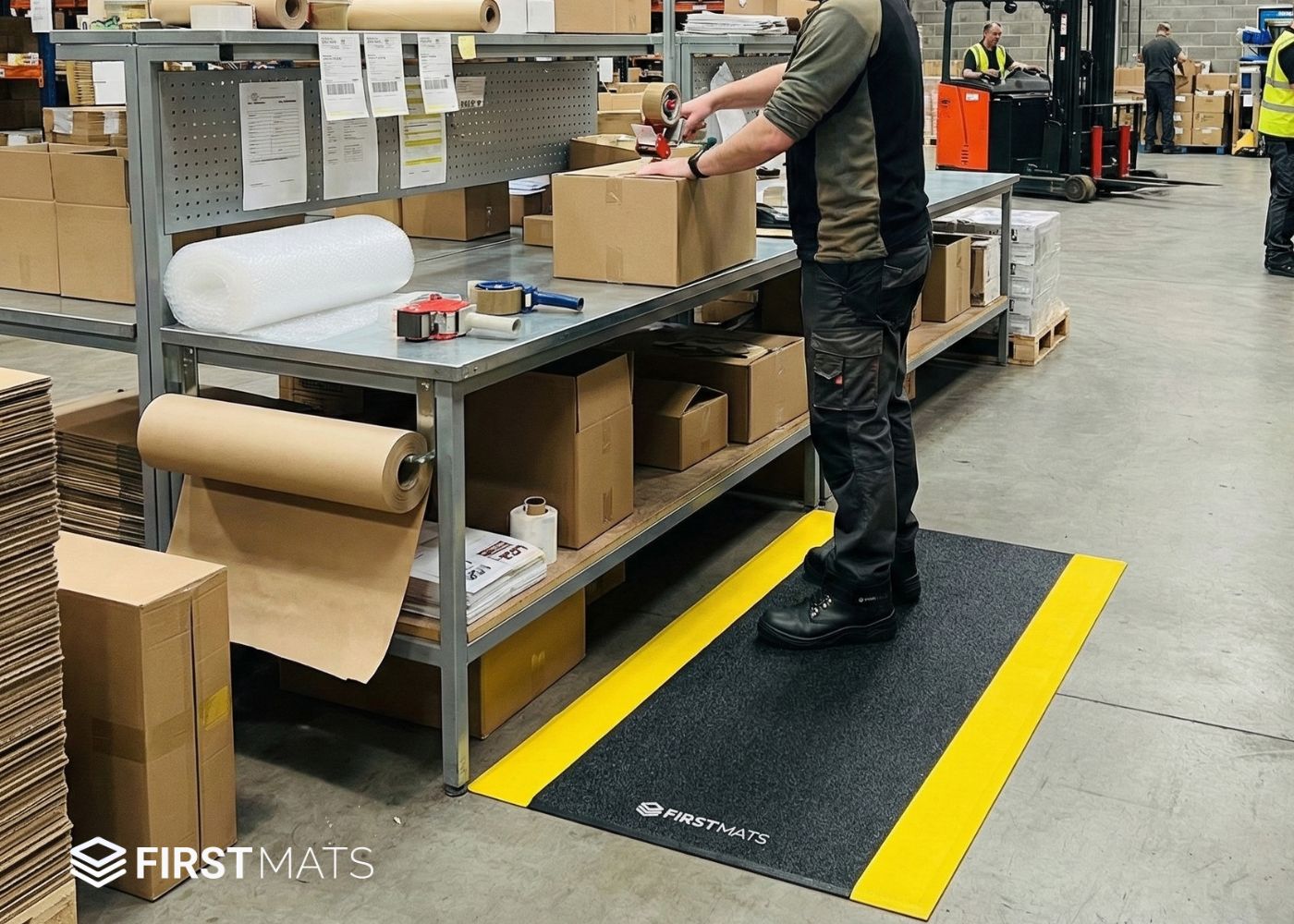
For busy operations, it can also help to review a warehouse-focused example and compare what carries across to your own production environment and what does not.
The best anti-fatigue mat for an assembly line is rarely the one with the strongest headline claim. It is the one that fits the line layout, the traffic pattern and the cleaning routine with the fewest compromises, so verify those points first before you buy.