Buying Guides
The Best Floor Mats for Packing Stations

Packing stations are often the heartbeat of goods-out. If your team is picking, checking, boxing, labelling, and getting orders ready for collection, they’re likely spending long periods on hard floors, repeating the same movements hundreds of times per shift. That’s where the right floor mats for packing stations come into their own.
A good mat can help in two practical ways:
- Comfort: reducing underfoot fatigue during standing tasks, which can support steady productivity and fewer aches at the end of the day.
- Safety: improving grip underfoot and making work zones clearer, reducing slip and trip risk.
The trick is choosing a mat that suits the reality of your despatch area. Some packing station anti-fatigue mats are ideal for occasional use, while others are built for continuous standing, turning on the spot, and the wear that comes with a busy operation.
Why packing stations benefit from anti-fatigue matting
Most packing benches sit on concrete or other hard industrial flooring for good reason: it’s durable and easy to keep clean. But for people, hard floors can be unforgiving. Standing still (or mostly still) for long spells can increase discomfort, and discomfort tends to show up in slower working, more mistakes, and more breaks being needed.

HSE guidance on musculoskeletal disorders (MSDs) and ergonomics consistently points towards managing the everyday factors that lead to strain at work — including sustained postures and poorly set-up tasks. If your operatives are spending significant time at a bench, comfortable underfoot support is a simple, sensible improvement alongside good workstation set-up.
In despatch areas, safety is equally important. Even when there are no liquids involved, slips and trips can happen due to busy walkways, stray packaging, or rushed movement around the station. The right matting, fitted properly, can help you keep footing secure and edges visible.
What to look for in floor mats in despatch areas
1) How often the mat is used
Start with a simple question: is someone on the mat constantly, or only at various times throughout the day?
- If the packing bench is used in short bursts, a standard industrial anti-fatigue mat is often a great fit.
- If an operative is stationed there for most of a shift, you’ll usually be better off with a thicker mat and a tougher top surface that holds up to daily wear.
2) Pivoting, turning, and “hot spots”
Packing work rarely involves standing perfectly still. People twist to reach tape guns, turn to grab cartons, pivot to scan items, and step forward to stack finished orders. That turning action tends to wear a mat in the same spot repeatedly, especially if one person uses the same station every day.
If your packing process includes lots of turning on the spot, it’s worth choosing a mat designed to cope with that movement. A more durable top layer can make a noticeable difference to lifespan and day-to-day appearance.
3) Trip visibility and edge safety
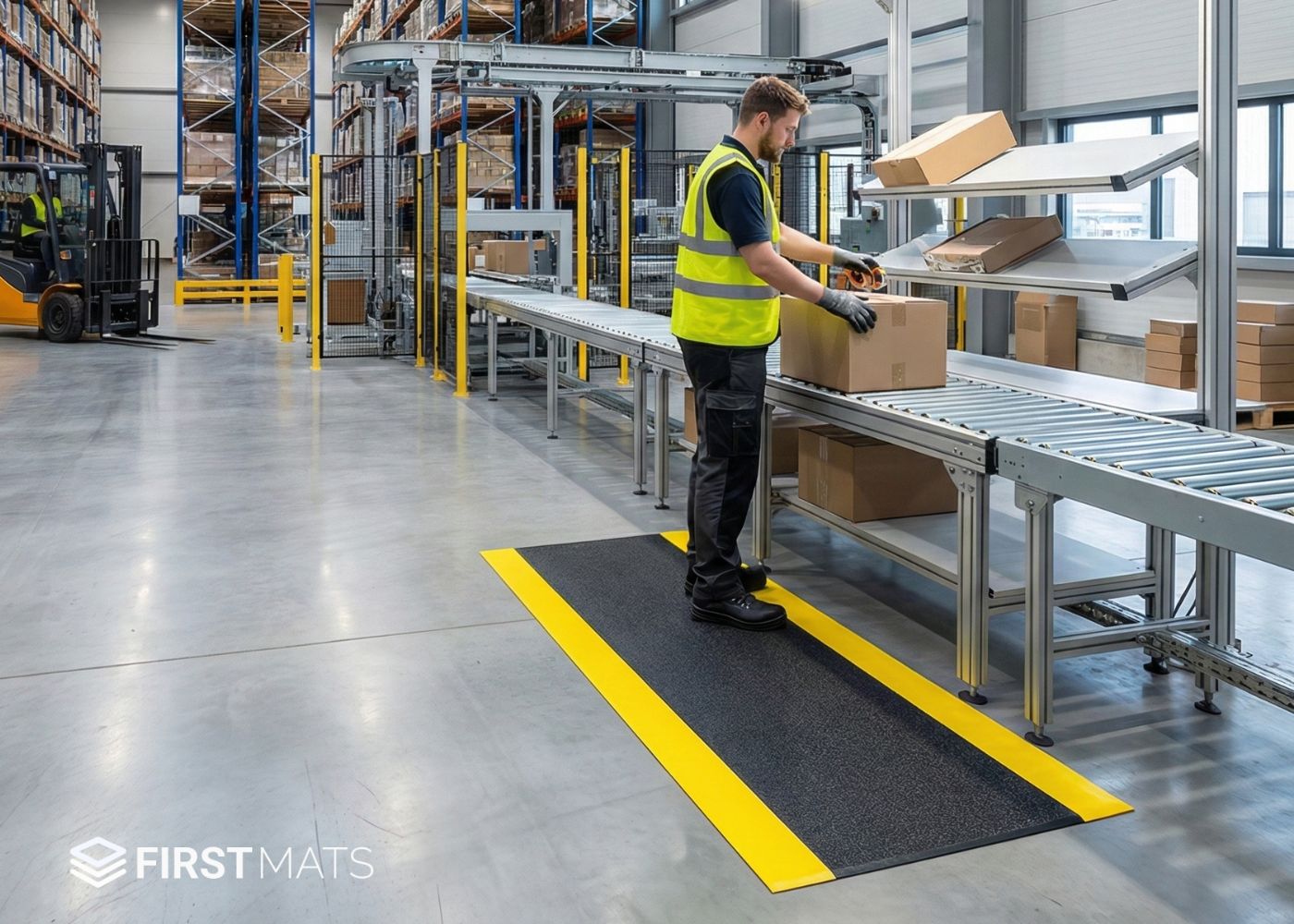
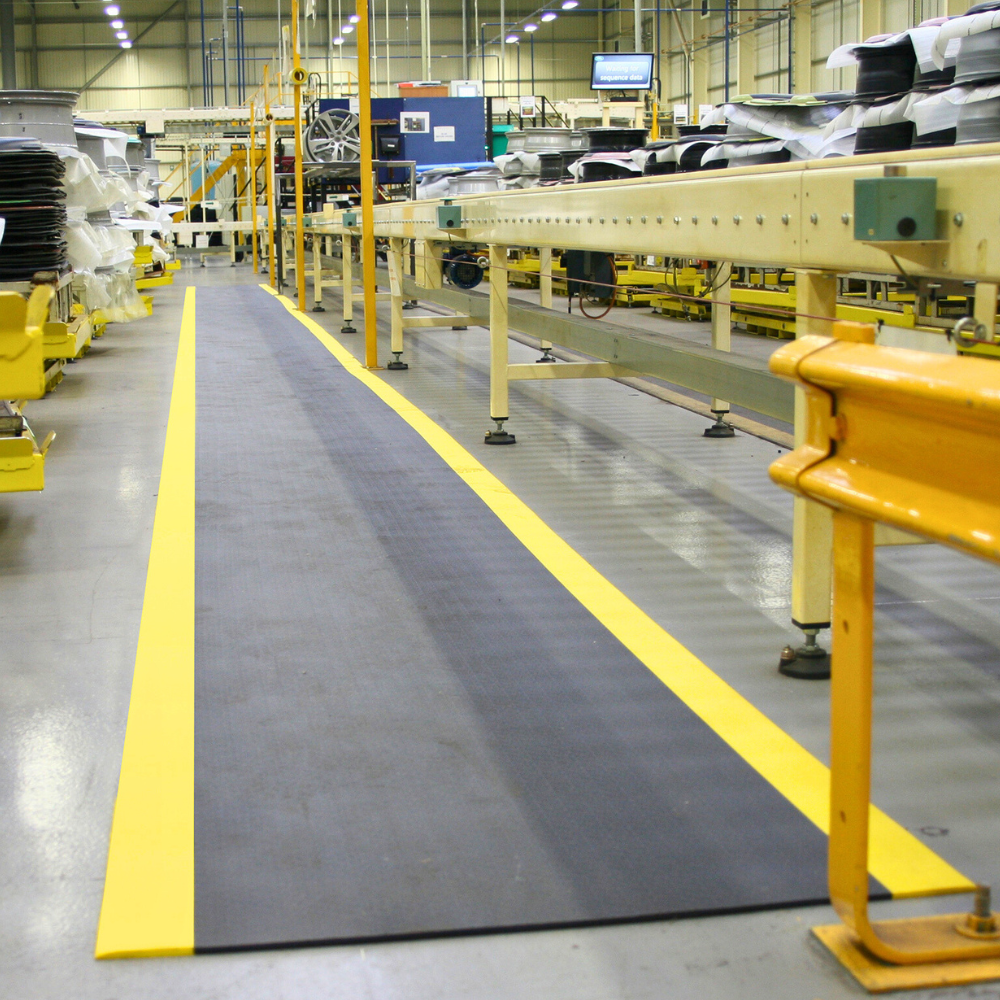
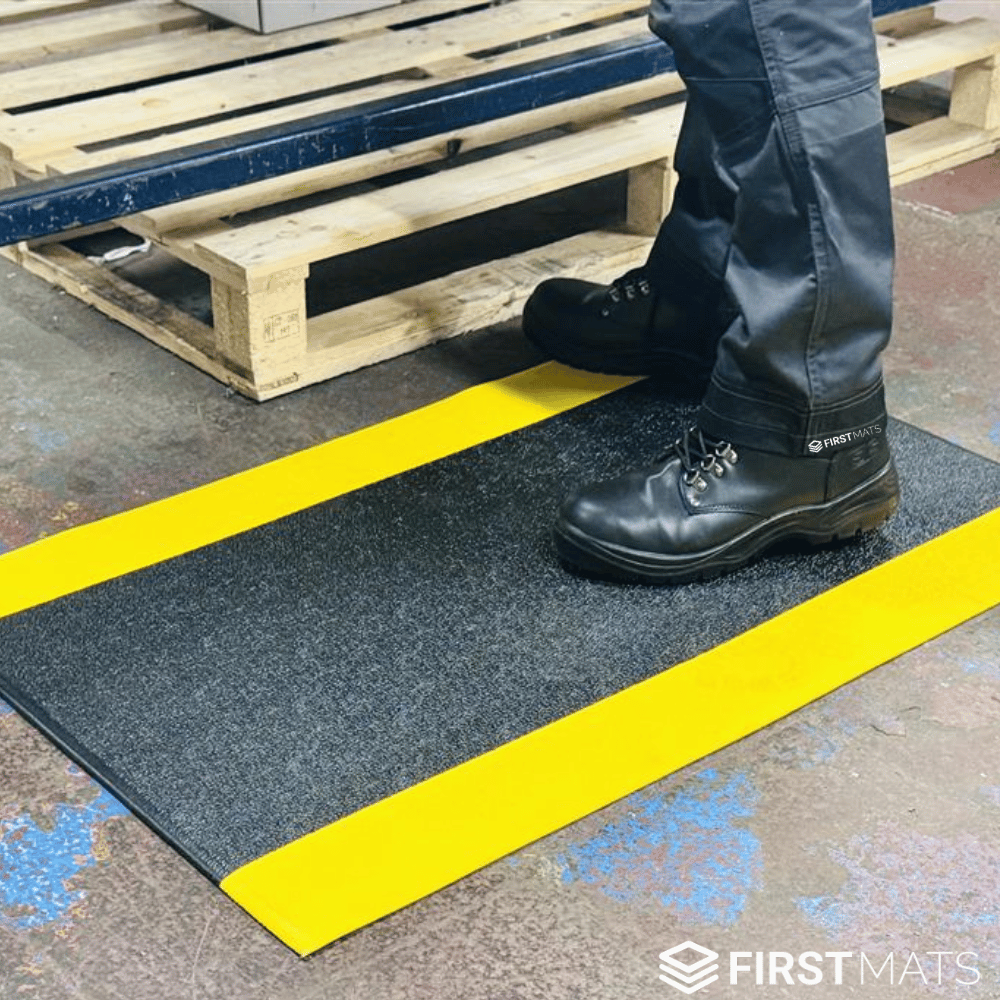
In busy goods-out areas, it helps to make mat edges obvious and keep transitions neat. Look for mats with bevelled edges (to reduce trip risk) and consider an optional yellow safety border if you want clearer visual separation between work zones and walkways.
HSE’s slips and trips guidance and flooring advice underline the importance of suitable floors and clear routes, so people can move around safely. Matting should support that by staying flat, staying put, and being positioned sensibly within the workstation layout.

4) Trolley wheels and wheeled traffic
This is often the deciding factor in despatch environments.
Foam-based mats are excellent for comfort, but if trolleys are constantly rolling across a mat, the surface can wear faster. If wheeled traffic is occasional, you may be fine with a more robust foam mat. If wheels are frequent and heavy, an all-rubber option is generally a better fit for durability.
It’s also worth reviewing traffic flow in the wider area. HSE workplace transport guidance focuses on safe routes and sensible traffic management. Even if your “vehicles” are mainly pump trucks, cages, and trolleys, keeping routes clear and predictable is a big part of preventing incidents.
Choosing the right mat for each packing and goods-out zone
Below is a practical way to match mat type to how the area is used. Each section includes a natural spot where you can drop in your product callout block.
At a packing bench with shorter shifts or occasional use
If the station is used on and off, you’ll often get everything you need from a standard industrial anti-fatigue mat. These are comfortable underfoot, quick to fit, and a popular choice for benches where staff rotate or where packing is only part of the role.
This is also a sensible option if you want to trial matting across multiple benches without going straight into heavier-duty specifications. In many dry packing stations (with no liquids, debris, or machining by-products), this type of mat is more than adequate.
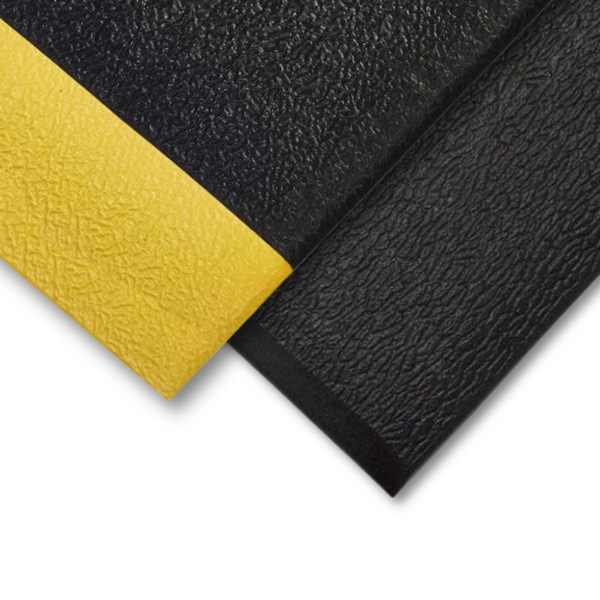
AtEase Standard Anti-Fatigue Mat
The AtEase Standard Anti-Fatigue Mat offers a simple, effective way to improve comfort in light-use work areas. Whether youre packing boxes or assembling small items, this mat provides welcome relief…
- Optimal Thickness: 9mm cushioning provides the perfect balance of comfort and support.
- Flexible Sizing Options: Choose from standard sizes or customize for the perfect fit.
- Safety First: High-visibility yellow safety border and beveled edges reduce trip risks.
- Versatile Use: Ideal for dry industrial and commercial spaces.
From £22.50 + VAT
If visibility is a priority, consider a yellow safety border to help draw attention to the mat edges, particularly if your goods-out area has mixed pedestrian movement and frequent passing traffic behind the benches.
Busy packing stations used throughout the day
Where one operative is based at a packing station for most of the shift, a thicker mat with a more durable top surface is typically the better long-term choice. You’re not just paying for extra cushioning, you’re also buying time: fewer early signs of wear, better appearance over months of use, and more consistent comfort as the day goes on.
This is especially relevant where packing involves a lot of turning on the spot (for example, reaching between a bench, a printer, and a stack of cartons). A tougher top layer is more resistant to the scuffing and twisting that can quickly mark lighter mats.
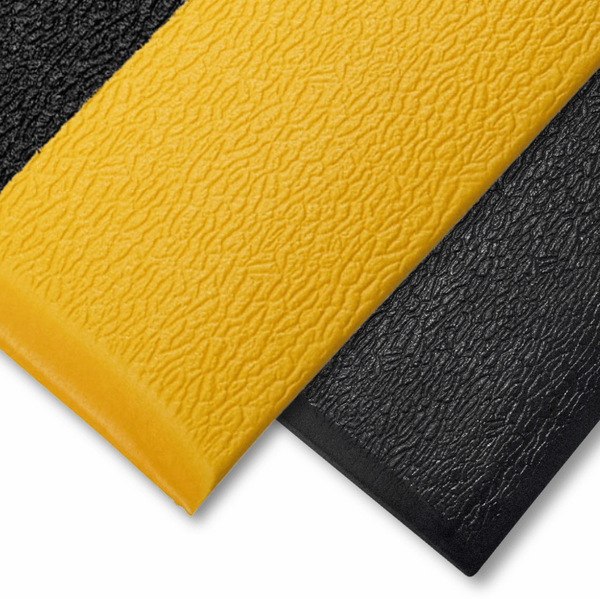
AtEase Premium Anti-Fatigue Mat
The AtEase Premium Anti-Fatigue Mat is designed for demanding workplaces where staff spend long hours on their feet. It provides lasting support and comfort, making it ideal for production lines,…
- Fatigue-Relief Comfort: Open-cell PVC foam construction provides excellent cushioning.
- Durable Design: Textured pebble surface resists wear from heavy use.
- Fire Certified: Compliant with BS EN 13501-1 Class Dfl - s1.
- Custom Lengths: Available up to 18.3m to fit any workspace.
From £32.65 + VAT
If your despatch team works long shifts, or if peak periods mean a station is continuously in use, this type of matting can be a sensible “fit-and-forget” upgrade compared to lighter alternatives.
Areas with higher wear, occasional wheels, or dropped items
Not all goods-out areas are gentle on floor matting. Some packing benches double as checking stations with heavier items, tools, scanners, and tape dispensers being handled all day. In these environments, you may find that a protective top layer helps the mat cope better with day-to-day knocks and scuffs.
A vinyl-topped anti-fatigue mat is designed with durability in mind. It can be a good option if you want the comfort benefits of anti-fatigue matting, but you also need added resistance to wear in a busy workplace.
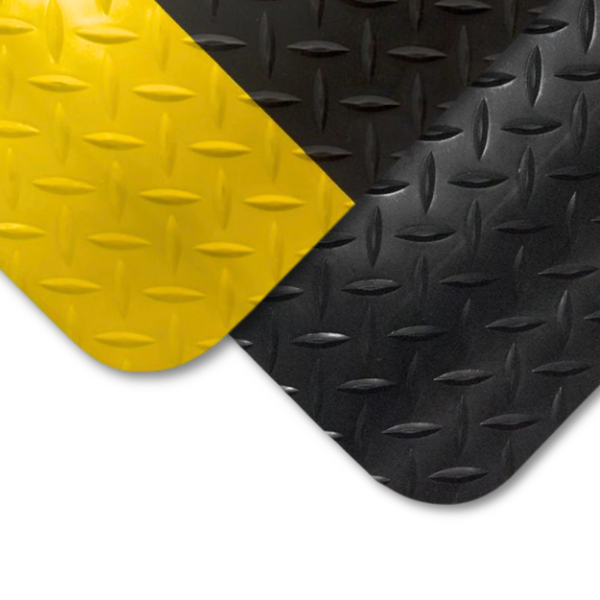
Elite Vinyl-Top Anti-Fatigue Mat
The Elite Vinyl-Top Anti-Fatigue Mat features a tough, wear-resistant vinyl surface that stands up to demanding industrial use. It’s built to handle boots, trolley wheels, and heavy foot traffic without…
- Exceptional Cushioning: 14mm thick foam backing for maximum comfort.
- Durable Vinyl Surface: Resists wear and tear in heavy-duty environments.
- Enhanced Grip: Diamond pattern reduces slips and improves safety.
- Custom Sizes: Options available up to 18.3m in length.
From £51.87 + VAT
It’s also a strong contender for “shared” areas, where different people use the same station and the mat sees a wider mix of footwear, movement, and handling activity.
Walkways and routes with constant trolley traffic
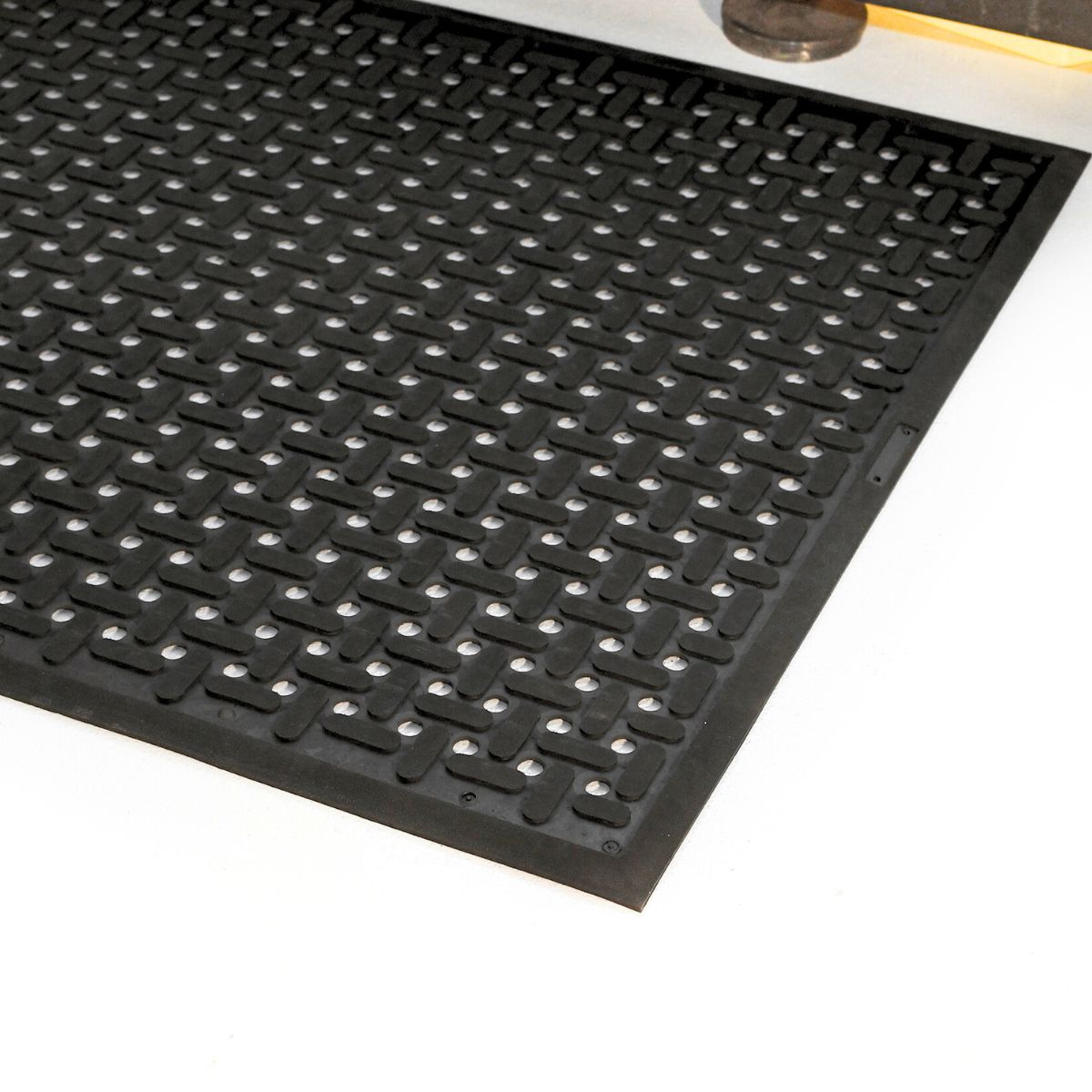
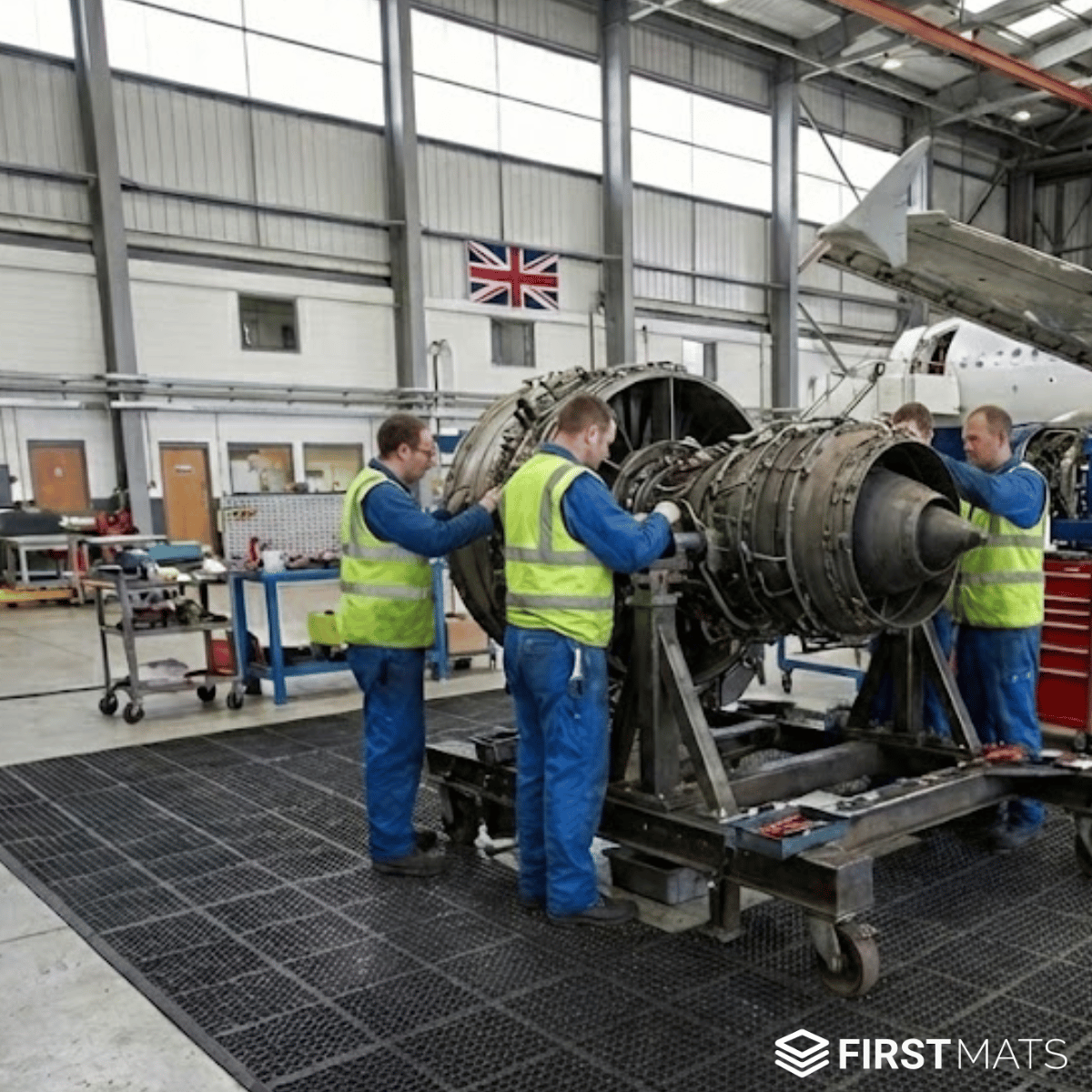
If trolleys are constantly rolling across the same routes, especially heavy cages, pump trucks, or regularly loaded carts, then foam mats tend to have a shorter working life. In these cases, an all-rubber mat is generally the more durable option.
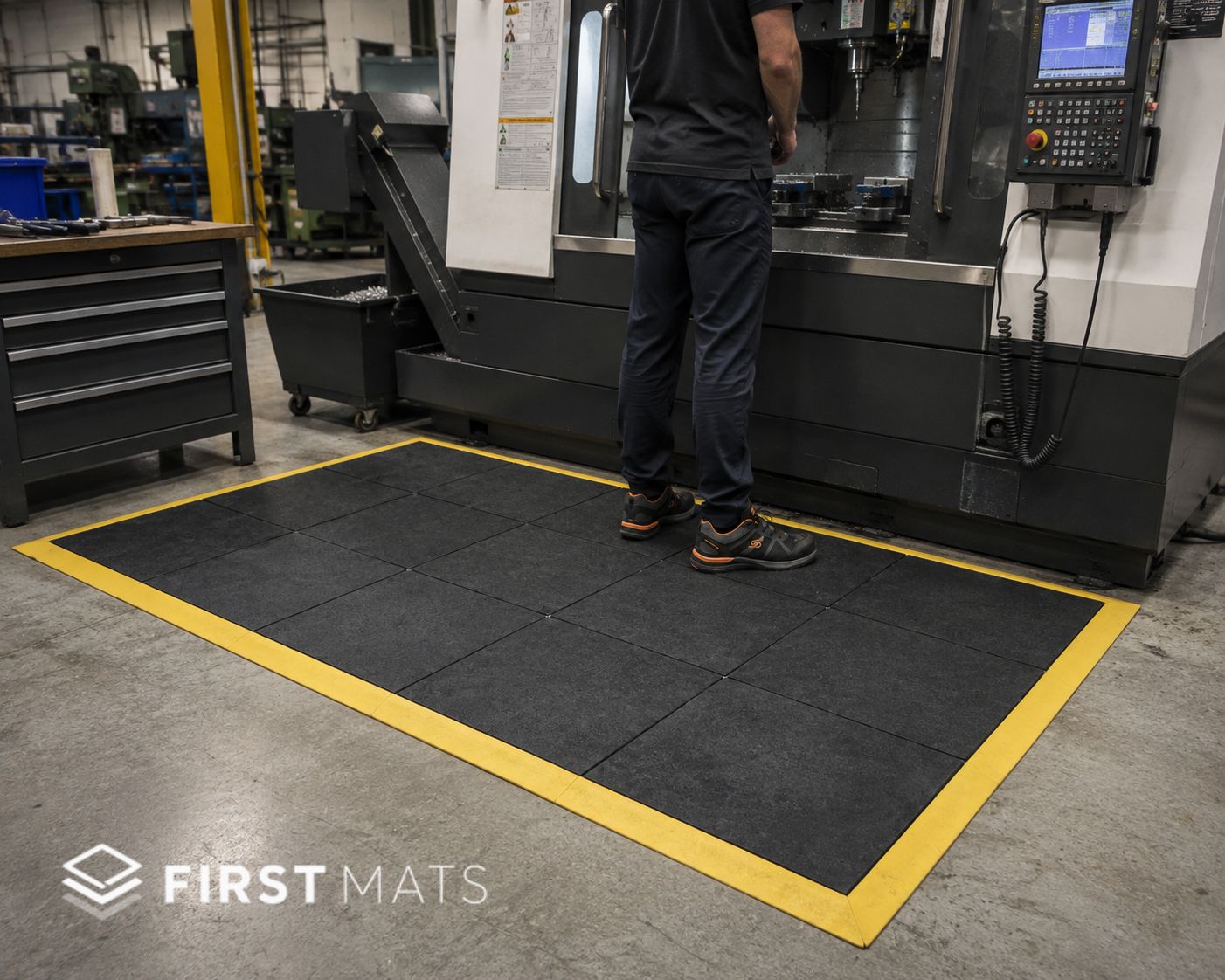
Interlocking rubber tiles can work particularly well where you need to cover a larger zone, create a defined standing area, or build matting around fixed equipment. They also make it easier to extend coverage later if your layout changes.
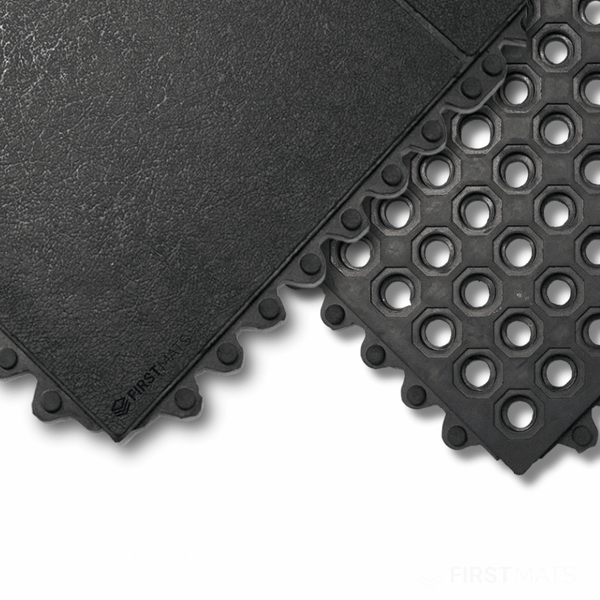
Heavy-Duty Interlocking Anti-Fatigue Mat Tiles
The Heavy-Duty Interlocking Anti-Fatigue Mat Tiles are designed to provide cushioned comfort in the most demanding industrial settings. Whether you're working in wet or dry areas, these mats help reduce…
- Durable and Resilient: Built for industrial use and high-traffic areas.
- Interlocking Design: Connect tiles for a modular, seamless surface.
- Temperature Resistant: Withstands up to 130°C, suitable for hot materials.
- Slip Resistance: Rated DIN 51130, R10 for superior safety.
From £14.89 + VAT
If you’re planning traffic routes through goods-out, it’s worth checking HSE guidance on workplace transport routes and traffic management to help keep pedestrian areas and trolley routes predictable and clear.
Quick checklist for specifying packing station matting
- How long is someone standing at the station each day?
- Is there frequent pivoting/turning in one spot?
- Will trolley wheels cross the mat occasionally, or constantly?
- Would a yellow safety border help with edge visibility?
- Are edges bevelled and positioned to avoid trip points?
- Is the surrounding floor kept clear of loose wrap, labels, and cartons?
Helpful HSE links for safety reviews
- Slips and trips (HSE)
- Flooring advice (HSE)
- Musculoskeletal disorders at work (HSE)
- Ergonomics and human factors at work (HSE)
- Workplace transport (HSE)
- Traffic management (HSE)
Shop the full range
If you’re reviewing multiple packing benches, checking stations, and goods-out walkways, you can browse our full range of Industrial Anti-Fatigue Mats.
Choosing the right mat for each zone is often the difference between something that feels good on day one and something that still performs well months down the line, especially in despatch areas where movement, turning, and traffic are part of the job.