Buying Guides
The Best Floor Mats for Stock Rooms and Store Rooms

Stock rooms and store rooms are often busy, functional spaces that support the smooth running of retail, hospitality, food service and commercial environments. While they may not be customer-facing, these areas see frequent foot traffic, manual handling and regular stock movement. Choosing the right floor matting plays an important role in maintaining safety, supporting hygiene standards and protecting floors from unnecessary wear.
This guide focuses on small to medium stock rooms and store rooms rather than large warehouses or distribution centres. It explains which types of floor mats are most suitable for different storage conditions, from dry goods rooms to food storage areas and cold rooms, helping you make an informed choice based on how the space is used day to day.
Why Floor Mats Are Important in Stock Rooms
In stock rooms, safety is the primary concern. Staff are often carrying boxes, trays or containers that can restrict visibility of the floor, increasing the risk of slips if surfaces are smooth, dusty or damp. Hard floors such as concrete, tiles or sealed screed can become particularly hazardous when combined with moisture or debris.
Well-chosen stock room floor mats help reduce these risks by:
- Reducing the likelihood of slips and falls in busy or confined spaces
- Providing consistent grip underfoot when carrying stock
- Helping define safer walkways between shelving
- Limiting the spread of dirt and making cleaning more manageable
In environments where stock rooms connect directly to kitchens, shops or prep areas, non-slip matting can also act as a barrier that helps control contamination and maintain cleaner working conditions.
Floor Mats for Dry Goods Stock Rooms
Dry goods stock rooms are commonly used to store boxed items, packaged products, paper goods or equipment. While these areas are less likely to experience regular spillages, they can still present slip risks due to dust, packaging debris or smooth flooring surfaces.
Staff may also be moving quickly between shelves, often while carrying items by hand, which increases the importance of secure footing.

In these environments, floor mats should focus on providing grip without introducing trip hazards.
- Low-profile designs help prevent catching toes or trolley wheels
- Textured surfaces improve traction on smooth floors
- Durable materials cope better with repeated foot traffic
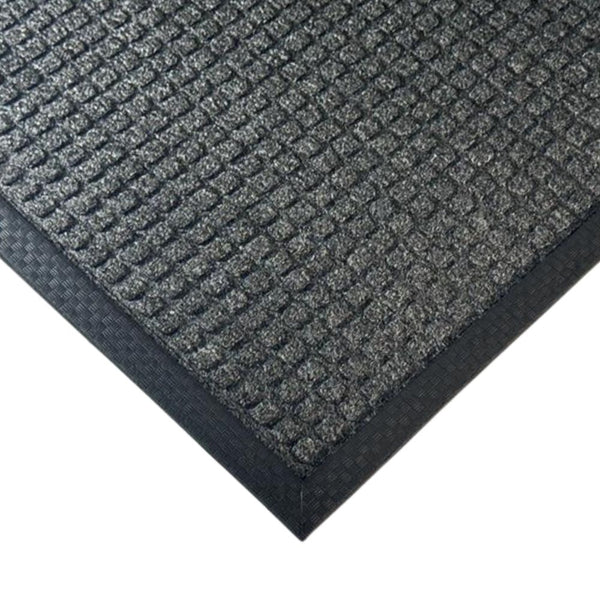
AquaProtect Super Absorbent Door Mat
The AquaProtect Super Absorbent Door Mat is made for entrances that have to deal with wet weather, muddy shoes, and heavy daily footfall. Holding up to 6 litres of water…
- Super Absorbent: Holds up to 6 litres of water per square metre.
- Highly Durable: 10.5mm thickness with Decalon fibres for long-lasting use.
- Non-Slip Design: Rubber backing prevents movement on smooth floors.
- Wheelchair Accessible: Reinforced border for added stability.
From £30.60 + VAT
Mats placed at entrances to stock rooms can also help trap dust and debris before it spreads further inside. Heavy-duty entrance mats or slim designs such as the Entryplus low-profile and durable door mat can be useful here, particularly where doors need to open freely or where occasional light trolleys are used.
Store Rooms Where Spills Are Likely

Some store rooms are used to hold liquids, cleaning products, paints or other substances that increase the likelihood of spillages. Even small leaks can quickly create slippery conditions, especially on smooth floors.
In these areas, choosing matting that actively manages liquid rather than simply sitting on top of it is essential.
- Drainage designs allow liquid to pass through the surface
- Raised structures keep feet above pooled spills
- Non-slip materials help maintain grip in wet conditions
PVC duckboard matting is a practical option in these situations, offering a raised, non-slip surface that remains easy to clean.
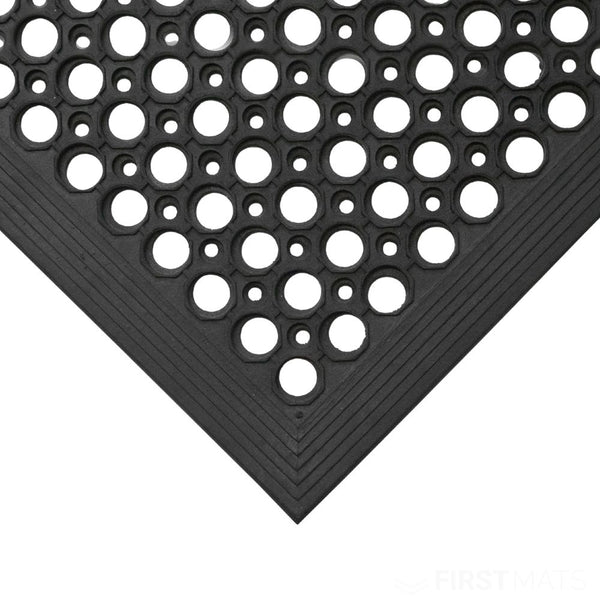
EntraGuard Rubber Door Mat with Holes
The EntraGuard Rubber Door Mat with Holes is built for tough outdoor use, combining durability with smart design. Its open hole pattern scrapes dirt and stones from shoes while allowing…
- Durable Natural Rubber: Long-lasting and wear-resistant material.
- Improved Drainage: Hole pattern removes water and debris efficiently.
- Slip Resistant: Meets EN 13552 Cat R10 standards for safety.
- Temperature Resistant: Performs in extreme conditions from -20°C to +130°C.
From £19.45 + VAT
These mats are well suited to maintenance cupboards, cleaning stores and back-of-house areas where occasional spillages are unavoidable.
Food Storage Floor Mats and Hygiene Considerations
Food storage areas place greater demands on floor matting due to hygiene requirements and the presence of moisture, oils or food residues. Mats used in these spaces should be easy to clean, resistant to liquids and capable of maintaining slip resistance even when conditions are less than ideal.
- Non-absorbent surfaces support regular wash-down cleaning
- Raised or open designs help prevent standing water
- Slip resistance must be maintained in damp conditions
Rubber mats designed for commercial kitchens are often well suited to food storage areas, particularly where staff move between prep spaces and storage.
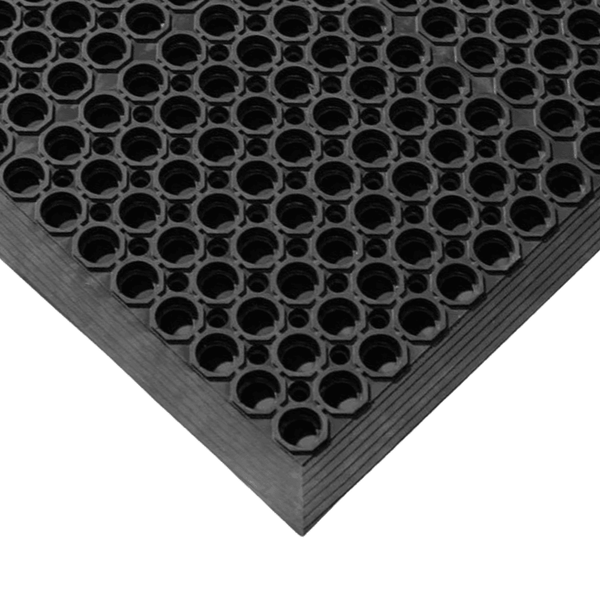
Kitchen Non-Slip Rubber Floor Mat
The Kitchen Non-Slip Rubber Floor Mat is a practical choice for busy commercial kitchens, offering comfort underfoot and reliable slip resistance in wet or dry areas. Made from durable natural…
- Natural Rubber Construction: Combines comfort and durability for intensive use.
- Honeycomb Surface: Enhances grip and fatigue resistance.
- Effective Drainage: Mat wells remove liquids to keep areas safe.
- Versatile Application: Suitable for wet or dry environments.
From £19.45 + VAT
Cold Room and Chilled Storage Areas
Cold rooms and chilled storage areas introduce additional challenges, as low temperatures and condensation can affect both flooring and mat performance. Not all materials remain flexible in cooler conditions, and some mats may harden, crack or lose grip if they are not designed for such environments.

When selecting matting for cold rooms, it is important to choose products that are suitable for lower temperatures and capable of maintaining slip resistance when condensation forms. Drainage-style mats are often effective in these areas, as they help manage moisture on the surface while providing a stable footing. Checking temperature suitability before installation helps ensure the mat continues to perform as expected over time.
- Mats must remain flexible at lower temperatures
- Condensation increases the need for reliable grip
- Drainage designs help control surface moisture
What About Trolleys in Stock Rooms?
In many small stock rooms, goods are moved manually rather than with heavy equipment. However, even occasional use of light trolleys or carts should be considered.
- Mats should be dense enough to support wheels
- Low-profile edges reduce resistance and trip risks
- Softer foam mats are generally less suitable
Low-profile rubber or PVC mats tend to work best in these situations.


DrainAway Rubber Utility Mat Rolls
DrainAway Mats: Safety & Comfort Redefined Enhanced Grip for Safety: Our DrainAway Rubber Utility Mat Rolls feature a natural rubber construction, offering excellent traction to prevent slips in wet or…
- Slip Resistance: Rated 2/3 for very good traction.
- Wear Resistance: Rated 2/3 for long-lasting durability.
- Impact Resistant: Handles up to 3kg/cm² for heavy-duty use.
- Custom Sizes: Available in 5m and 10m rolls or cut to length.
From £194.68 + VAT
Stock Room Matting Comparison Guide
| Stock Room Type | Main Risks | Recommended Mat Types |
|---|---|---|
| Dry goods store rooms | Dust, smooth floors, manual handling | Low-profile rubber mats, entrance mats |
| Spill-prone store rooms | Liquids, slippery surfaces | Drainage mats, PVC duckboard matting |
| Food storage areas | Moisture, hygiene requirements | Non-slip rubber kitchen-style mats |
| Cold rooms | Condensation, low temperatures | Cold-resistant drainage mats |
Final Thoughts
There is no single floor mat that suits every stock room. The best choice depends on the specific demands of the space, from dry goods storage and food storage rooms to spill-prone areas and cold rooms.
By focusing on slip resistance, ease of cleaning, durability and suitability for the environment, you can choose store room matting that supports safety and day-to-day operations.
First Mats offers a wide range of commercial and industrial floor mats designed for different working conditions, making it easier to find an option that fits the needs of your stock room or store room.