Buying Guides
Best Mats for Campsites and Holiday Parks

If you run a campsite or holiday park, you already know the pattern: one wet weekend and suddenly the reception floor is gritty, the route to the wash block is slick, and you are fighting mud, puddles and complaints at the same time. The good news is that matting solves a lot of this when it is used in the right places, with the right surface and the right fixing.
This article walks through the most common areas around a park and the mat types that work best there, as recommended by the experts at First Mats. Along the way, it highlights what “good” looks like (so mats actually perform) and the simple risk-control thinking behind each choice.
HSE notes that rain, puddles, mud, ice and poor lighting are common contributors to slips and trips in outdoor areas, and contamination on the floor is involved in almost all slip accidents, which is why stopping water and debris at the right points matters so much (see HSE: slips and trips in outdoor areas and HSE: contamination and slip accidents).
Note: This is practical guidance, not legal advice. Always align choices with your site layout and risk assessment.
Which mat type goes where
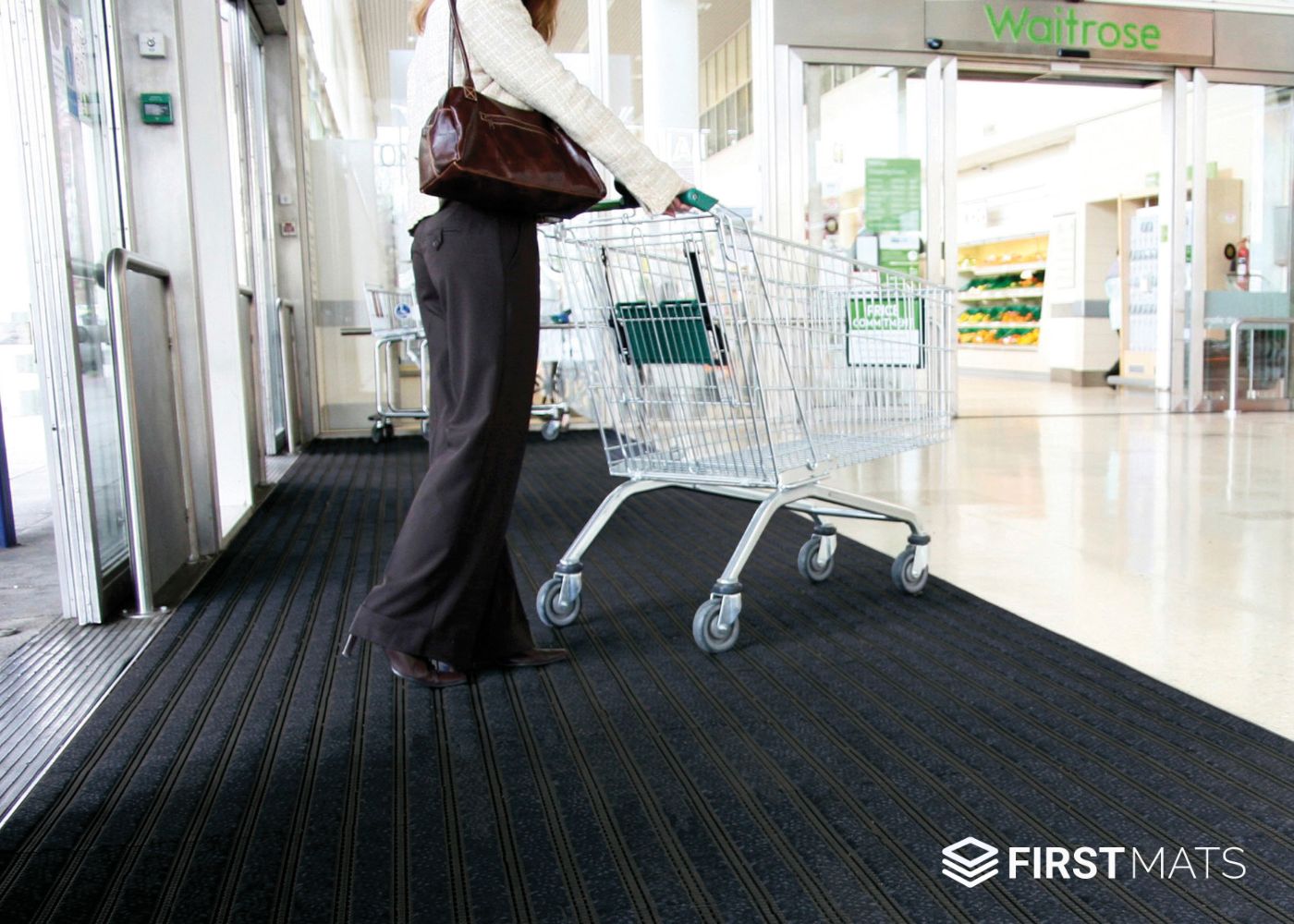
- Entrance mats: main doors into reception, shop, restaurants, entertainment areas. Best used as a two-step system: scrape outside, wipe and absorb inside.
- Outdoor mats: walkways and pinch points that get muddy or slippery (outside the wash block, near taps, bins, shortcuts, gates).
- Rubber mats: wet thresholds and wet-use areas where drainage, grip and easy cleaning matter most (amenity entrances, splash-prone routes).
- Ground stabilisation mats: grass overflow parking, event fields, service access and emergency routes where rutting and bogging become a problem.
Main entrance areas
Think reception doors, the shop, the bar, restaurants, arcades, entertainment venues, and any entrance that sees a steady stream of damp shoes and sandy pushchairs. These are the places where parks tend to look untidy fast, because foot traffic drags the outdoors in.

What works well here
- Entrance matting as a system: According to First Mats, a scraper or draining mat outside to knock off mud and grit, followed by a wiper or absorbent mat inside to capture moisture.
- Outdoor rubber or open-grid mats: great at the door line on muddy or beach-adjacent sites because debris can fall through instead of building up on top.
What “good” looks like
- It stays flat and stays put: no curling corners, no creeping under footfall, no bunching at the threshold.
- It stops contamination spreading: because contamination is involved in almost all slip accidents (see HSE: contamination and slip accidents).
- It is friendly for wheels: prams, mobility scooters, delivery trolleys. Low-profile edges matter for comfort and trip prevention.
A quick word on duty of care
When an entrance becomes predictably slippery in wet weather, it is not just annoying, it is a foreseeable risk. In the UK, occupiers owe visitors a duty of care under the Occupiers’ Liability Act 1957 (section 2). Good entrance matting is one of the simplest, most visible ways to show you have taken sensible steps to manage that risk.
AquaProtect Super Absorbent Door Mat
First Mats recommendationThe AquaProtect Super Absorbent Door Mat is made for entrances that have to deal with wet weather, muddy shoes, and heavy daily footfall. Holding up to 6 litres of water…
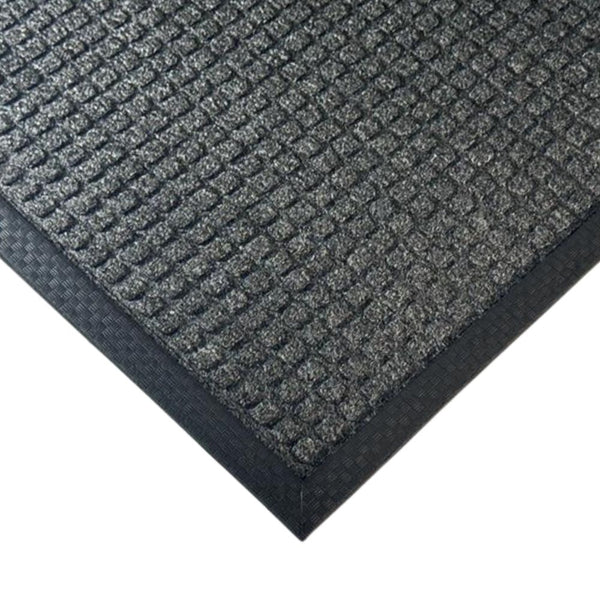
- Super Absorbent: Holds up to 6 litres of water per square metre.
- Highly Durable: 10.5mm thickness with Decalon fibres for long-lasting use.
- Non-Slip Design: Rubber backing prevents movement on smooth floors.
- Wheelchair Accessible: Reinforced border for added stability.
From £30.60 + VAT
Amenity blocks and wet thresholds
Toilets, showers, laundry rooms and dishwashing areas are where “wet underfoot” is the default, not the exception. Add soap residue, constant traffic, and frequent cleaning cycles and you have a zone that benefits from purpose-built wet-area matting.

What works well here
- Draining mats: designed to let water move away from the standing surface while staying stable underfoot.
- Outdoor scraper or draining mats at the entrance: so mud and grit get dealt with before guests step onto smoother indoor floors.
What “good” looks like
- Drainage that actually drains: if water sits in or under the mat, it will smell and it will become harder to keep hygienic.
- Easy lift-out cleaning: you should be able to remove, clean, and dry mats as part of routine housekeeping.
- Cleaning does not create new hazards: HSE highlights that cleaning activities can introduce slip and trip risks (wet floors, trailing cables, blocked routes), so the easier mats are to clean and dry, the better (see HSE: slips and trips in cleaning activities and HSE: cleaning and slips).
What to avoid
- Soft absorbent “bath-style” mats: they tend to stay damp, degrade, and create hygiene complaints.
- Mats that slide when wet: if it shifts during cleaning, it will shift during guest use.
EntraGuard Rubber Door Mat with Holes
First Mats recommendationThe EntraGuard Rubber Door Mat with Holes is built for tough outdoor use, combining durability with smart design. Its open hole pattern scrapes dirt and stones from shoes while allowing…
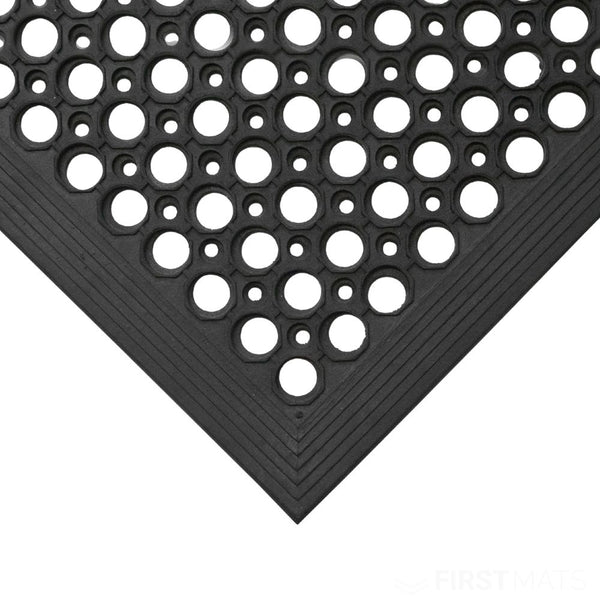
- Durable Natural Rubber: Long-lasting and wear-resistant material.
- Improved Drainage: Hole pattern removes water and debris efficiently.
- Slip Resistant: Meets EN 13552 Cat R10 standards for safety.
- Temperature Resistant: Performs in extreme conditions from -20°C to +130°C.
From £19.45 + VAT
Outdoor walkways, shortcuts and pinch points
Every park has them: the shortcut across a corner, the route to the wash block, the area by the taps, the gate everyone uses, the bins after a rainy day. These are the spots where ground turns to churn and surfaces become unpredictable.
What works well here
- Outdoor walkway mats: used selectively to “fix” the places that repeatedly go muddy or slippery.
- High-traction surfaces for ramps and slopes: especially where shade or poor drainage keeps areas damp.
What “good” looks like
- Permeable where possible: avoid making puddling worse.
- Stable transitions: no raised leading edge that catches toes or wheels.
- Right performance for the conditions: if an area is consistently wet, it is reasonable to ask for evidence-based slip performance and not rely on how it looks (see HSE: assessing slip resistance (GEIS2)).
It is worth remembering that HSE specifically calls out rain, puddles, mud, ice and poor lighting as common slip and trip contributors outdoors (see HSE: slips and trips in outdoor areas).
If you can make the main routes predictable underfoot, you will usually reduce both incidents and complaints.
SiteStep Walkway Matting Roll
First Mats recommendationThe SiteStep Walkway Matting Roll is the ultimate solution for creating clean, safe, and defined walkways across grass, gravel, and other uneven outdoor surfaces. Ideal for temporary footpaths at events,…
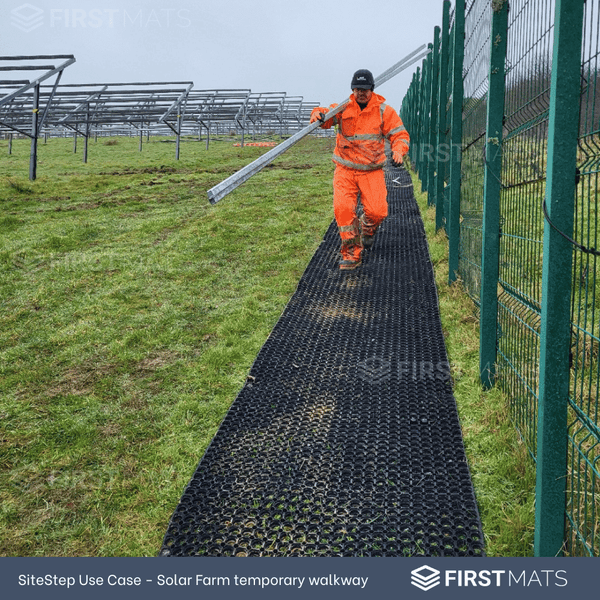
- Slip-Resistant Surface: Improves safety on grass, gravel, and uneven ground.
- Mud-Scraping Holes: Help remove dirt and debris from footwear.
- Durable Rubber: Built to endure heavy foot traffic and outdoor conditions.
- Portable Format: Supplied in a roll for easier transport and deployment.
From £24.50 + VAT
Crossings and shared routes (people and vehicles)
Some areas are used by guests and vehicles: deliveries, maintenance, buggies, mobility scooters, and the occasional van cutting across. This is where a “good mat” has to be exceptionally secure, because a shifted edge becomes a repeat hazard fast.
What works well here
- Fixed, low-profile mats only: if matting is used on a shared route, it needs secure fixing or strong interlocking so it cannot migrate or buckle.
- Use matting to reinforce pedestrian lines: for example, fixed anti-slip surfaces at crossing points, paired with clear route design.
What to avoid
- Loose lay mats: they can creep into vehicle lines or deform under turning forces.
- Raised edges: vehicles catch them, then the mat becomes uneven and unpredictable.
HSE’s message is simple: separate pedestrians and vehicles wherever possible (see HSE: separating pedestrians and vehicles). If you cannot fully separate, the next best thing is to make pedestrian routes obvious, consistent and free of movable hazards.
Grass overflow parking, event fields, service access and emergency routes
Grass areas look fine until they do not. One busy weekend in the rain and you can end up with bogging, rutting, closures, recovery costs, and unhappy guests. This is where stabilisation matting earns its keep.

What works well here
- Ground stabilisation mats: permeable, interlocking systems designed to spread load and reduce rutting.
What “good” looks like
- Load rating that matches reality: not just cars, but also deliveries, maintenance vehicles and any waste collection access.
- Connections that hold under turning: the system should not separate as vehicles manoeuvre.
- Traction in the messy stuff: a surface texture that remains usable when wet and muddy.
Standard Ground Protection Tiles - 40 Tonne
First Mats recommendationThe Standard Ground Protection Tiles provide a reliable way to turn soft or uneven ground into stable parking and access areas for festivals and outdoor events. Each extra-large mat supports loads…
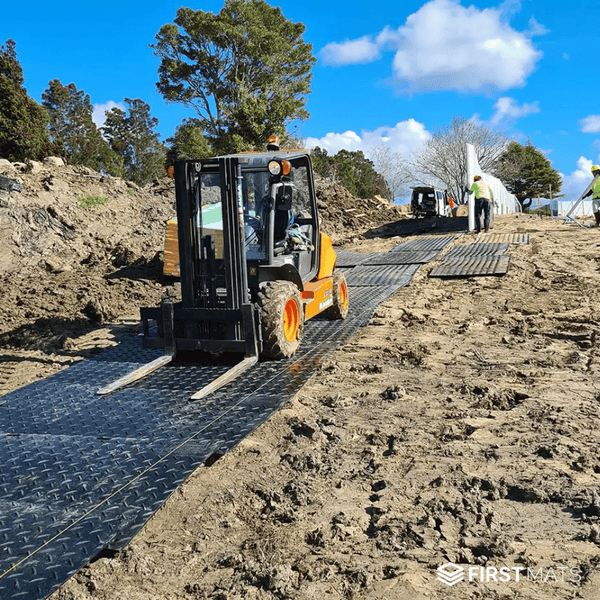
- Slip-Resistant Surface: Improves safety on grass, gravel and uneven ground.
- Heavy-Duty Load Capacity: Supports up to 40 tonnes for cars and vehicles.
- Dual-Sided Design: One side for pedestrians, one for vehicles with maximum traction.
- Easy to Handle: Integrated hand holes allow quick lifting and positioning.
From £11.39 + VAT
Pools, spas and splash-prone areas (if you have them)
If your park includes a swimming pool, spa or splash zone, the floor is basically “wet by design”. Guests are often barefoot, and cleaning is frequent. That combination needs matting that drains, stays stable, and can be sanitised properly.

What works well here
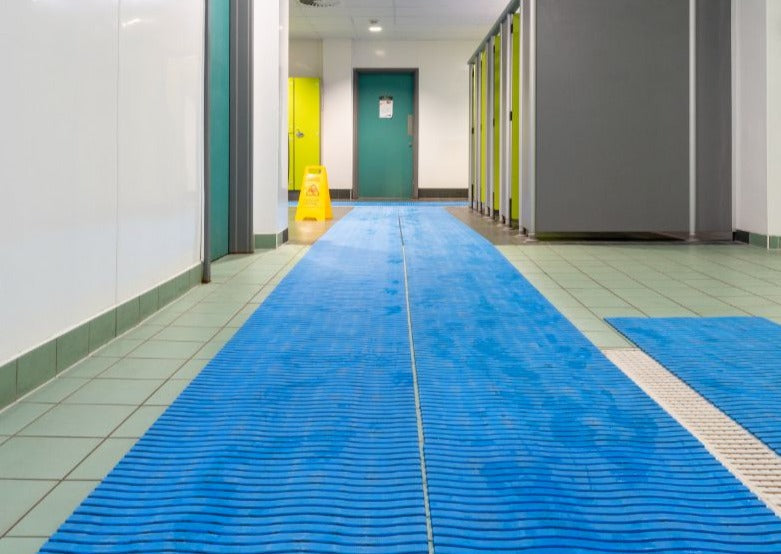
- Wet-use PVC matting: designed for drainage and stability in continuously wet conditions.
What “good” looks like
- It cleans without leaving slippery residue: choose mats that can handle the cleaning routine.
- It drains well: so guests are not standing on pooled water.
- It stays flat under constant use: no curling edges that catch toes.
For higher-risk wet areas, it is sensible to lean on evidence-based slip-resistance information (see HSE: assessing slip resistance (GEIS2)).
Plastic Duckboard Standard Pool Matting Rolls
First Mats recommendationThe Plastic Duckboard Standard Pool Matting Rolls are a long-lasting and practical choice for wet floor areas such as swimming pools, changing rooms, and leisure centres. Constructed from robust, non-porous…
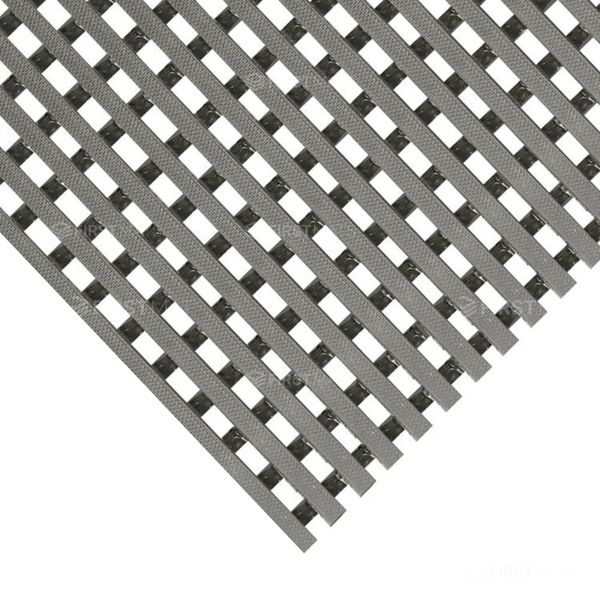
- Custom Lengths: Choose a size up to 10 metres for a perfect fit.
- Slip-Resistant Surface: Etched texture ensures stability in wet areas.
- Hygienic & Durable: Resists bacterial and fungal growth for cleanliness.
- Oil & Chemical Resistant: Ideal for industrial and wet environments.
From £406.95 + VAT
The most common matting mistakes on parks
A few problems show up again and again. Avoid these and you avoid most of the “we bought mats and they did nothing” frustration.
- Using lightweight loose lay mats at main doors: they move, curl and become trip hazards under heavy traffic.
- Choosing mats that hold water in wet zones: they smell, they underperform, and they become a hygiene complaint.
- Putting soft, thick mats on main routes: unstable transitions, poor performance under wheels.
- Relying on “looks grippy” in high-risk areas: if it is a ramp, shower entrance or persistently wet threshold, ask for test information and maintenance guidance (see HSE: GEIS2).
Keeping mats working (without making cleaning harder)
Matting pays back when it stays effective. In practice, that is about simple routines: clear debris, wash or sanitise as needed, and make sure mats dry properly. HSE also flags that cleaning activities themselves can create slip and trip hazards, so building a routine that keeps floors drier for longer is a genuine safety win (see HSE: cleaning activities and slip risks and HSE: cleaning and slips).
- Entrance mats: increase cleaning frequency during wet and peak periods.
- Wet-area rubber mats: lift out and clean on a schedule to prevent film build-up.
- Outdoor tiles and route mats: check edges and fixings regularly, especially after storms or heavy traffic.
- Replace when they stop behaving: curling edges and migration are not cosmetic issues, they are hazards.
A quick buying checklist you can use on a site walk
- Where is this going? Entrance, wet threshold, outdoor route, stabilisation zone.
- What is the traffic mix? Pedestrians only, or wheels and vehicles too.
- Will it stay flat and stay put? Look for edge treatment, fixing options, weight, or interlocking where needed.
- Does it drain or trap water?
- Can it be cleaned and dried easily? Cleaning should not create a permanent wet-floor problem (see HSE: cleaning activities and slip risks).
- Do you need evidence-based slip performance? In ramps and persistently wet areas, it is reasonable to ask for test information (see HSE: GEIS2).
- Is it accessible? Stable, low-trip edges help prams and mobility aids. Reasonable adjustments are part of service provision expectations (see GOV.UK: disability quick start guide for service providers).
Final thought
If you want the quickest matting win, start at the places where the outdoors becomes indoors: main doors and amenity entrances. Then walk the site after heavy rain and look for the natural “desire lines” where people shortcut and where ground churns. Those are the areas where the right mats make the biggest difference, both for how your park looks and how safely it runs.