Buying Guides
How to Cut and Install Coir Matting

Trying to fit coir matting neatly into a doorway or recessed mat well can go wrong fast if you cut first and measure later. A small mistake can leave visible gaps, a proud edge, or a mat that catches on the door.
This guide shows you how to install coir matting step by step, with a focus on PVC backed coir matting used in mat wells, porches and wall-to-wall entrance areas. It covers what to check before you start, how to cut and install coir matting more cleanly, and when to pause and verify the fitting method against the specific product.
Check if coir matting suits the space
Start by looking at where the mat will go. Coir matting is commonly used in recessed mat wells and in sheltered doorway or porch areas. The fitting approach can differ depending on whether the mat sits inside a recess or lies on a flat floor.
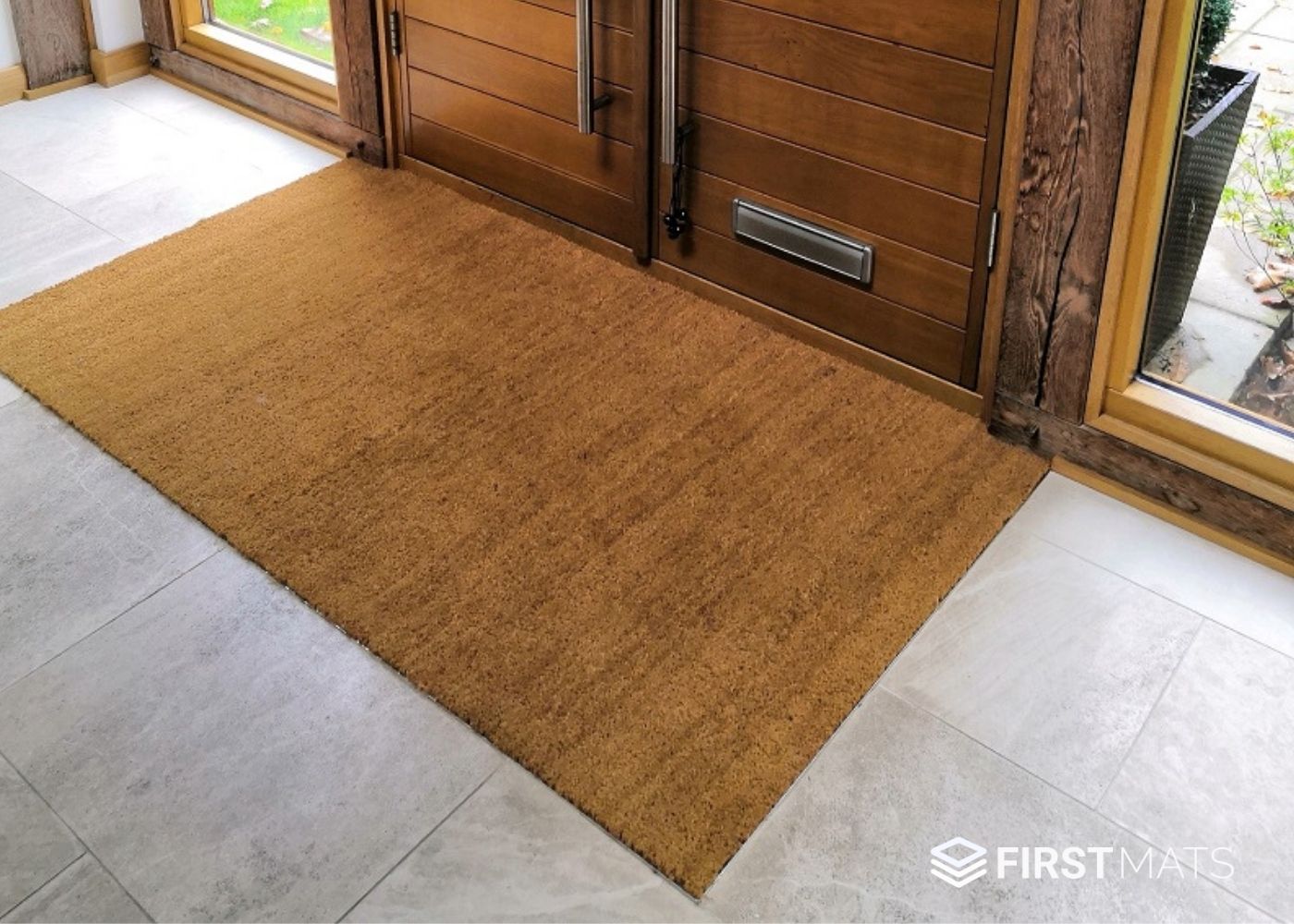
In a mat well, the main aim is usually a tidy fit that sits neatly within the recess and works with the surrounding floor level. In a wall-to-wall or flat doorway area, you also need to think about how the edges will finish and whether the mat is likely to move in use.
Before ordering or cutting, check:
- Whether the space is a recessed mat well or a flat floor area
- Whether the base looks reasonably clean and level
- Whether the door can open freely over the fitted mat
- Whether the threshold or surrounding edges leave enough room for a neat finish
- Whether the specific product has any fitting guidance you should follow
If you are still choosing a product, it helps to look at the available coir matting options first so you can match the matting to the entrance and fitting style.
17mm Coir Coconut Matting is a typical example of PVC backed coir matting used for this type of job.
17mm Premium Coir Coconut Matting - Cut to Size
First Mats recommendationThe 17mm Premium Coir Coconut Matting is the gold standard for natural entrance matting. Crafted from 100% natural coconut husk fibres on a tough PVC backing, it combines rustic charm…
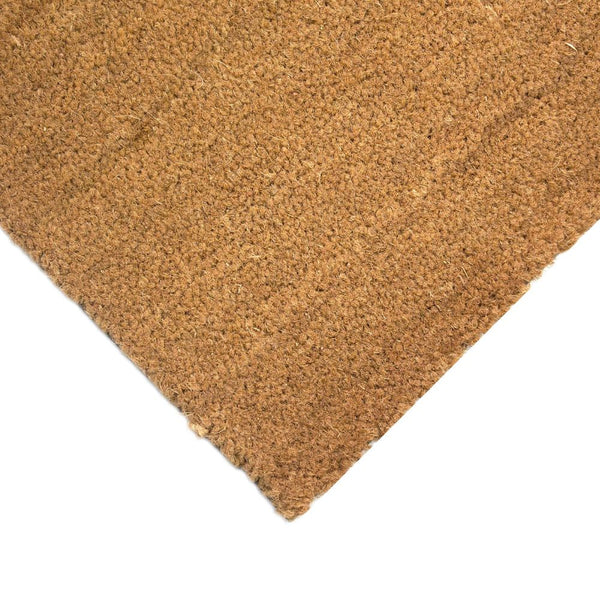
- Custom-Fit Matting: Cut to length for a precise fit.
- Highly Durable: Made from tough, 100% natural coconut husk fibres.
- Strong PVC Backing: Securely fits into mat-wells, preventing movement.
- Superior Absorbency: Highly rated for moisture retention, keeping floors dry.
From £150.60 + VAT
For recessed wells and porch areas, the important point is not to assume every coir mat installs in exactly the same way. Backing type, floor condition and the way the entrance is built all affect the final fit.
Tools and preparation
Keep the setup simple. You do not need a long list of equipment, but you do need enough control to measure accurately and cut the back of the mat cleanly.
Useful basics include:
- A tape measure
- A straight edge
- A marker or chalk for the back of the mat
- A suitable cutting tool for the backing
- A vacuum for finishing
Clear the area before you begin. Remove the old mat if there is one, then brush or vacuum out dust and loose debris. If the mat is going into a recess, check that the base is reasonably even and that nothing will stop the new mat from sitting flat.
It is also worth letting the matting settle before cutting if it has been tightly rolled for delivery. That can make it easier to mark and handle.
Measure the space properly
Most fitting mistakes happen at the measuring stage. Length and width matter, but they are not the only dimensions to check.
For a recessed mat well
Measure the length and width of the recess in more than one place, especially if the walls are not perfectly square. Use the smallest practical measurement as your starting point, then trim gradually if needed.
Next, check the depth of the well. You want to know how the fitted mat will sit against the surrounding floor and whether the door will clear it. Also check any threshold detail that could affect placement.
For a wall-to-wall doorway or porch
Measure the full area the mat needs to cover, then check the edges where the mat will meet walls, thresholds or other floor finishes. If the space narrows slightly, mark that before you cut.

Whichever setup you have, measure twice before making any marks on the matting. If the space is awkward, make a simple sketch with your measurements so you do not rely on memory while cutting.
How to cut coir matting neatly
When people ask how to cut and install coir matting, this is usually the part they are most concerned about. The safest approach is to mark the back, cut conservatively and test fit before trimming more.
1. Mark the back of the matting
Turn the mat over and mark the backing side, not the coir surface. This gives you a clearer line to work to and helps keep the visible face neater. Use a straight edge for long cuts.
If you are fitting into a recess, allow for a careful test fit rather than aiming for an overly tight first cut. You can always remove a little more material, but you cannot put it back once it is gone.

2. Cut along the back of the matting
Cut from the backing side using a steady, controlled pass. Keep to the marked line and avoid rushing corners or short edge cuts. If the piece is large, support it so the mat does not twist while you work.
For awkward shapes or slight irregularities, trim in small stages. This usually gives a better result than trying to match every variation in one go.

3. Test fit before final trimming
Place the mat into the space and check how it sits. Look at all edges, not just the first side you offered into place. If it catches, bunches, or leaves a section sitting proud, lift it out and trim only the area that needs adjustment.
A snug fit can look neat, but it can also make placement harder. A looser fit may go in more easily, but it is more likely to show gaps or allow movement. Aim for a clean, practical balance rather than forcing the mat into the opening.

How to install coir matting in place
Once the size is right, place the mat fully into the recess or doorway area and check the finished position from all sides. The mat should sit as intended within the space without curling edges or obvious high spots.
For many recessed mat wells, a correctly cut piece of PVC backed coir matting may simply sit in place. In other settings, especially on flat floors or where movement is more likely, the right approach depends on the specific product and the subfloor condition.
Do not assume adhesive is always required, and do not assume it is never needed either. If you think the mat may need securing, check the product guidance first and make the decision based on the backing type, the floor surface and how the area will be used.

Check door and threshold clearance
Open and close the door carefully before you treat the job as finished. Check that the mat does not foul the door, catch at the threshold or create a raised edge that could cause wear.
Finish by vacuuming the surface
Once fitted, vacuum over the newly installed coir matting. This helps remove loose coir fibres from cutting and handling and gives the surface a cleaner finish.

Common mistakes to avoid
- Measuring only one side of a recess and assuming it is square
- Ignoring recess depth, door swing or threshold clearance
- Marking the face of the mat instead of the backing
- Cutting to the final size too quickly without a test fit
- Forcing a tight piece into place and damaging the edges
- Assuming one fixing method suits every coir mat and floor type
If you are fitting wall-to-wall in a porch or working with an unusual subfloor, use the same principle throughout: check the space, cut in stages and verify any product-specific fitting advice before you commit.
When to check the product details before you fit
This guide covers the general process, but the final fitting method still depends on the matting and the floor beneath it. That matters most when you are deciding whether the mat can be loose laid, whether it needs a different edge treatment, or whether any securing method is suitable.
If anything about the entrance is unusual, such as an uneven base, tight clearance, or a detail that could affect the finished edge, pause before installation and confirm the best approach for that product. A few extra minutes checking the details is better than recutting the mat or lifting it again after fitting.
If you are about to order, measure the space carefully first, then choose the coir matting size and format that best matches the entrance.